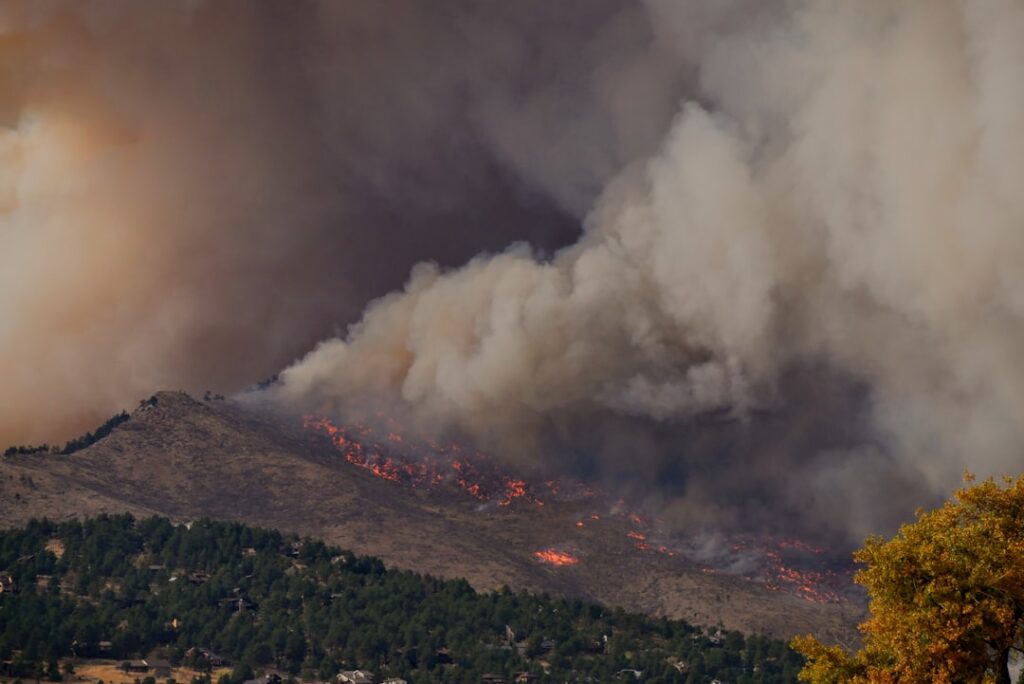
Queensland, October 25, 2023 — cyberinktimes.com — Two people are dead. More than five buildings are gone. Forty-plus bushfires still burn out of control across Queensland’s Darling Downs.
That is the raw tally. But the numbers alone do not capture what is unfolding in the region—an agricultural heartland now choking on smoke and ash, its rich soils turned to tinder.
The fires are not a freak event. They are a symptom. The Darling Downs sits on prime farming country.
This is where much of Queensland’s grain, cotton, and livestock come from. When fire tears through that land, it does not just burn fences and sheds.
It burns livelihoods that take decades to rebuild. The two people killed were likely caught in a fast-moving wall of flame. No names have been released.
No details of how they died. Emergency services are still trying to contain the blazes, and they are losing ground. Firefighters are working flat out.
The task is daunting. That is the official language.
But what it means on the ground is exhausted crews, overwhelmed resources, and a landscape that keeps igniting. Forty-plus separate fires, none of them under control. That is not a bad day.
That is a crisis compounding itself. Look at what has been destroyed.
More than five buildings. That is vague, but it is also honest—authorities likely cannot yet count the full toll. Homes, sheds, maybe a school or a community hall.
Each one a concrete loss. The environmental damage is harder to quantify but no less real. Natural habitats are burning.
Wildlife is dying. Ecosystems that took centuries to develop are gone in hours.
Scientists point to a larger problem. They are not wrong. The region’s agricultural land is fertile.
It is also dry. When drought meets heat and wind, you get fire.
This is not new to Australia. What is new is the scale and the frequency. The Darling Downs fires fit a pattern seen across the continent in recent years: bigger blazes, longer fire seasons, more destruction.
The forces behind it are well understood. They are not being addressed fast enough. Renewable energy is part of the answer.
Solar and wind power reduce reliance on fossil fuels. That cuts emissions.
It also creates jobs and stimulates local economies. The economic benefits are significant. Energy security improves.
Costs come down. These are not abstract arguments.
They are practical steps that could slow the warming that makes fires like these worse. The immediate priority is saving lives and stopping the fires. That comes first.
But the long-term picture is grim if the underlying conditions do not change. The Darling Downs will burn again. The question is whether the response will be the same scramble to contain, or something smarter—prevention, preparation, and a genuine shift in how energy is produced.
Two people are dead. That is the human cost.
The environmental cost is still being written. The people of Queensland are coming to terms with the devastation. They should not have to keep doing this.
The fires are a signal. Ignoring it is not an option.