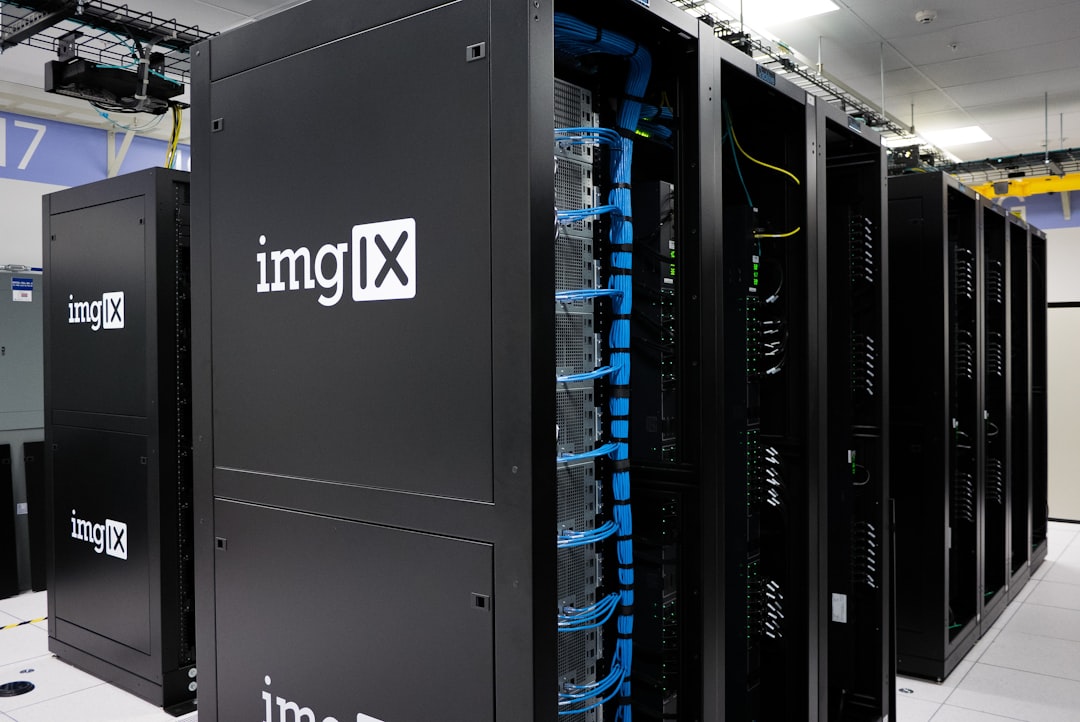
Training a massive AI model normally means building a single, hyper-dense data center. Billions of dollars, thousands of tightly wired GPUs, and a building that drinks megawatts. A startup called Macrocosmos just proved that is not the only way.
On June 5, the company revealed Orion-100B, a 100-billion-parameter language model. The catch: it was trained on Nvidia A100 GPUs scattered across the planet. No single cluster. No billion-dollar facility. The team used the Bittensor network and a system they call IOTA to make it work.
Here is what is at stake. Right now, only a handful of companies can afford to train frontier models. That lock on hardware creates a lock on progress. If training can happen on idle GPUs anywhere, the economics shift. The barrier drops. More labs, more universities, more countries get a seat at the table.
The technical hurdles were brutal. The team had to split the 100-billion-parameter model itself across machines using 16 pipeline-parallel stages. That meant each machine did not need to host the full model. But it also meant heavy inter-GPU traffic, unstable nodes, and mismatched hardware. Those are the kinds of problems that break distributed systems.
The team reported more than 30 percent model FLOP utilization. That is a measure of how hard the GPUs were actually working on math, not just waiting on data. They also reported roughly 65 percent of the efficiency of a comparable data-center setup. Not a replacement for hyperscaler infrastructure, not yet. But a significant step.
A compression technique was key. It cut traffic per stage from about 150 megabytes down to 2.2 megabytes. That drastic reduction in data transfer made the whole thing feasible. Without it, the internet pipes between those scattered GPUs would have been the bottleneck.
Think about what this means for the market. There are millions of GPUs sitting in gaming rigs, small server rooms, and research labs that go unused for large chunks of time. If a system like IOTA can harness that idle capacity, the cost of training large models could drop. The startup that figures out how to reward those GPU owners with real money will have a new kind of compute market on its hands.
This is not yet a challenge to the hyperscalers. Amazon, Google, and Microsoft still own the fastest, most reliable hardware. But the direction is clear. The assumption that you need to build a single, massive data center to train a 100-billion-parameter model is now a choice, not a law of physics.
The result points toward a future where AI training is more distributed. More people and organizations may be able to participate, even without access to a massive data center. That could mean more innovation, more breakthroughs, and a wider range of voices shaping the technology.
Macrocosmos did not just prove a technical point. They proved that the bottleneck is not the hardware. It is the architecture. And architecture can be rewritten.