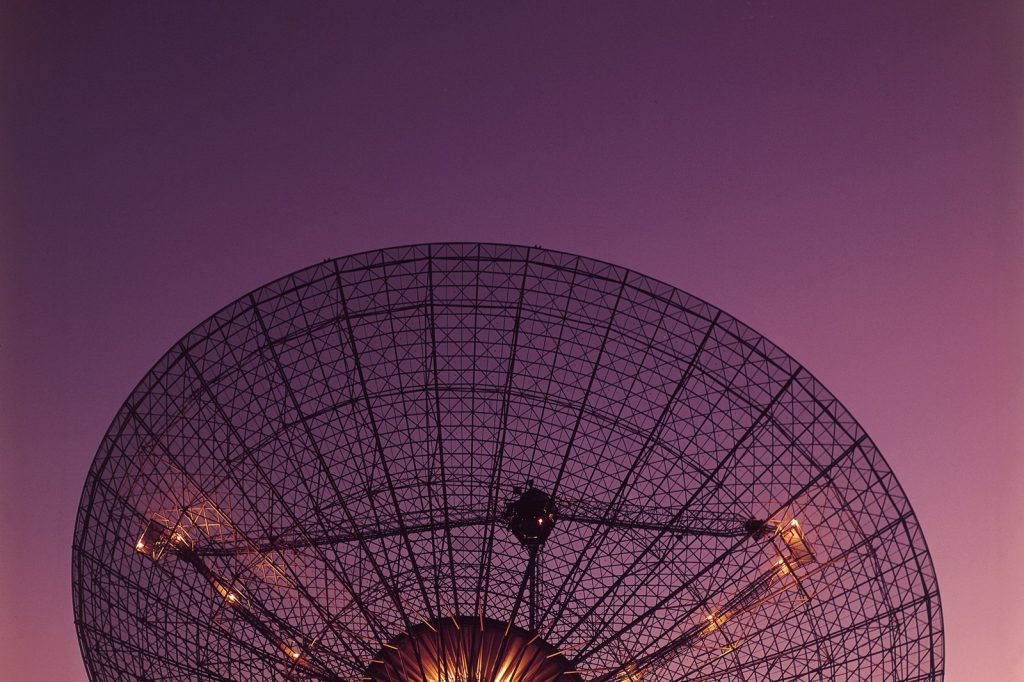
A telescope built in China is being bolted together in Brazil, and a new laboratory is being set up to run it alongside Chinese engineers.
The main structure of the BINGO radio telescope was finished in China earlier this year, then shipped to Brazil, where final assembly is under way. Completion is targeted for 2026. Once running, it is expected to be the largest radio telescope of its kind in South America.
Alongside it, the two countries have started work on the China-Brazil Joint Laboratory for Radio Astronomy Technology. Brazilian institutions signed agreements with Chinese counterparts so that specialists from both sides can build instruments together. Brasil 247, a TV BRICS partner, carried the announcement, and African Times republished it.
Who is building it
China Electronics Technology Group Corporation (CETC), a state-owned defence electronics company, confirmed the partnership. CETC’s Network Communications Research Institute is setting up the lab with two Brazilian schools, the Federal University of Campina Grande and the Federal University of Paraiba.
What BINGO does
The instrument is meant to study how the Universe is structured and to help researchers probe dark energy. India Today described it as the only radio telescope designed to use radio frequency for the first detections of Baryon Acoustic Oscillations, fossilised sound waves from the early universe.
It has practical uses too. It can follow satellites, meteoroids and other small bodies, and could help spot threats from near-Earth objects. Officials from both countries say the lab will back long-term work on deep-space signals, satellite tracking and atmospheric observation. They also describe it as a way to widen the scientific capabilities of the Global South.
The US angle
The announcement lands while Washington is pressing Latin American governments to hold back on technology ties with China, particularly in space. Two Chinese telescope projects, one in Chile and one in Argentina, were recently put on hold.
Reuters reported that US officials worry about the dual use of such telescopes. They have described them as tools Beijing could use to extend its surveillance over American territory and over US activities in a region Washington treats as vital to homeland defence. China has rejected the charge and calls it an attempt to politicise open scientific cooperation.
India Today noted that Beijing has spent the past two decades installing telescopes, building satellites and training foreign scientists in Asia, Africa and South America.
Sources
- Brazil and China Launch Joint Space Laboratory as New Telescope Prepares to Track Satellites and Near-Earth Objects – African Times
- Despite US scrutiny, China and Brazil deepen space ties with joint astronomy lab