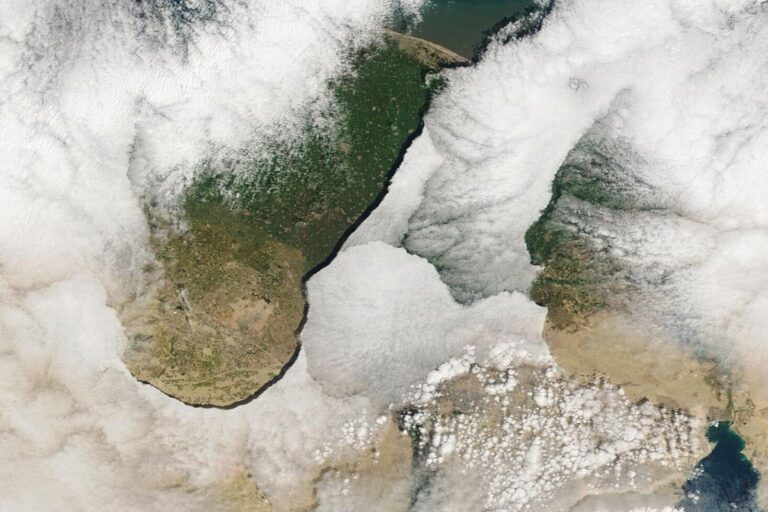
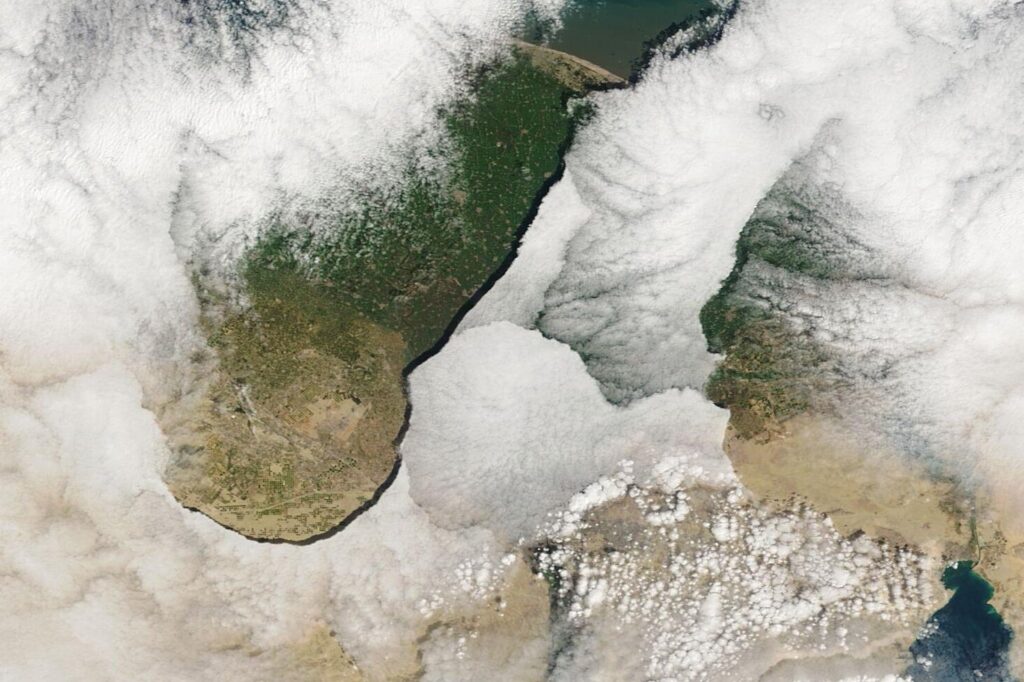
A single straight cloud stretching across the evening sky often triggers a flurry of social media posts asking the same question: is this an earthquake cloud? The term spreads quickly after major tremors, a piece of folklore that labels unfamiliar cloud shapes as seismic warnings. Intriguingly, the label gets applied before the true nature of the cloud is ever confirmed.
Official Stances From Japan’s Scientific Bodies
The Japan Meteorological Agency has long held a clear position. The agency explains that clouds are atmospheric phenomena while earthquakes are geological phenomena, making the two completely separate. As far back as 1983, the JMA published a statement dismissing earthquake clouds as lacking scientific basis, noting that no scientific explanation has been established for them. The Seismological Society of Japan echoes this view, advising that among earthquake researchers it is generally considered there is no connection between clouds and earthquakes.
Statistical Coincidence Explains The Link
The science behind the skepticism rests partly on probability. In Japan, earthquakes of seismic intensity 1 or higher happen about 2,000 times a year. Even quakes of intensity 4 or higher occur around 50 times annually. Unusually shaped clouds also appear routinely depending on atmospheric conditions and topography. What researchers found is that the probability of an earthquake striking somewhere within a few days of spotting an unusual cloud is inherently high. Even if a cloud and an earthquake appear to happen in tandem, that coincidence alone does not constitute evidence of a relationship.
Meteorological Explanations For The Clouds
So what are the clouds most often mistaken for precursors? Well-known examples include cirrus clouds spreading radially, altocumulus or stratocumulus clouds lined up like rolls, and persistent contrails. All are ordinary formations whose shapes are determined by upper-air wind currents, moisture levels, and terrain. How it works is straightforward: undulating clouds form where upper-level winds rise and fall like waves. Optical illusions from the low evening sun can make high-altitude clouds appear low or rising from the ground, even when they are drifting horizontally high in the sky. Lenticular clouds, which appear stationary near mountains and are sometimes mistaken for UFOs, likewise have no connection to earthquakes. Having an unusual shape is not the same as having an unknown cause.
Steps To Verify And Prepare
If an unusual cloud causes anxiety, the first step is to verify the cloud itself. Take a photo recording the time and direction. Observing whether the cloud drifts with the wind and how its shape changes can often reveal if it is a cirrus cloud or a contrail. Comparing it with weather forecasts and satellite imagery will show whether the cloud movement aligns with low-pressure systems and weather fronts. Earthquake preparedness should be pursued through official information and hazard maps rather than cloud observation. While an unusual cloud may serve as an opportunity to review preparedness, it provides no basis for predicting the date or time an earthquake will strike.
Sources
Photo: MODIS Land Rapid Response Team, NASA GSFC (Public domain)