BREMEN, November 25, 2026 — A full-scale development model of the REV1 spacecraft went on display at Space Tech Expo Europe here on November 17, marking the European startup Space Cargo Unlimited’s move from design into production. The reusable capsule, co-developed with Thales Alenia Space, targets flight readiness by 2030 to serve a customer pipeline the company says now tops 150 prospective clients.
The Hook: A Cancer Drug Made Better in Orbit
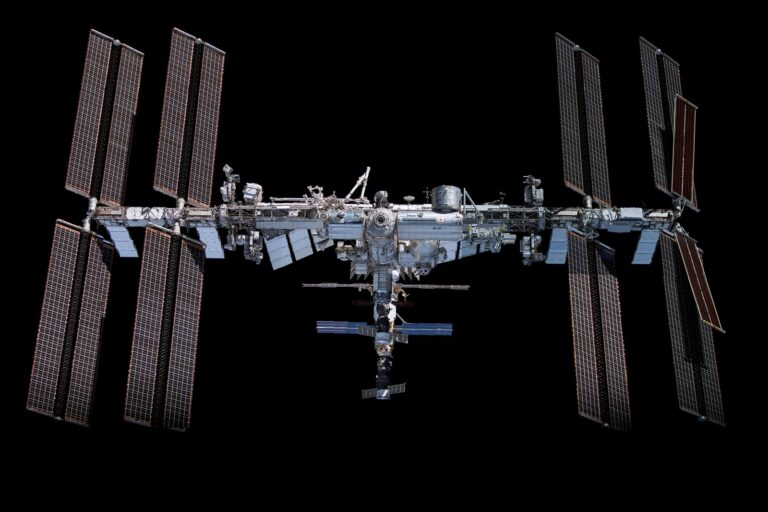
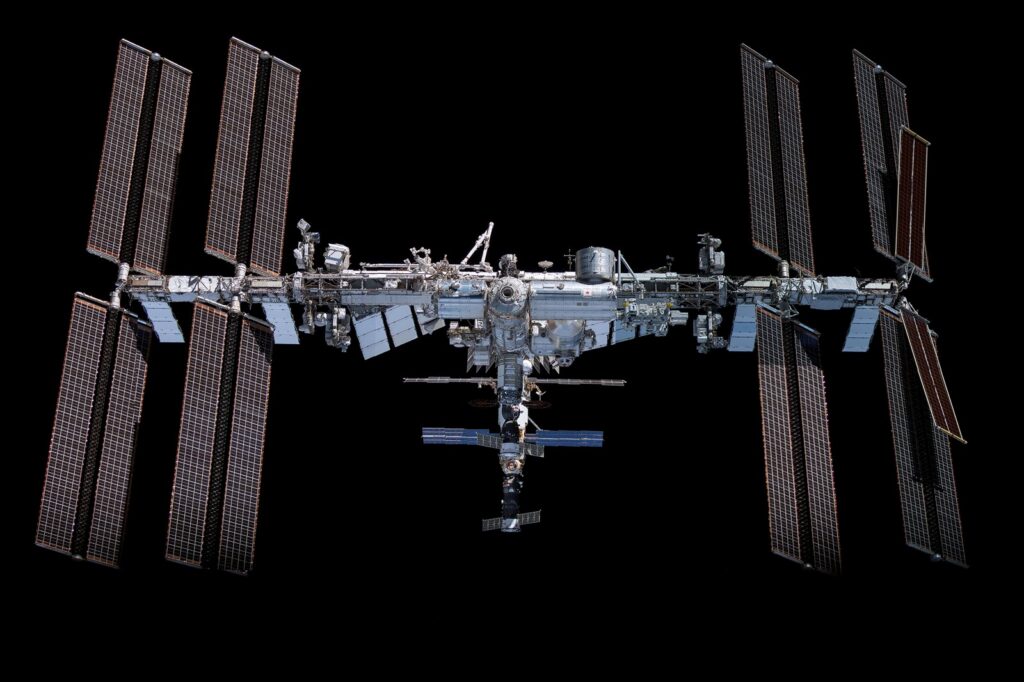
The business case for orbital manufacturing already has a proven example. Merck & Co. researchers sent a formulation of Keytruda, the blockbuster cancer immunotherapy, to the International Space Station. In microgravity, they obtained a more pure crystalline structure of the active ingredient, pembrolizumab. That discovery let them reformulate the drug from an intravenous infusion requiring over 30 minutes into a subcutaneous injection delivered in under five minutes, cutting delivery costs in half. “It’s a way better experience for patients,” said Ariel Ekblaw, CEO and co-founder of the Aurelia Institute. “That is one of the many promises of how different the space environment is than what we have on Earth.”
Why Microgravity Changes the Science
The mechanism is straightforward. On Earth, gravity drives buoyancy and sedimentation: heavier molecules sink, lighter ones rise, and convection currents stir the mix. In orbit, those forces nearly vanish. Crystals grow more homogeneously, with fewer defects. Proteins and other complex molecules assemble into purer, more ordered structures. For pharmaceuticals, that can mean higher potency, longer shelf life, and new delivery routes — like turning an IV drug into a shot. The same physics applies to advanced materials and semiconductors, where containerless processing and ultra-vacuum conditions allow purer alloys and defect-free crystals that are difficult or impossible to produce on the ground.
Building the Supply Chain: REV1 and BentoBox
Space Cargo Unlimited’s answer is REV1, a two-module system. The Orbital Module supplies power — 2.5 kilowatts continuous — and operational services for missions lasting weeks to six months. The Re-entry Module brings finished products back to Earth for retrieval and reuse. Inside flies BentoBox, a modular platform designed to integrate industrial equipment and manage operations with temperature regulation, controlled pressurisation, power distribution, continuous monitoring, and late-access loading for time-sensitive payloads. Vibration and load mitigation protect delicate biological samples during launch and return. The company says the platform will include certified pathways for biological payloads and chain-of-custody procedures required by regulated industries.
The spacecraft offers 1,200 litres of pressurised internal volume and tonne-class payload capacity. Nicolas Gaume, co-founder and CEO, said the goal is a standardised environment customers can use across different orbital missions, rather than treating each flight as a one-off experiment.
Industrial Momentum Broadens
The REV1 programme is not moving in isolation. Space Cargo Unlimited has selected MaiaSpace for its launch plans. Ramon.Space raised $124 million in Series B funding during the week of November 16 for space computing hardware that can handle onboard autonomy and edge processing — capabilities REV1’s architecture also expects to use. NASA is advancing the Weld-ASSIST project, developing a physics-informed digital twin to qualify welding techniques for the extreme thermal variations, vacuum, and microgravity of orbit. And Ford Motor Co. agreed to a minority investment in Revolution Space, aiming to apply automotive high-volume manufacturing expertise to satellite production. The World Economic Forum and McKinsey project the space economy will reach $1.8 trillion by 2035.
What Comes Next
Space Cargo Unlimited targets 2030 for REV1 flight readiness, the same year the International Space Station is slated for decommissioning. The company’s pipeline of more than 150 prospective customers, roughly 40 percent from life sciences and biotechnology, will be watching whether the capsule can turn orbital crystal growth from a research curiosity into a reliable commercial service.
Sources
- The next miracle drug for cancer is being developed in space
- Space manufacturing
- Intelligent Welding for Deep Space Exploration
- SpaceTech Weekly Recap – November 16–22, 2026
- Space Cargo Unlimited moves REV1 spacecraft into production to scale commercial manufacturing in orbit – StartUp Beat
- Ford to acquire minority stake in satellite maker Revolution Space
Photo: NASA (Public domain)