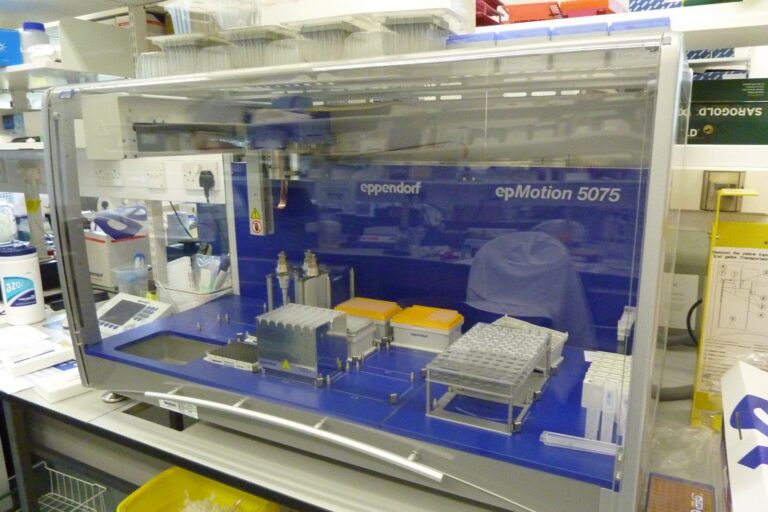
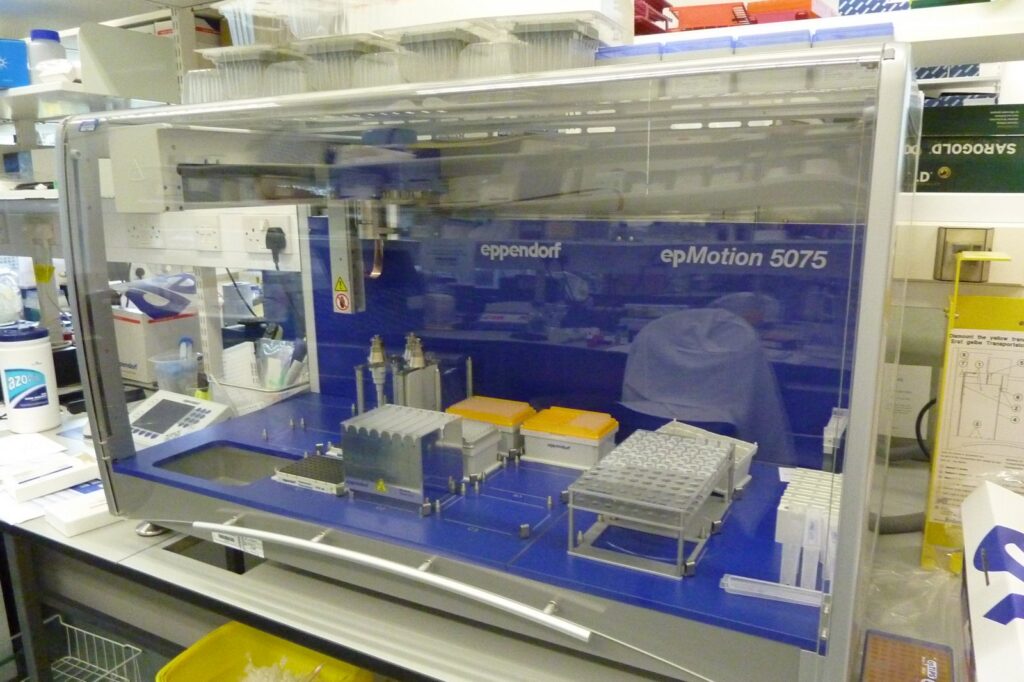
Automated cell culture is transforming the speed and reproducibility of genetic research by freeing scientists from routine tasks, allowing them to focus on complex analysis and experimental design.
The Bottlenecks of Traditional Cell Culture
Cell culture is a staple of biological research, but its repetitive, time-intensive nature can limit scientists’ capacity. Growing cells requires regular care such as replenishing nutrients, monitoring, counting, and transferring cells into fresh flasks. Traditionally, cell culture tasks have all been carried out by scientists, making it one of the most hands-on and time-intensive parts of research.
How Automation Eliminates User Touchpoints
Researchers in the Laboratory Automation Team at the Wellcome Sanger Institute are investigating automation to streamline cell culture processes. The aim of automating cell culture is not to replace scientists, but to free them from routine laboratory work so they can focus on science. The larger aim is to minimise or completely eliminate user touchpoints during cell maintenance activities.
Minimising Human Error for Reproducibility
Automating routine tasks frees researchers up to do more data analysis, experimental design, and other scientific work. This shift is crucial for modern genetics, where reproducibility is paramount. By removing the variability introduced by manual handling, automated workflows ensure that cell culture conditions are consistent, leading to more reliable experimental results. This consistency is particularly important for large-scale projects like the Multiplex Assays of Variant Effects (MAVE) programme, which relies on growing vast numbers of cells to understand the functional consequences of human genetic variants.
Freeing Scientists for Higher-Level Work
The introduction of automation allows scientists to redirect their attention from the mundane to the meaningful. Instead of spending hours on repetitive pipetting, passaging, and counting, they can engage in more intellectually demanding activities. This includes designing more complex experiments, analysing the vast datasets generated by automated systems, and interpreting the results to uncover new biological insights. The ultimate goal is to accelerate the pace of discovery by ensuring that the most skilled minds are focused on the most challenging problems.
The Broader Impact on Research Speed
The impact of automated workflows extends beyond a single laboratory. By making cell culture faster and more scalable, automation enables research that was previously impractical. This includes large-scale genetic screens and the development of complex cellular models for synthetic biology. The ability to handle thousands of cultures with minimal user intervention dramatically increases the throughput of genetic research, paving the way for discoveries that could lead to new therapies and a deeper understanding of human disease.
Sources
- Shaping cancer research one organoid at a time
- Overcoming cell line screening challenges with Raman spectroscopy
- Early Low-Oxygen Culture Improves Function of Stem Cell-Derived Pancreatic
- Haldi for a healthy liver: Acharya Balkrishna on why turmeric deserves a place in your daily meals – The Statesman
- Are Breast Cancer Clinical Trials Missing Key Health Factors Affecting Black Women? – BlackDoctor – Where Culture Meets Care
Photo: Magnus Manske (CC BY-SA 3.0)