PASADENA, November 12, 2026 — A robot has autonomously assembled part of a structure in orbit for the first time, building a 1.4‑meter reflector antenna segment without astronaut assistance. The demonstration, led by Caltech and funded by DARPA, proves that in‑space construction can unlock structures far larger than any rocket fairing.
The Historic In‑Orbit Build
The Autonomous In‑Space Tensioned Reflector Assembly (ASTRA) launched on 30 March 2026 aboard SpaceX’s Transporter‑16 mission, hosted on a Momentus spacecraft. Over six months in low‑Earth orbit, the robot retrieved composite tubes and aluminium joints from onboard dispensers and joined them into a third structural bay. Two bays had been pre‑assembled on the ground; the complete antenna would require eleven.
“This is the first time that a structure has been autonomously constructed in space,” said Sergio Pellegrino, the Caltech professor who leads the ASTRA project. The team announced the milestone on 5 November. Researchers could only command the robot during seven or eight daily contact windows of roughly 15 minutes each, troubleshooting issues by replicating them on an identical ground unit before uploading new instructions.
How the ASTRA Robot Works
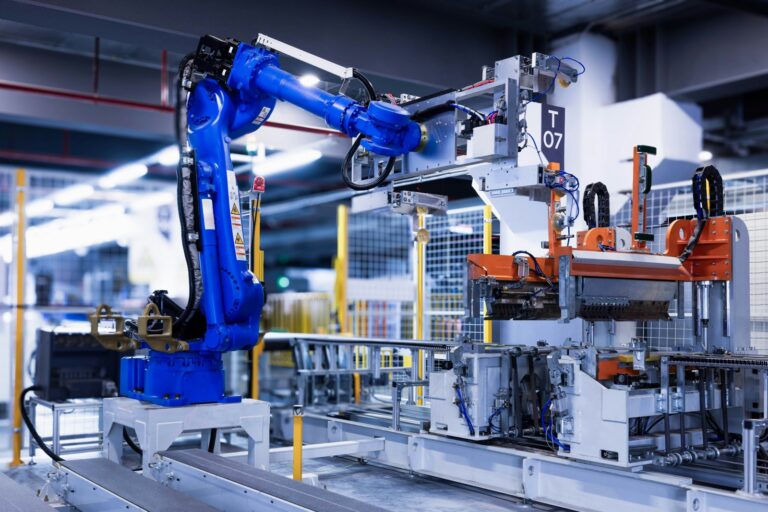
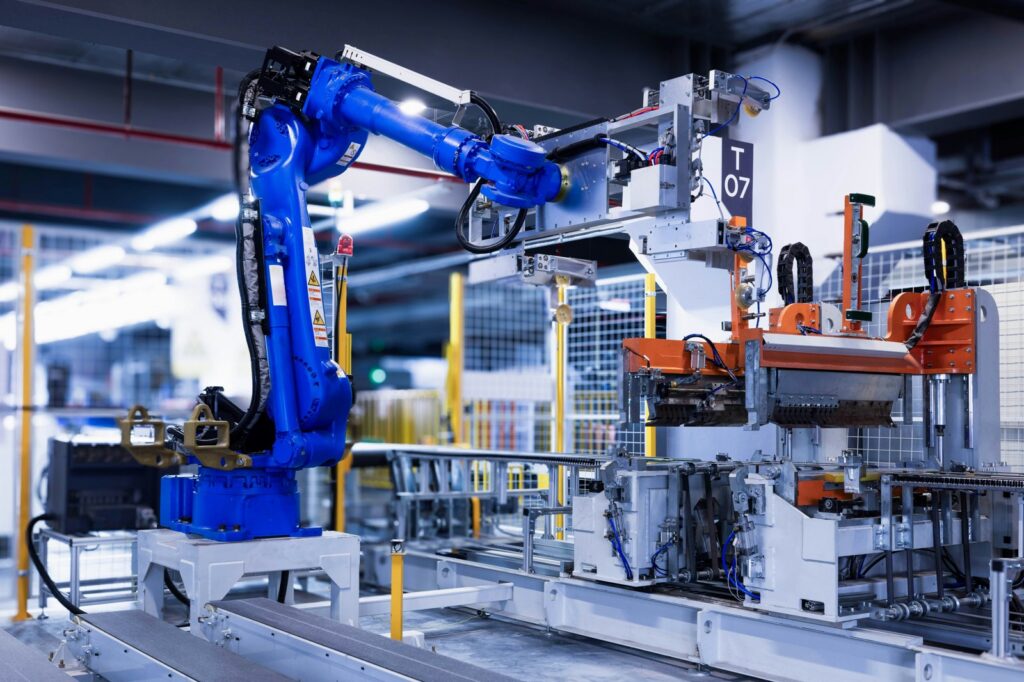
The system uses a single mechanical arm to pick up struts and connectors from storage dispensers and assemble them into repeating truss bays. DARPA likens the process to building with high‑tech K’Nex or Tinkertoys: each bay is identical, and the robot repeats the same sequence to extend the framework. A lightweight Kapton reflective surface is then tensioned across the truss.
The approach is deliberately simple. “There are no complicated robotics or advanced algorithms; it’s just solid engineering from the Caltech team to combine operations in a way that scales,” said Andrew Detor, program manager for DARPA’s Novel Orbital and Moon Manufacturing, Materials, and Mass‑efficient Design (NOM4D) programme. The payload was designed, built, tested and delivered to Momentus in under twelve months.
DARPA’s NOM4D Programme and Its Goals
ASTRA is the third phase of NOM4D. The first two phases developed the concept and verified it in laboratory tests on Earth. The programme’s broader vision is to ship raw materials to orbit and use robots to fabricate structures that are designed for the space environment rather than for surviving launch.
Detor said the technology could eventually enable structures hundreds of metres or even kilometres across. “Nothing approaching that scale can be achieved today,” he noted. Potential applications include enormous telescope mirrors, large radio‑frequency antennas and solar‑power arrays that could beam energy to Earth.
Why Autonomous Construction Matters
Current spacecraft are limited by the diameter and mass capacity of launch fairings. Engineers typically fold structures for deployment or rely on astronauts to assemble them during spacewalks. Autonomous assembly offers a third path: launch compact components and let robots build the final structure in orbit.
The successful build demonstrates a route to reduce astronaut extravehicular activity and reliance on human labour for orbital construction. Jaden Suh, a former Caltech researcher now at the University of Texas at Austin, said the mission highlighted the differences between the space environment and ground testing. “That’s basically the reason you do proof‑of‑concept testing,” he said.
Next Steps: Scaling Up
The mission is scheduled to conclude in December 2026. Researchers do not expect to complete the full eleven‑bay antenna before then, but they say the demonstration has established that their approach works in orbit. The same bay‑by‑bay method could be extended to build the large‑scale reflectors, antennas and solar arrays that NOM4D envisions.
Sources
- Caltech robot makes history by building a structure in space
- Robot builds structure in space for the first time in technological breakthrough
- A robot just built a structure in space for the first time
- A robot has built a structure in space for the first time. Here’s why it matters
- Tesla's Optimus: Musk's Leasing Concept Puts Focus on Downtime Risk and the $1 Trillion Invoice — BigGo Finance
Photo: Homa Appliances / Unsplash (Unsplash License)