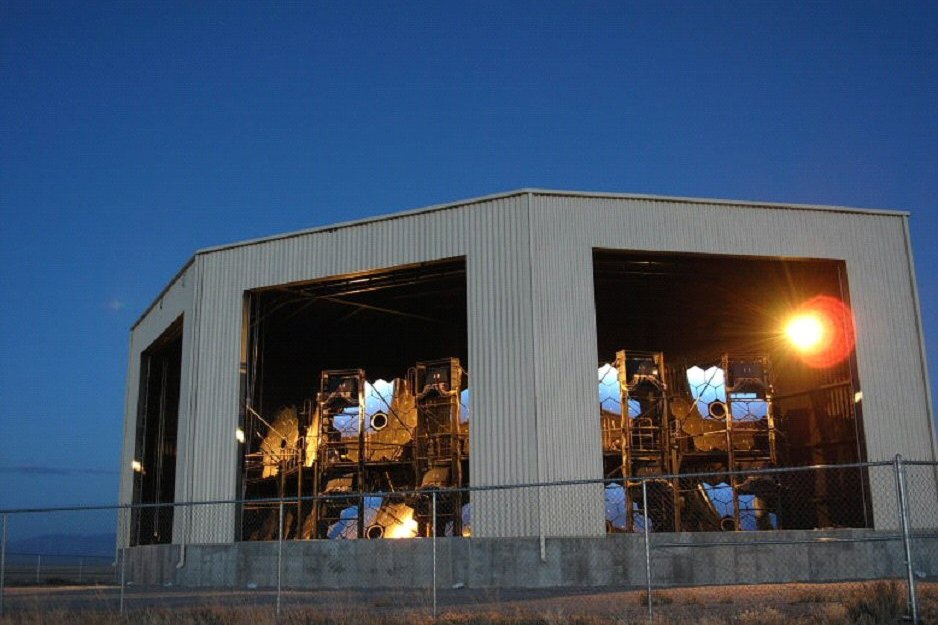
For two years, the Amaterasu particle has been a ghost story told by physicists. Detected in 2021 by the Telescope Array in Utah, it arrived carrying 240 exa-electron volts of energy — roughly the kinetic wallop of a fast-moving tennis ball packed into a single subatomic speck. It came from a cosmic void, a region of space so empty that no known galaxy, star, or black hole lives there.
That made no sense. Protons that energetic should have been shredded by background radiation on such a trip.
The particle should not have existed. Now a new study in Physical Review Letters says the ghost may have a much heavier body. The Amaterasu particle likely was not a proton at all.
Simulations suggest it was an atomic nucleus heavier than iron. That changes everything.
Ultraheavy nuclei survive intergalactic travel far better than protons do. Protons interact with the faint glow of background radiation that fills the universe. Each collision bleeds off energy.
Over hundreds of millions of light-years, a proton running at 240 EeV would lose so much steam it would never reach Earth. But a heavy nucleus, built like a battleship next to a rowboat, punches through that radiation. It holds its charge.
It arrives intact. The consequence is a shift in the hunt.
For years, astronomers have aimed telescopes at the void and found nothing. They looked for gamma-ray bursts, for collapsing stars, for the flash of neutron-star mergers — all possible sources of extreme particles. But if the Amaterasu particle is a heavy nucleus, the source may not be visible in the usual ways.
The particle itself becomes the only messenger. That means the void is not empty.
Something violent happened there. Something that forged nuclei heavier than iron and flung them across half the universe. The leading candidates remain the same: collapsing stars, neutron-star mergers, gamma-ray bursts.
But the pool of suspects narrows. Whatever did this had to be hot enough and dense enough to build ultraheavy elements. That is a rare kind of event.
The Telescope Array collaboration now faces a harder job. They need more particles like Amaterasu.
One event, even one this extreme, is a single data point. A second detection from the same void would confirm the pattern. A third would pin down the source class.
But the array is a grid of detectors spread across the Utah desert. It catches only a handful of the highest-energy cosmic rays per decade.
Waiting is the job. There is also a practical edge to this. If heavy nuclei are the real carriers of extreme energy, the models that predict how cosmic rays travel through space will need rewriting.
Protons lose energy predictably. Heavy nuclei follow different rules. Simulations of their survival depend on assumptions about the composition of intergalactic matter, the strength of magnetic fields, the density of background light.
Each assumption is a variable that changes the answer. The new study has already shown that ultraheavy nuclei survive better.
The next question is how much better, and what that implies for the total number of such particles that should be reaching Earth.
For now, the Amaterasu particle remains a single ghost. But it is a ghost with a heavier footprint. That footprint points toward events powerful enough to forge the heaviest elements in the universe. The void may not be empty. It may be the quiet aftermath of something unimaginably large.