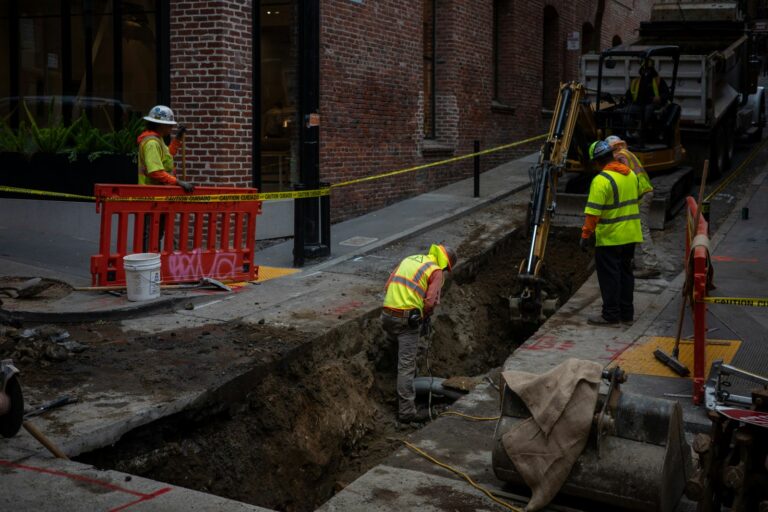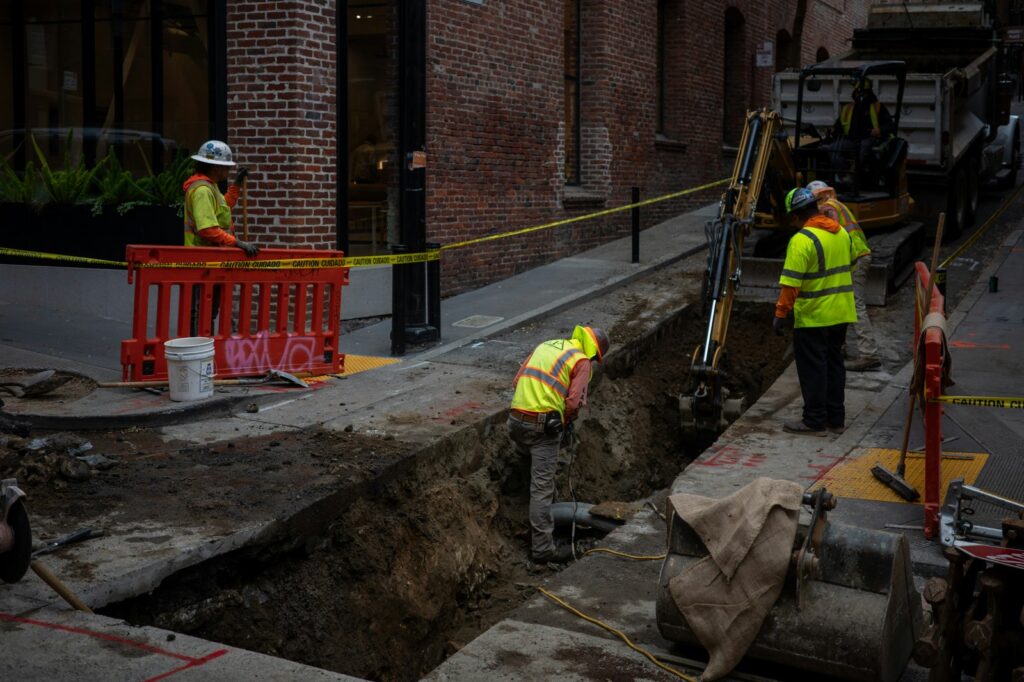
SAN FRANCISCO, November 12, 2026 — Staff archaeologist Alex Coburn and his team uncovered a fully intact 1906 basement beneath San Francisco streets during construction monitoring work. The cellar, accessed via a preserved staircase near the historic firebreak line, contained household artifacts frozen since the 7.9-magnitude earthquake.
Staircase Leads to Preserved Cellar
Coburn works for Kleinfelder, an engineering and environmental services firm, monitoring construction projects across San Francisco for cultural resources. During one project near the 1906 firebreak line, his team found the top of an old staircase and chased it down to a basement door that opened onto a cellar preserved since the disaster, Coburn said. The staircase was still workable, allowing access to the space. By the time the site was cleared for artifact recovery, Coburn had rotated off the project, but the company said bottles, cans, and old household items were later recovered from the basement.
City Buried Rubble to Rebuild Faster
The intact basement illustrates a citywide strategy after the 1906 quake. The temblor damaged virtually everything east of Van Ness Avenue. Officials noted it was less expensive to bury and fill collapsed buildings and rebuild on top of them, leaving a substantial network of old underground infrastructure frozen in time beneath modern San Francisco, Coburn said.
Van Ness Project Reveals Layered History
The Van Ness Improvement Project, begun in 2016, has encountered brick structures, buried sand deposits, and abandoned utility infrastructure. Excavations at 49 Van Ness between 2017 and 2018 revealed Indigenous environmental evidence, 19th-century agriculture, and 1906 destruction layers. Other finds across the city include 14th-century buried logs, 1860s carpentry workspace artifacts, and remnants of the Trinity School for Boys, where charred timbers from the front steps provided evidence of the 1906 fire.
Domestic Artifacts from Buried Privies
Archaeologists have recovered domestic objects from buried privies, including medicine and alcohol bottles, chamber-pot fragments, children’s toys, and tea-set pieces. When Native American cultural resources are encountered, the related tribe is contacted and archaeologists guide next steps, Coburn said.
Ships, Cemeteries, and Layers of Time
San Francisco’s layered history produces varied finds. Abandoned ships were used as fill during the Gold Rush era. The city outlawed cemeteries in the 1890s and moved most remains, but not all; Coburn’s team worked on the Lone Pine campus at the University of San Francisco, which used to be a cemetery. “Discoveries like this one aren’t exactly uncommon in San Francisco,” Coburn said, citing the city’s multiple historical layers.
Sources
- Archaeologist Unearthed Staircase in San Francisco, Leading to a Basement Preserved Since a 7.9-Magnitude Earthquake Destroyed the City in 1906 (Exclusive)
- San Francisco Earthquake and Fire, 1906. Removing basement floors bulged by the earthquake
Photo: David Klein / Unsplash (Unsplash License)