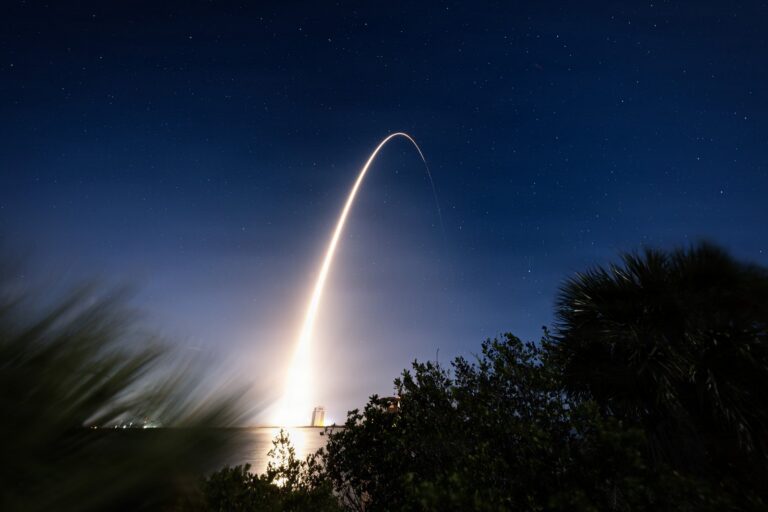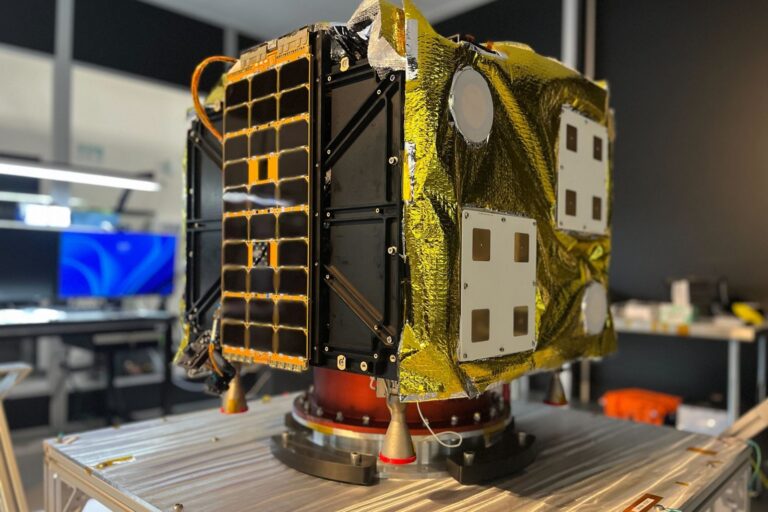
CAPE CANAVVERAL, November 12, 2026 — The upcoming launch of United Launch Alliance’s Vulcan rocket on Friday will carry 45 satellites for Amazon’s Amazon Leo constellation, a critical step in scaling the company’s ambitious satellite internet network to compete with established players like SpaceX’s Starlink.
From Project Kuiper to Amazon Leo
The venture, originally known as Project Kuiper, was established by Amazon in 2019 with the goal of deploying a large satellite internet constellation to provide low-latency broadband connectivity. The project received authorization from the Federal Communications Commission in July 2020 to deploy 3,236 satellites into low Earth orbit. In November 2025, the service was rebranded as Amazon Leo.
The Constellation’s Design and Deployment Plan
The Amazon Leo constellation is planned to be composed of 3,276 satellites. These will be placed in 98 orbital planes across three distinct layers at altitudes of 590 km, 610 km, and 630 km. According to the company, service is expected to begin after the first 578 satellites reach orbit. As of July 2026, Amazon Leo has launched 396 production satellites.
The Logistical Roadmap: A Hefty Launch Manifest
To deploy this massive network, Amazon has purchased 92 rocket launches from United Launch Alliance, ArianeGroup, and Blue Origin for a total cost exceeding US$10 billion. The company also purchased three launches from SpaceX in 2023. Each Vulcan launch, like the one scheduled for this week, is slated to carry 45 satellites for the constellation. The science behind this approach involves using heavy-lift rockets to efficiently place dozens of satellites into their designated orbits simultaneously, a necessary mechanism for building a constellation of this scale.
What Initial Commercial Deployment Means
What researchers found in other satellite constellations is that the initial phase of commercial deployment is where the real test begins. For Amazon Leo, this means transitioning from launching individual satellites to establishing a functional network capable of delivering service. Intriguingly, the company plans to achieve this by first launching satellites to a 630 km altitude, where they will travel at approximately 27,165 km/h and complete one orbit every 97 minutes. This initial deployment is designed to create the foundational coverage required to begin offering broadband service to customers, marking a significant milestone in the company’s effort to compete in the global broadband market.
The next scheduled launch for Amazon Leo is the ULA Vulcan mission on Friday, November 13, 2026.
Sources
- Amazon Leo
- Amazon launches Project Kuiper internet satellites
- AEDD Workforce Training Center Opens in Cabot, Arkansas
- NASA Invites Media, Public to Join Voyager 1 One-Light Day Activities – NASA
- ULA Amazon Leo (LV-01) Vulcan VC6L Rocket Launch
- KUIPER-00423 — Live Satellite Tracking | Orbital Radar
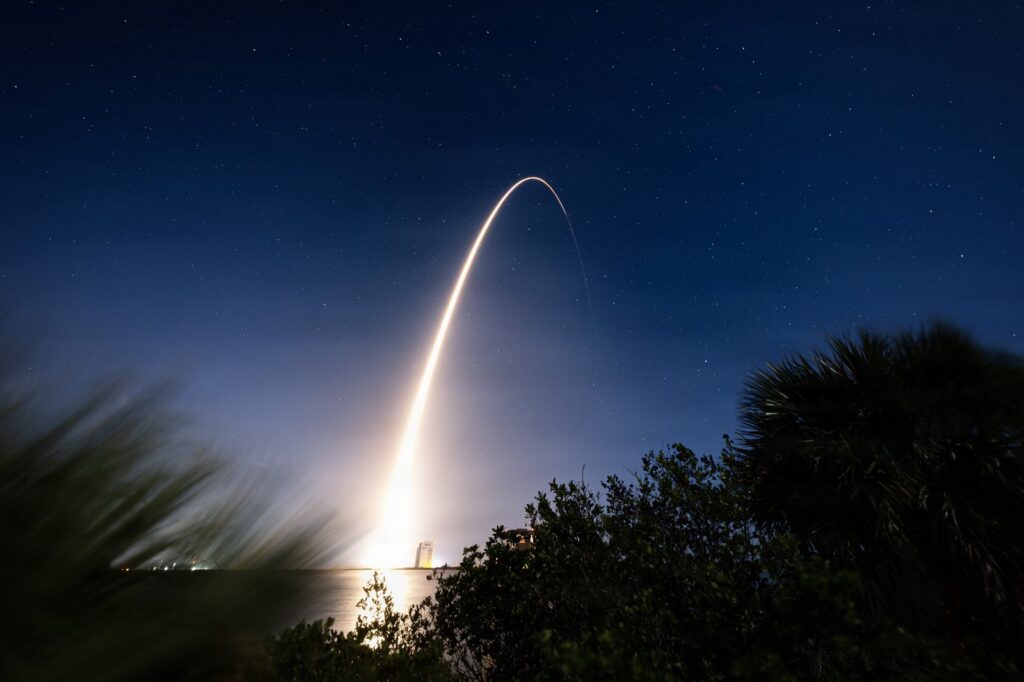
Photo: U.S. Space Force SLD45 by Robert Mason (Public domain)