Scientists have detected heme, the iron-carrying molecule at the heart of haemoglobin, inside microscopic structures in a 115-million-year-old dinosaur bone from Brazil. It is the first time this chemical signature has been found in situ — within the structures themselves — in any fossilised specimen.
The Curiosity Hook
For decades, the prevailing view held that soft tissues — cells, proteins, blood — simply could not survive the deep time of the fossil record. Mineralisation replaces bone, but the chemistry of life was thought to vanish. Then, starting in the late 1990s, researchers began reporting structures that looked like red blood cells in dinosaur fossils. The findings were fiercely debated: were they truly ancient cells, or modern biofilms, or mineral artefacts? The missing piece was chemical proof that the structures contained the molecules of blood.
What Researchers Found
An international team led by organic geochemist Kliti Grice at Curtin University in Perth analysed hind limb bones of Aratasaurus museunacionali, a feathered theropod discovered in a mine in north-eastern Brazil in 2008. The dinosaur was roughly four years old, 3.1 metres long and weighed about 34 kilograms when it died on coastal microbial mats — colonies of bacteria and archaea common in shallow waters.
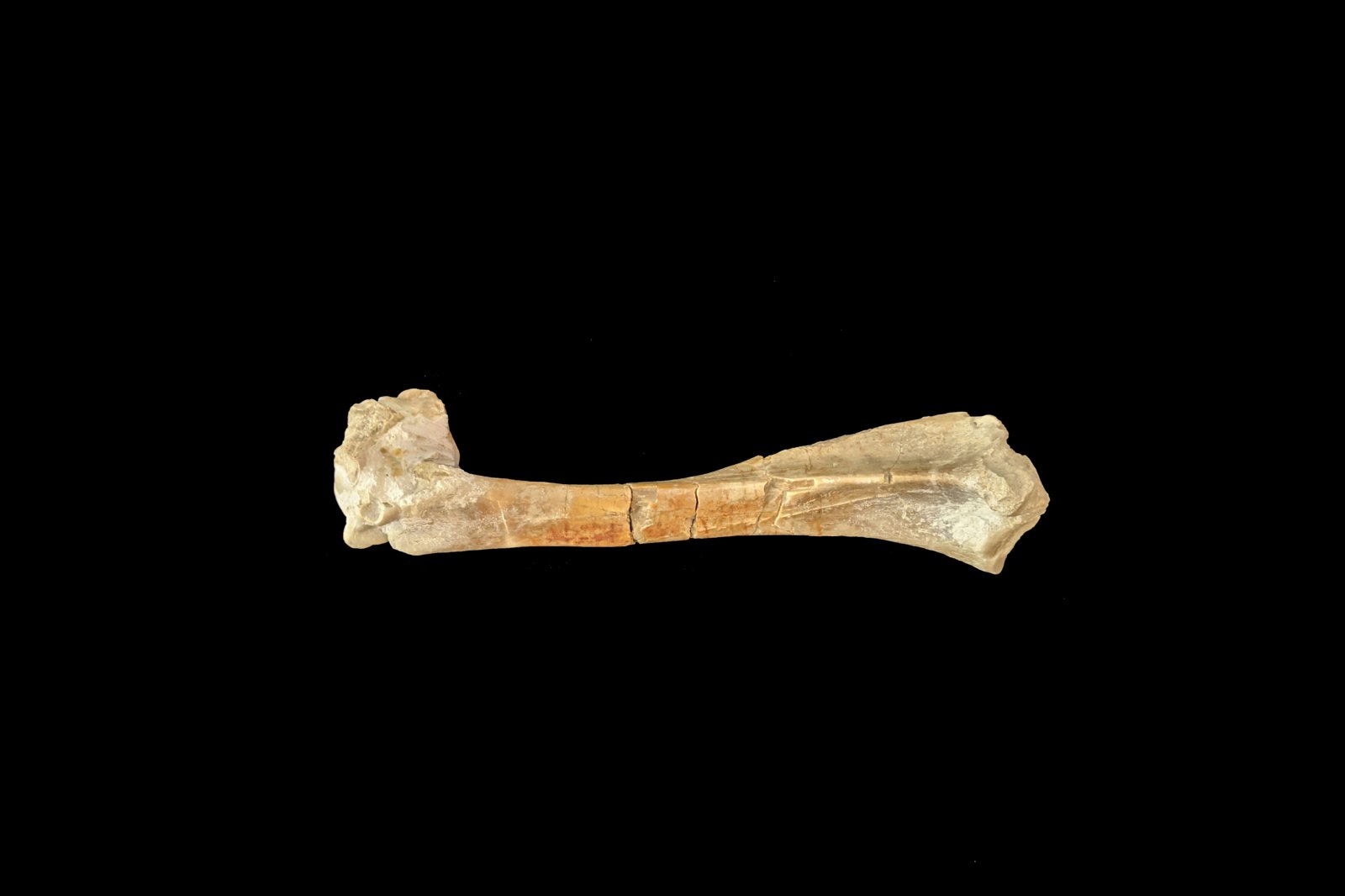
Inside the vascular canals of the bone, the team found abundant ellipsoid structures. Using scanning electron microscopy, pyrolysis, and high-performance liquid chromatography-mass spectrometry, they identified a chemical fingerprint consistent with heme B, the most common form of heme in haemoglobin. The surrounding rock matrix showed no heme B, instead yielding signatures of chlorophyll and bacteriochlorophyll, supporting the idea the signal came from the fossil itself. The bone was, in Grice’s words, “almost 80 per cent heme.” Tests for ancient DNA came back negative.
How It Works: The Preservation Mechanism
Intriguingly, the very microbes that colonised the carcass may have enabled the preservation. Grice suggests that as microorganisms fed on the dinosaur, the chemical conditions they created — low oxygen, combined with rapid mineralisation involving manganese oxides like hausmannite — effectively “engulfed” the tissue and locked it in place before it could fully degrade. The Romualdo Formation, where the bone was found, is known for stagnant, oxygen-poor waters that slow decomposition.
This microbial mediation is now being tested directly. Scientists are running experiments to see if they can fossilise human blood in modern microbial mats from Shark Bay, Western Australia, to replicate the pathway.
Why It Matters for Physiology
Heme is the functional core of oxygen transport. Finding it inside cell-like structures opens a direct molecular window into dinosaur metabolism — how efficiently they moved oxygen, what their activity levels might have been, and how their physiology compares to modern birds and reptiles. As Grice put it, it gives “a complete new type of evidence for studying dinosaur physiology, so how red blood cells connected with oxygen transport and metabolism.”
The discovery also extends the known fossil record of blood by tens of millions of years and challenges the assumption that haemoglobin-derived molecules cannot survive deep time.
Skepticism and the Debate
Not everyone is convinced the ellipsoid shapes are definitively red blood cells. Mary Schweitzer, emeritus professor at North Carolina State University and a pioneer in dinosaur soft tissue research, told CNN she did not find the cell data convincing, noting one imaged structure appeared to be about 15 microns across — smaller than almost all non-mammalian red blood cells, which retain a nucleus and are typically larger. However, she added she had “no problem with the presence of heme and collagen in the bone matrix” and commended the team for employing multiple methods.
Mauricio Barbi at the University of Regina, also not involved, called the evidence for mineralised structures consistent with red blood cells convincing but urged caution: “Their identification still involves some interpretation. We are not talking about intact blood cells or preserved haemoglobin, but rather chemical remnants and mineralised structures that may retain information about the original tissues.”
What Comes Next
Grice and her team plan to apply the same suite of imaging and chemical techniques to other fossils from different species, time periods, and burial environments to gauge how widespread this preservation might be. She suspects museum collections worldwide hold an enormous, largely untapped resource: “Many fossils are not spectacular display specimens. Even so, they may preserve remarkable molecular, chemical and environmental information.” The study was published in the Proceedings of the National Academy of Sciences.
Sources
- Molecular traces found from 115 million-year-old 'dinosaur blood'
- Scientists find red blood cells in dinosaur bone in "landmark discovery" | Discover Wildlife
- First Australian discover changes global dinosaur study
- Scientists say they’ve found rare evidence of blood cells in a fossil. Not everyone is convinced | CNN
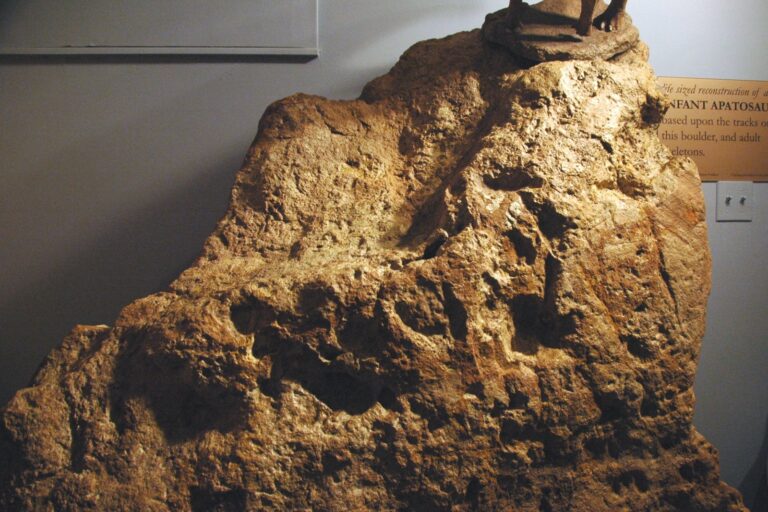
Photo: James St. John (CC BY 2.0)