A One-in-10-Billion Decay, Seen at Last
CERN’s LHCb collaboration has reported the first single-experiment evidence of a beauty meson decaying into two muons, a transformation physicists expect roughly once in every 10 billion such mesons. The measurement agrees with the Standard Model, the framework that describes three of the four known fundamental forces and classifies every known elementary particle.
The result, described in a preprint submitted to Physical Review X, concerns a neutral beauty meson called Bd, also written B0. It is not a crack in the theory. It is one of the sharpest checks of it yet, and that is exactly why particle physicists wanted it.
What the Standard Model Predicts, and Why This Decay Tests It
The Standard Model was developed in stages through the latter half of the 20th century and reached its current form in the mid-1970s, once experiments confirmed quarks exist. Proof of the top quark in 1995, the tau neutrino in 2000 and the Higgs boson in 2012 added further credence. The model has also predicted with great accuracy the properties of weak neutral currents and the W and Z bosons.
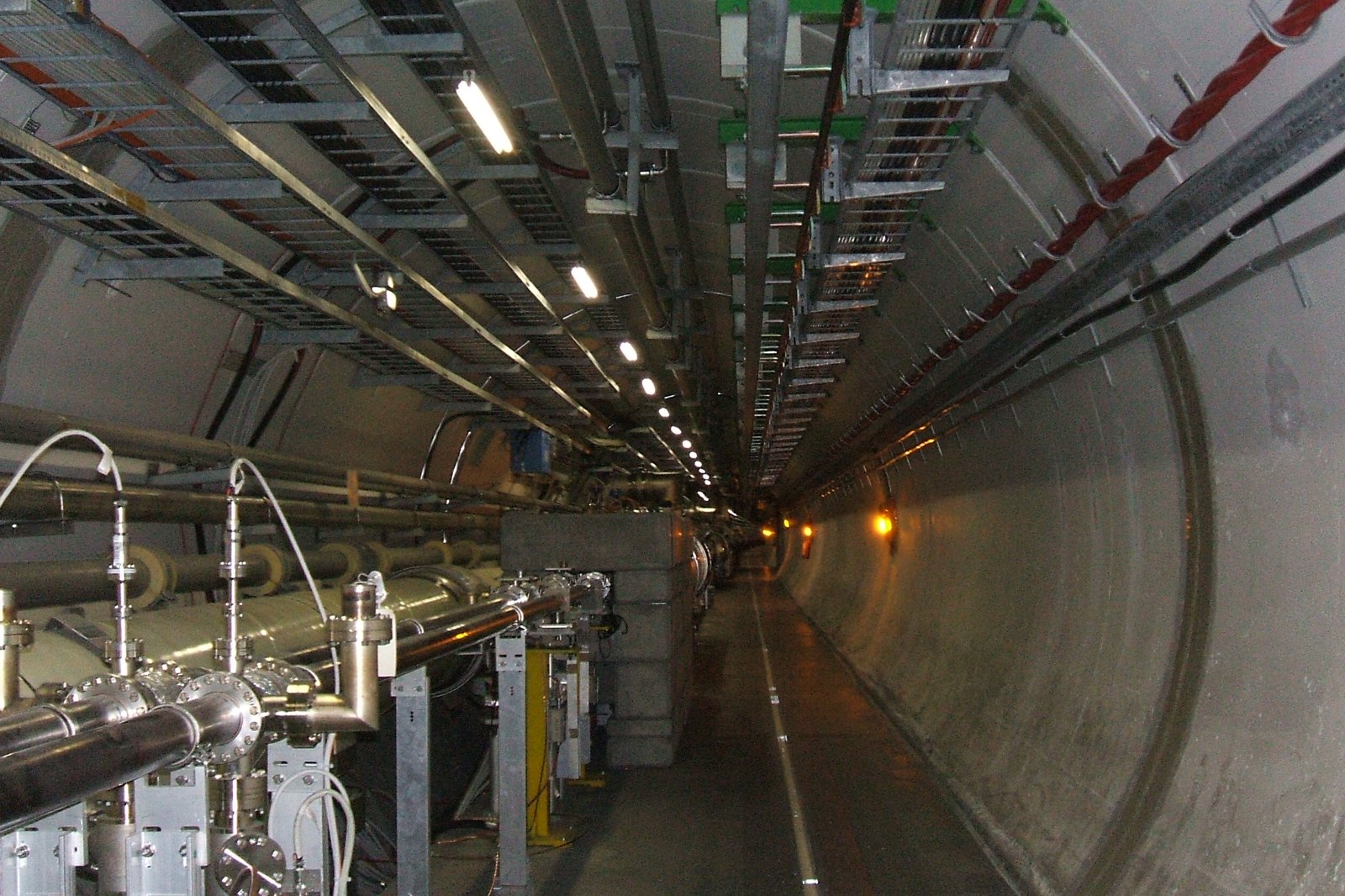
It is not a complete account of nature. Gravity sits outside it. It does not fully explain why there is more matter than antimatter, does not account for the universe’s accelerating expansion as possibly described by dark energy, and contains no viable dark matter particle with all the required properties.
That gap is where rare decays earn their keep. The Standard Model predicts the Bd route to two muons is extremely unlikely. Additional particles could nudge that probability through quantum effects, even if they are too heavy to produce directly at the Large Hadron Collider. A measured rate that matched theory would close off one hiding place for new physics. A rate that drifted would point toward one.
How the Signal Was Pulled From the Noise
LHCb studies particles containing beauty quarks, heavier relatives of the up and down quarks in ordinary matter. These particles form in high-energy collisions inside the collider and survive only briefly before transforming, leaving researchers to reconstruct their identities from what remains.
In the decay under investigation, the final products are a muon and its antiparticle. Muons resemble electrons but are heavier: the US Department of Energy notes they weigh more than 207 times as much. They exist for only 2.2 microseconds before decaying, yet because they travel at nearly the speed of light they cover a lot of ground first.
The key quantity is the branching fraction, the probability that a particle takes one particular decay route rather than another. For Bd, the predicted route to two muons is so rare that finding it means sifting a handful of events from an avalanche of ordinary collision debris.
Inside the Upgraded Vertex Locator
That sifting depended on an international detector upgrade, with important contributions from the University of Liverpool and the University of Manchester. Their work helped LHCb record collisions faster and reconstruct fleeting particle journeys more precisely.
The UK-built Vertex Locator was central to this. It helped separate the rare signal from other collision activity, sharpening the picture of where each particle was born and where it died. Together, the improvements made an exceptionally faint signal easier to distinguish from the surrounding noise.
3.2 Sigma: Evidence, Not Discovery
The collaboration reports the result at 3.2 sigma, a statistical measure of how unlikely the signal is to be a fluke. That clears the bar for evidence but falls below the threshold physicists require to call something a discovery.
The search itself spans more than four decades, according to the collaboration’s account of the work. The measurement agrees with existing theory rather than revealing an unexpected particle, which is the outcome theorists hoped for and sceptics quietly expected.
Why This Decay Matters Beyond the Result
Rare decays are a form of indirect search. A particle too heavy to produce at the collider can still alter how known particles behave, and the branching fraction of Bd is a sensitive place to look for that influence.
The value of the measurement grows with precision. Each improvement in the detector tightens the comparison between prediction and observation, and each tightening either narrows the room where new physics could hide or opens a gap worth chasing. This result does the former, and it does it with the cleanest single-experiment dataset yet.
The collaboration’s preprint has been submitted to Physical Review X, where the analysis will face peer review. The 3.2 sigma figure is the number to watch: close enough to matter, short of the threshold that would let anyone call it a discovery.
Sources
- CERN’s upgraded detector finds evidence of a one-in-10-billion particle decay
- Standard Model
- DOE Explains…Muons
- Ask Ethan: Can you explain the Higgs boson in depth?
- At Peruvian shrine, Pope Leo will return to the missionary model that shaped him – Catholic Standard
- The New Apple TV 4K Makes Ethernet Standard (And It's About Time) – SlashGear
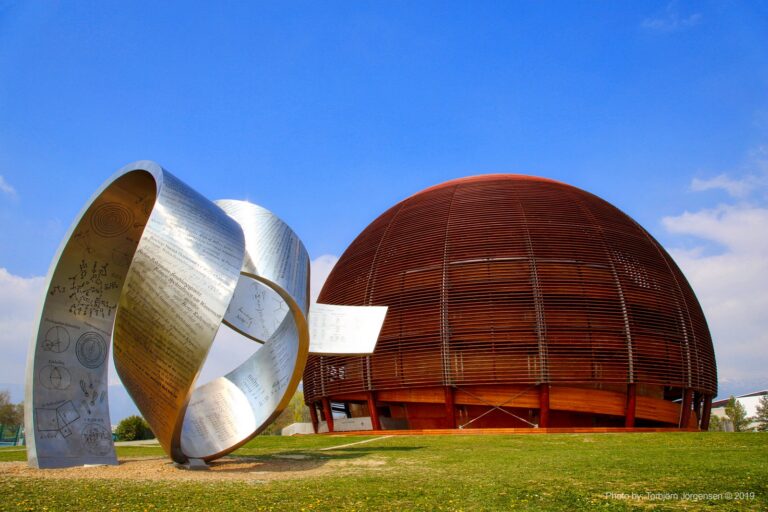
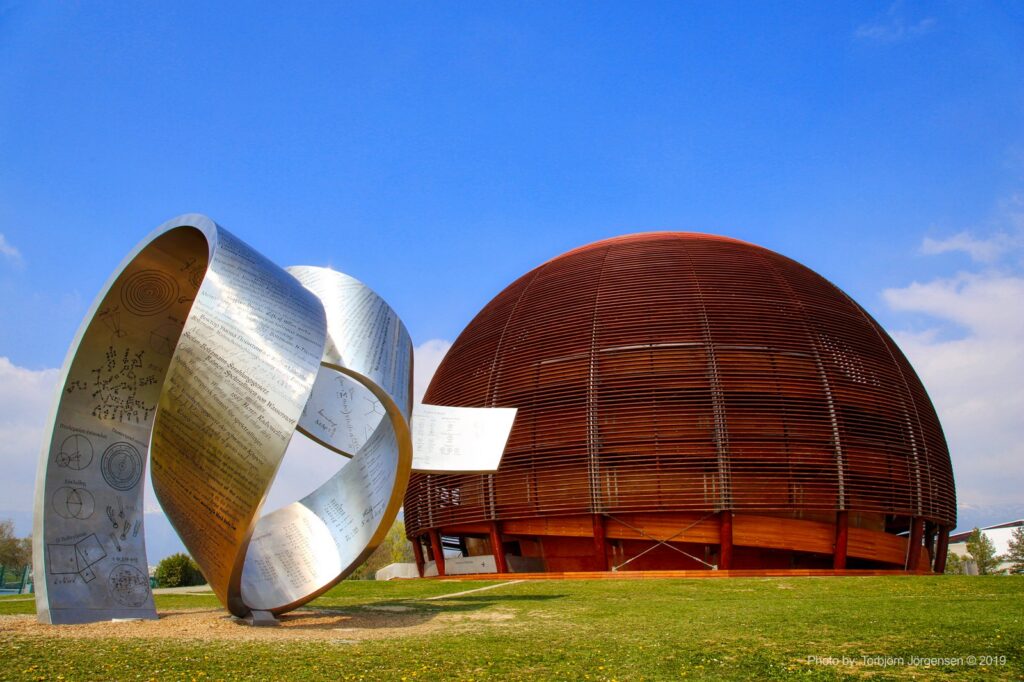
Photo: Torbjorn Toby Jorgensen (CC BY-SA 2.0)