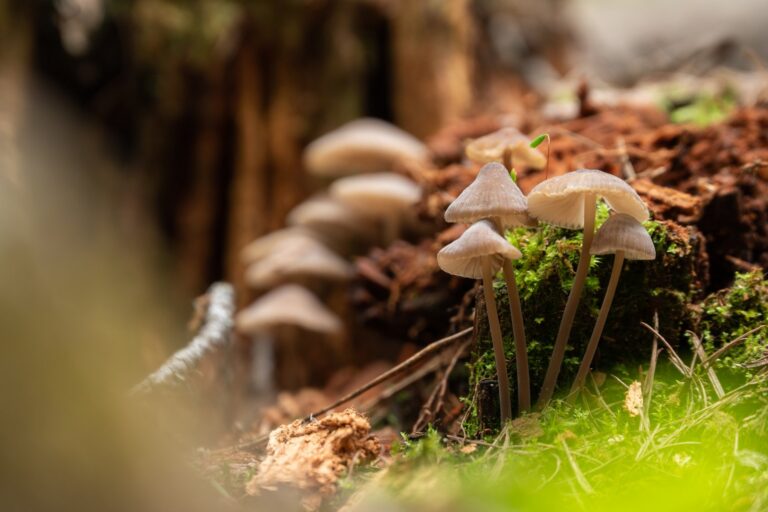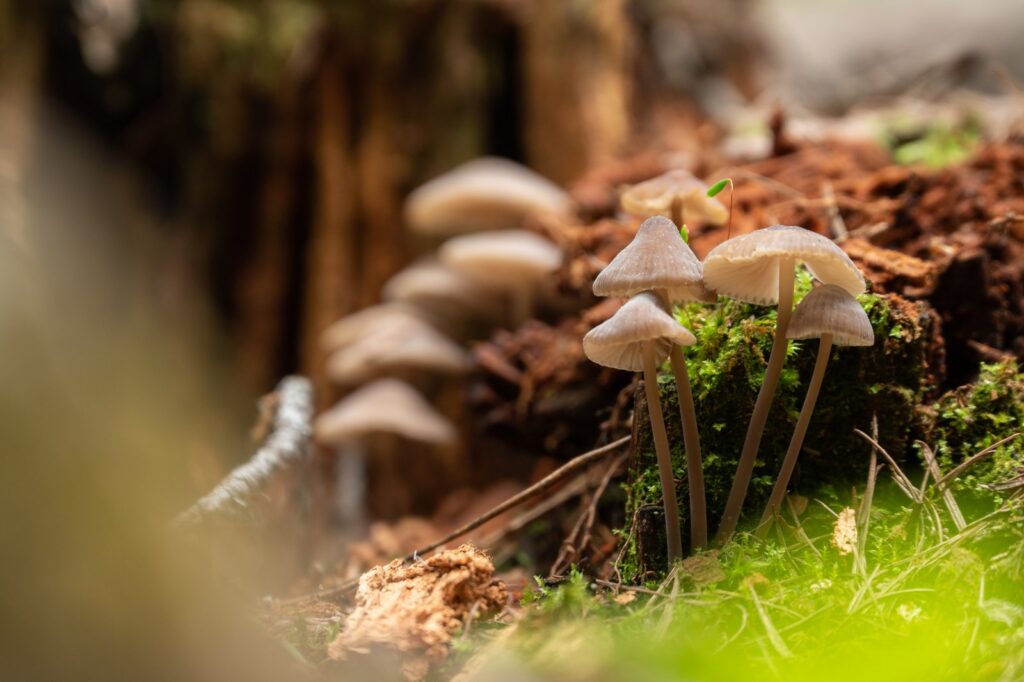
Scientists in Florida have found a tiny brown mushroom that makes both a classic psychedelic and one of nature’s most lethal poisons. The species, Galerina indica, was collected on moss-covered palm trunks in the state’s wetlands and has been nicknamed the “dark magic mushroom” for its unprecedented chemistry.
How It Works
Psilocybin, the compound that gives “magic mushrooms” their mind-altering effects, is a tryptamine alkaloid found in more than 200 fungal species. Amatoxins are a separate class of cyclic peptides responsible for the vast majority of fatal mushroom poisonings worldwide. Until now, these two pathways had only been documented in distantly related groups of fungi, never in a single organism.
Tests on the Florida specimens revealed the fungus produces psilocybin and its active metabolite psilocin alongside two amatoxin compounds. Intriguingly, one of those toxins, alpha-proamanitin, turned out to be entirely new to science. The paper, published in Current Biology, notes that the biosynthetic pathways for both psiloids and amatoxins co-occur in this one species.
The Science Behind the Combination
Researchers at the University of Florida believe the mushroom acquired its psychedelic-producing genes from unrelated fungi through horizontal gene transfer, a rare process where an organism borrows useful genetic material from another species. The evidence suggests this transfer happened after the mushroom’s ancestors had already evolved the ability to manufacture deadly toxins.
The discovery came as a surprise. The team, led by professor Matthew E. Smith of the UF/IFAS Department of Plant Pathology, had originally set out to search for little-known poisonous mushrooms in the southeastern United States. Undergraduate student Andrew Kunik spotted the unusual specimen at the Ordway Swisher Biological Station. It belonged to the genus Galerina, some species of which are known to contain amatoxins, but this one also stained blue when handled, a hallmark of psilocybin-containing mushrooms.
Toxicological Risks
The authors warn that the finding carries an important public health message. Many mushroom hunters assume that a blue-bruising reaction signals a psychedelic species rather than a deadly one. Galerina indica breaks that rule of thumb, producing both the blue stain and lethal amatoxins. Smith, who serves as Florida’s state mycologist, regularly consults with poison control centres, ER doctors and veterinarians on suspected mushroom poisonings, and the existence of a species that mimics the visual cues of a “magic mushroom” while packing fatal toxins complicates that work.
What This Means for Mycology
The co-occurrence of these pathways in a single genome raises new questions about why fungi produce these compounds and how their metabolic machinery evolves. The study demonstrates that the evolutionary boundaries between psychedelic and poisonous chemistries are more porous than previously thought, and that seemingly ordinary “little brown mushrooms” in local wetlands can hide extraordinary biochemistry.
Sources
- 'Dark magic mushrooms' contain deadly chemicals NEVER seen before
- Psilocybin
- Magic mushrooms rewire the brain in a way scientists didn't expect
- Update: Compass submits psilocybin depression drug for approval after stock wobbles
- Shrooms Could Be the First Classic Psychedelic the FDA Approves for Depression
- UF students discover the ‘dark magic mushroom’
Photo: GlacierNPS (Public domain)