On the northern flank of Mars’s Alba Mons volcano, fissures measuring around 330 feet are releasing a scientific puzzle: sharp pulses of hydrogen chloride where seasonal atmospheric chemistry does not easily explain them.
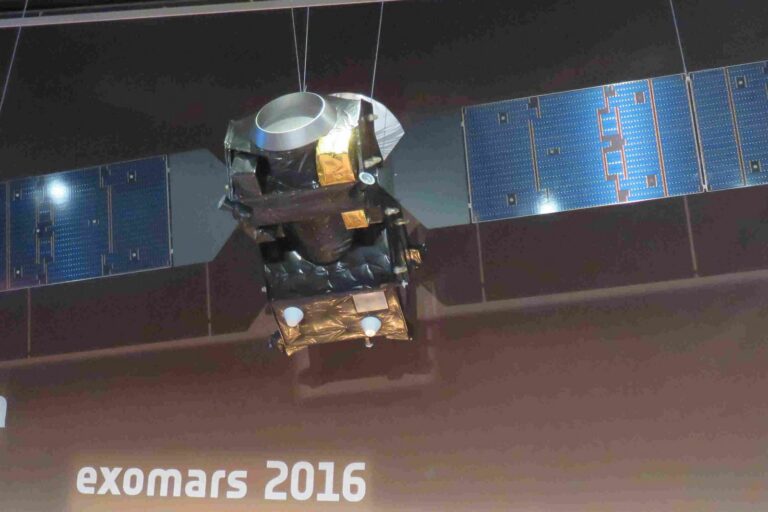
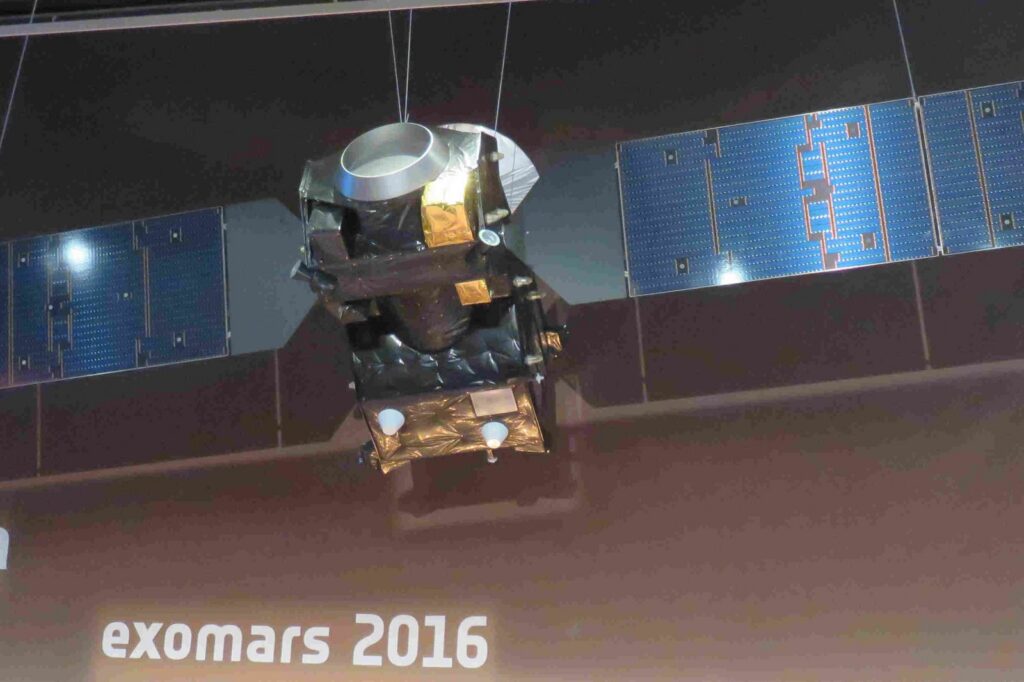
The European Space Agency’s ExoMars Trace Gas Orbiter recorded the gas low in the atmosphere. Researchers say its most likely source is volcanic seepage, possibly from magma beneath the surface. They are not claiming to have witnessed an eruption.
“We found that the most likely origin for the hydrogen chloride is volcanic seepage,” said Daniel Mège of the Polish Academy of Sciences and the University of Bern, co-lead author of the research published in Science Advances on Wednesday, Nov. 4.
Why this gas looks different
Hydrogen chloride is colorless, corrosive and pungent. On Earth, it appears in volcanic emissions when dissolved, chlorine-bearing compounds escape from rising magma as pressure falls. It can also form through other chemical reactions.
The orbiter first detected small quantities on Mars in 2021. Most of that gas was spread across the southern hemisphere during spring and summer. One proposed explanation involves ice vaporizing and releasing trapped hydrogen chloride, which later attaches to falling ice particles and returns to the surface.
The northern observations do not fit that cycle so neatly. Mars’s orbit places the southern summer closer to the Sun, producing a stronger vaporization-and-freezing cycle than the northern summer. The northern gas instead appeared as localized, distinct pulses.
Kevin Olsen, an atmospheric physicist at the University of Oxford and a study co-author, said the intriguing feature was their repeated location: Alba Mons’s northern flank. Targeted observations continued for two Mars years, roughly four Earth years.
Fissures, ice and buried heat
Alba Mons is a broad shield volcano roughly the area of the contiguous United States, making it Mars’s largest volcano by surface area. Orbital images show relatively young lava flows and the fissures examined by the team.
Those cracks may be associated with vertical sheets of magma. The researchers suspect ice blocks them during colder months, then early-summer thawing allows trapped gas to escape. The observed signal strengthens, diminishes and eventually falls below the spacecraft’s detection threshold.
Olsen cautioned that the precise source remains unresolved: “Is it just pockets of gas underground, or is there actually active magma?” Nor can scientists be certain that the gas emerges from these exact fissures. Reactions between hot water and metal chlorides offer another possible route.
NASA’s InSight lander has detected marsquakes consistent with fluid moving underground, but it found no convincing magmatic seismic signal from Alba Mons or the wider Tharsis volcanic province. Tracy Gregg, a planetary volcanologist at the University at Buffalo who was not involved in the study, noted that large, long-lived magma chambers would take considerable time to cool and solidify.
A possible refuge for microbes
Magma could heat or melt subsurface water, creating hydrothermal environments protected from the harsh Martian surface. Similar systems on Earth provide energy and chemical ingredients used by living organisms.
That does not make the gas evidence of life. Mège said suitable conditions would have to persist locally for at least millions of years for life to arise, and maintaining such stability is not obvious.
Mars’s atmosphere is 95% carbon dioxide, with surface pressure about 0.6% of Earth’s. Liquid water cannot persist on its surface under that low pressure, although water is known to be trapped underground. For researchers, the practical target is now specific: warm hydrothermal systems beneath Alba Mons, not an imminent volcanic eruption.
Sources
- Something Weird is Seeping Out of Mars
- Atmosphere of Mars
- If 1 Million People Lived on Mars | Part 1: Housing and Construction—On Mars, the Deeper the Room, the Higher the Rent|Beyondge未来研究所
- Mars may host an environment similar to hydrothermal vents on Earth, where life first arose
- Pungent gas above Martian fissures hints at ongoing volcanism – SRN News
Photo: Gerbil (CC BY-SA 4.0)