Natural disasters cost the world about $204 billion in the first nine months of 2026, according to Aon’s Global Catastrophe Recap. Data shows that is 31% below the long-term average of $296 billion since 2000 and 25% under the median of $271 billion. It is also the lowest January-to-September figure since 2015.
Quiet total, busy year
The total hides the pace of events. At least 42 disasters each caused more than $1 billion in losses, 16 of them in the third quarter. Five hit the United States and Asia, four struck Europe and at least two occurred in South America. The costliest of the quarter was the August 10 earthquake in Colombia. Aon noted that the quarter extended a stretch of moderate losses with no extraordinary global event.
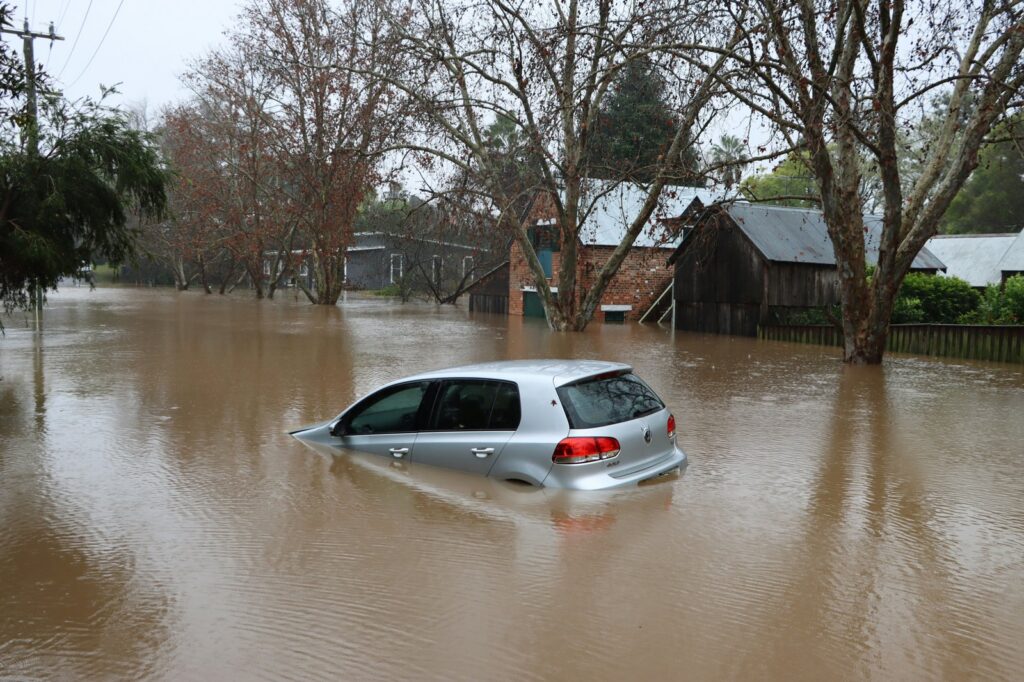
By region, losses in the United States and Asia-Pacific stayed below their long-term means, while Europe, the Middle East and Africa, and the Americas ran above. Earthquakes in Venezuela and Colombia, plus floods in Colombia and Chile, lifted the Americas. In Asia-Pacific the costliest events were seasonal flooding in China, Typhoon Sinlaku in the Northern Mariana Islands and bushfires in Victoria, Australia.
Storms and drought
Severe convective storms were again the costliest peril, at about $73 billion in economic losses, boosted in the third quarter by major outbreaks in the United States and Europe. 2026 already ranks among the five worst years for these storms. In the U.S., storms generated more than $43 billion in insured losses. Europe saw outbreaks in mid-July and late August.
Europe’s prolonged drought was the largest aggregated insured loss event through September, at more than $8.5 billion. It damaged farms and property, and France took the largest share, mostly from soil subsidence under buildings. The United Kingdom also reported subsidence losses.
What insurers paid
Insured losses reached an estimated $91 billion. That is slightly above the 21st-century average of $88 billion but well short of the five-year average of $135 billion. More than 60% occurred in the United States, where insured losses totaled $56 billion with almost no tropical cyclone contribution. No single event produced insured losses above $10 billion.
The protection gap, the share of economic losses not covered by insurance, stood at about 55%, against a historical average of 71%. Aon attributes the decline mainly to changes in what drives losses.
People and heat
Disasters killed at least 53,000 people, a little below the 21st-century average of 57,800. Extreme heat and earthquakes caused most deaths, including European heatwaves and the Venezuela quake. Sixteen countries recorded all-time high temperatures.
Aon says the figures are preliminary. Fourth quarters typically add about $50 billion in economic losses, with outliers of $102 billion in 2004 and $126 billion in 2012. Insured losses in the quarter average $16 billion, and with Hurricane Isaias in early October, Aon expects the 2026 insured total to pass $100 billion.
Sources
- Global Natural Catastrophe Losses in 2026: Economic and Insurance Trends by Regions
- Global natural disaster losses reach $204 bn in 2026, Aon reports
- Willis Towers Watson (WTW) Q3 2026 Earnings Call Transcript
Photo: Wes Warren / Unsplash (Unsplash License)