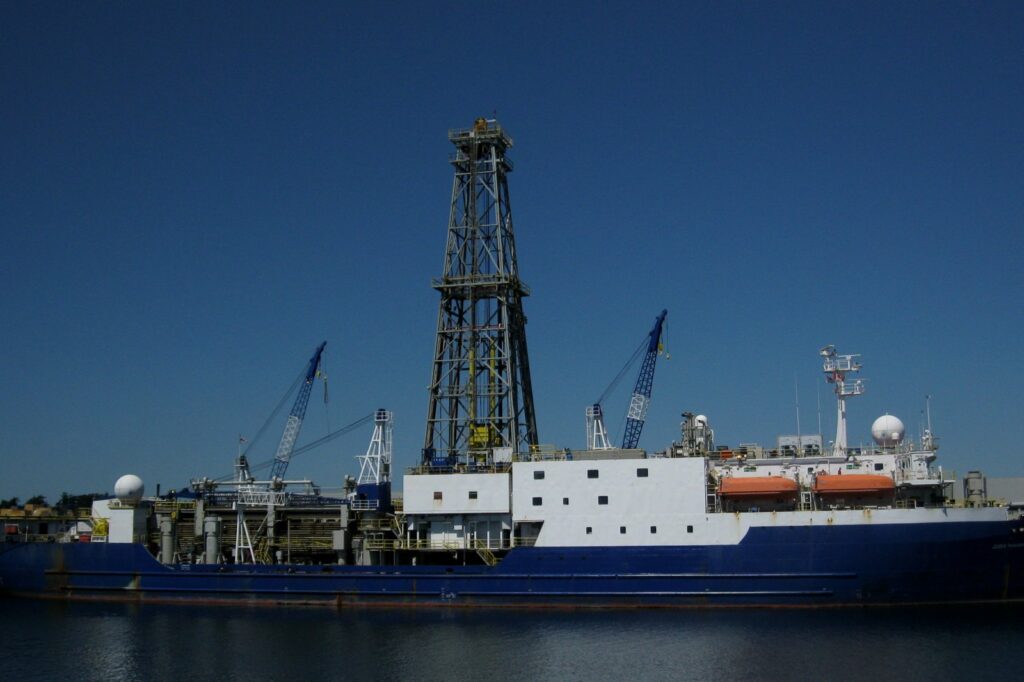
THOUSAND OAKS, November 26, 2026 — The U.S. government issued its first commercial deep-sea mining leases in federal waters off American Samoa last week, auctioning 31.5 million acres for $6 million despite a federal court ruling that regulators failed to assess risks to endangered whales, sea turtles and coral. The sale, held in Thousand Oaks, California, drew a single bidder and protests from American Samoan leaders who say their ocean is not for sale.
The Push for Critical Minerals
Demand for cobalt, copper, manganese and nickel — essential for batteries, smartphones, electric vehicles and renewable energy infrastructure — has revived interest in seabed mineral resources. An electric car alone requires five to ten kilograms of cobalt. Polymetallic nodules on abyssal plains contain these metals in concentrations that have drawn mining companies to the ocean floor. The Clarion-Clipperton Zone (CCZ), a stretch of Pacific seafloor between Hawaii and Mexico spanning roughly 1.7 million square miles, is estimated to hold more copper, cobalt, nickel and manganese than all known land deposits combined, according to the U.S. Congressional Research Service.
From Shallow Diamonds to Abyssal Plains
Underwater mining is not new. Viable operations have recovered diamonds off the west coast of southern Africa from shallow continental shelf depths. But the current drive targets deep-sea deposits: massive polymetallic sulfides around hydrothermal vents, cobalt-rich crusts on seamounts, and manganese nodules on abyssal plains. The technical and economic problems of extraction at depth have long prevented commercial operations. To date, no commercial deep-sea mining operations have begun anywhere in the world.
How Extraction Works
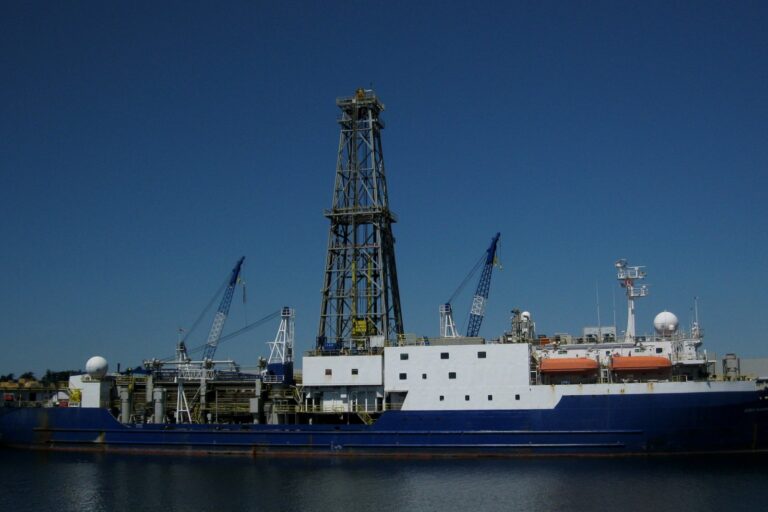
Companies plan to deploy robotic crawlers to gather nodules. In November 2026, a Chinese robotic vehicle named Kunpeng — after a mythical giant fish — crawled across the eastern Pacific abyssal plains at 5,330 metres depth during what state media described as China’s first large-scale deep-sea mining trial in international waters. The vehicle operated inside a 72,745-square-kilometre exploration block in the CCZ licensed to state-owned China Minmetals, collecting polymetallic nodules using an acoustic navigation system that achieved one-metre positioning accuracy. The submersibles spent approximately 197 hours underwater, supported by the Haiwei GD11000 winch system, reported as the only winch capable of reaching the ocean’s deepest point. The Metals Company, a Canadian-listed firm, is developing a similar business to collect nodules from the Pacific floor.
The Numbers: Leases, Valuations and Capital
The Marine Minerals Administration, established this year within the Department of Interior, offered two lease areas totalling 31.5 million acres (about 127,000 square kilometres) adjacent to the Rose Atoll Marine National Monument. Both leases were awarded to Wetstone U.S. Ventures for $3 million each, totalling $6 million. The leases permit preliminary mapping and environmental surveys; physical exploration, equipment testing and commercial mining each require separate federal approvals. The Metals Company reported a net loss of $28.4 million in its latest quarter with approximately $123 million available from cash and credit facilities, and a market valuation of $809.8 million. Its shares rose 12% to $1.84 on November 25 amid a broader mining rally, though the stock remains down 70% from levels six months ago. The U.S. ocean agency reviewing its application expects a certification decision by mid-December.
The Core Debate: Irreversible Habitat Loss
A federal judge ruled three days before the lease sale that regulators failed to fully assess risks to protected marine life, including endangered blue, fin, sei and sperm whales, five sea turtle populations and five threatened coral species. At their closest point, the U.S. lease areas lie about three miles (five kilometres) from Rose Atoll, one of the most pristine coral atoll ecosystems in the world and a nesting habitat for endangered hawksbill sea turtles. “Once mining strips away habitat that took millions of years to form, no amount of money can bring it back,” said Arlo Hemphill, U.S. project lead against deep-sea mining for Greenpeace USA. Sabrina Suluai-Mahuka, founder of Finafinau, American Samoa’s youth and environment nonprofit, said: “This is not just seabed on a map. This is our home, our livelihoods, our identity, and our responsibility to protect. Ocean rights are human rights, and our home is not for sale.” A council of Samoan chiefs (matai) and community groups, represented by Earthjustice, has sued to contest federal authority to lease the seabed under the Outer Continental Shelf Lands Act and historic treaties. Finafinau and the Natural Resources Defense Council filed a separate lawsuit on November 18 asking the court to strike down the leases.
Sources
- Seabed mining
- Trump Administration Awards First-Ever Deep-Sea Mining Exploration Leases – Inside Climate News
- US issues first deep sea mining leases off American Samoa – Oceanographic
- Seabed Sand Mining Generates Over RM53.38 Mln As Of October
- Beijing's deep dive: Inside China's race for the ocean’s mineral wealth
- The Metals Company Jumps 12% With Mining Shares
Photo: John Newcomb (CC BY 3.0)