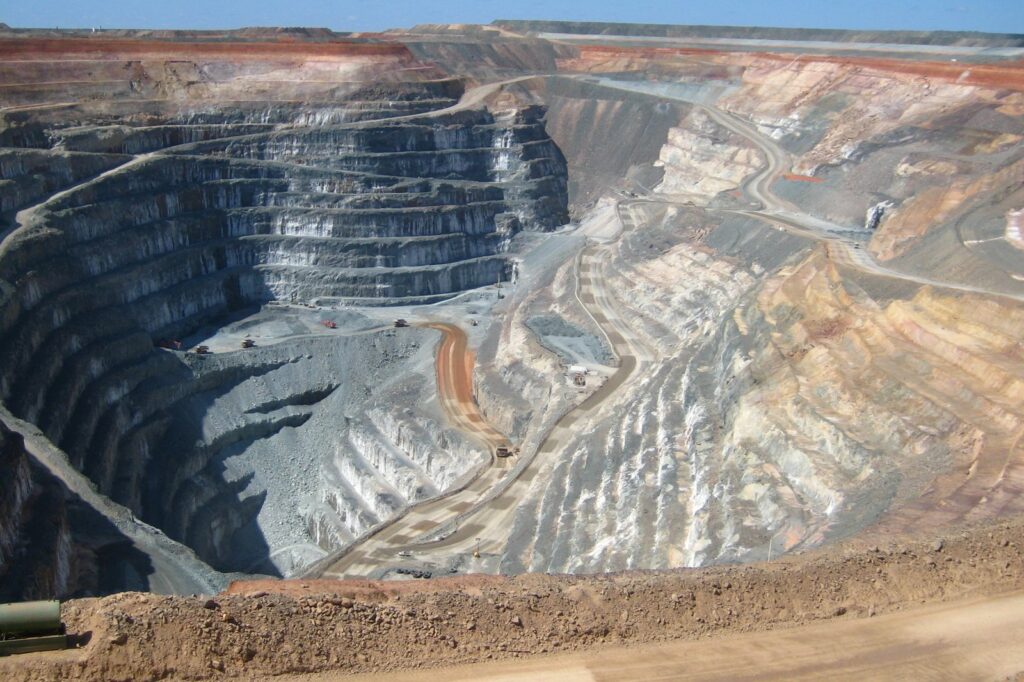
MAYAYA, November 3, 2026 — In less than a decade, private Chinese mining companies have turned this once-remote Bolivian Amazon town into a hub of gold speculation, with about 20 open-pit mines and 12 dredge boats now worked by roughly 2,000 Bolivian and 200 Chinese laborers, The Guardian reported. Record gold prices are driving deforestation and violent conflict across the basin, and the boom in Mayaya shows how quickly a quiet settlement can be remade around a single commodity.
A Town Built on Gold
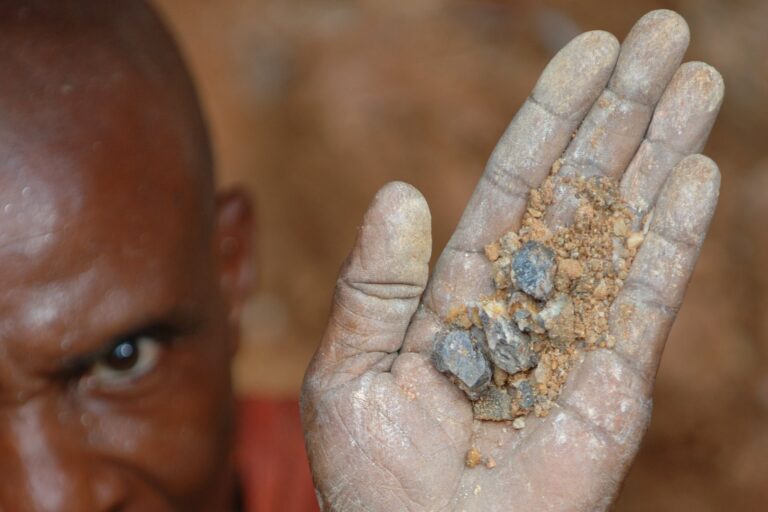
The main street now carries mining equipment stores, hotels and Chinese restaurants. Chinese gold miners first arrived in Mayaya in 2005, but the major wave of immigration came in 2017, after a change in China’s national policy, according to The Guardian. The men who run the operations gather most nights in a small restaurant to eat, drink and play mahjong, debating the afternoon’s games over high-end Chinese cigarettes and Bolivian beer. Almost every conversation revolves around money.
“We developed this town,” Zhang Changchun, a middle-aged miner from China’s Heilongjiang province, told The Guardian between gulps of beer and bites of pork. “Without the Chinese, there would be no Mayaya today.”
How the Operation Works
The Chinese presence in Mayaya is private and small-scale, not a state project. The miners at Zhang’s table play distinct roles: some are investors or miners, others import supplies and equipment. Together they run most of the town’s mining operations, according to The Guardian.
Much of that activity sits outside Bolivian law. A 2014 national law limits mining rights to cooperatives and independent miners, state-controlled firms, and domestic and foreign private companies. Foreign firms must have a registered Bolivian office and operate in their own name. The state permits joint ventures, leases and risk-sharing agreements between foreign and national firms, but only through public-private contracts in which the state is a shareholder. Chinese mining firms operating outside this framework act unlawfully, and under a 2016 law cooperatives risk expropriation if they contract, lease or share mining-concession risks with foreign firms, The Guardian reported.
The Scale of the Boom
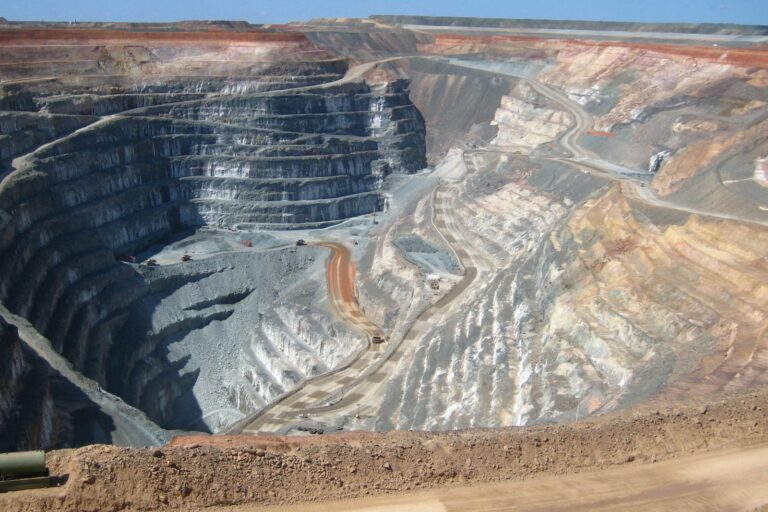
The numbers in Mayaya are modest beside the industrial mines of Peru or Chile, but they are concentrated in a place that had little before. About 20 open-pit mines and 12 dredge boats employ roughly 2,200 people, the overwhelming majority of them Bolivian. The town’s economy has reoriented around gold speculation, with equipment dealers and hospitality following the miners.
The stakes are set globally. As record gold prices drive Amazonian deforestation and violent conflict, these small private operations are tightening China’s grip on the world’s gold reserves, The Guardian reported. The Bolivian Amazon has long attracted foreign capital, from rubber and timber to North American mining companies in the 1950s, but Chinese mining now defines a new era of extraction, with a global network of goods, machinery and labor that often thrives illegally under Bolivian law.
The Environmental Cost
The Amazon basin holds about 6 million square kilometers of rainforest across nine countries, with 60% of the forest in Brazil and smaller amounts in Bolivia, Peru, Colombia and elsewhere. More than 30 million people of 350 ethnic groups live there, including 3,344 formally acknowledged indigenous territories; indigenous peoples make up 9% of the population, and 60 groups remain largely isolated.
Large-scale deforestation is occurring across the forest, creating different harmful effects. Economic losses due to deforestation in Brazil could be approximately seven times higher than the cost of all commodities produced through deforestation, and the damage to agriculture can be severe enough to lead to what researchers call “agro-suicide,” according to the World Bank report cited in background material on the rainforest.
Gold mining adds a specific hazard. According to the Amazon Underworld mapping project, gold has overtaken cocaine as the Amazon’s most lucrative criminal industry, and that shift “has accelerated environmental destruction through deforestation and mercury contamination,” report author Bram Ebus told Mongabay. Mercury is used to separate gold from ore and can persist in rivers and soils long after a pit is abandoned.
Violence and Displacement
The criminal footprint around Amazon mining is broad. Amazon Underworld found criminal networks or armed groups operating in 768 of 1,310 municipalities examined across Bolivia, Brazil, Colombia, Ecuador, Peru and Venezuela, or 59%. Colombia had the highest proportion at 98%, followed by Venezuela at 82%, Brazil and Ecuador at 59% each, Peru at 34% and Bolivia at 31%.
About 78% of Bolivia’s rural population, nearly 10 million people, “live under the influence of at least” one non-state armed group, according to Humanitarian Action. The report also identifies increasingly interconnected operations crossing borders, such as Brazil’s Comando Vermelho, now present in almost 500 municipalities including in Bolivia and Peru.
“One of our main concerns is how organized crime instrumentalizes local communities,” Ebus told Mongabay. “Groups extort them. They also use them, often under coercion, as human shields to protect illicit economies and obstruct state interventions. This leaves communities exposed to violent repression by state forces as well.”
Rival groups battling for territorial control have “driven up violence, as groups compete for access to mining areas and kill those who oppose them, including Indigenous community defenders,” Ebus said. Locals who work in illicit economies such as gold mining, coca leaf picking or recruitment into armed groups can make far more money than from traditional legal economies, the report notes.
China’s Expanding Reach
The Mayaya case fits a wider pattern in which Chinese capital moves into frontier mining regions faster than local regulation can follow. The 2014 and 2016 Bolivian laws were written to channel foreign involvement through registered offices and state-shareholder contracts, but enforcement in a remote Amazonian municipality is another matter. The Guardian found operations that often thrive illegally under Bolivian law, with imported Chinese supplies and equipment running most of the town’s mines.
The report from Amazon Underworld warns that a regional shift toward right-wing governments has brought militarized crackdowns on cartels, but that approach fails to address the systemic economic and political roots of organized crime. “Unless the social drivers of crime are addressed, that approach offers no guarantee of success,” Ebus said. “People already feel abandoned by the state, and bombing the criminal groups that provide their livelihoods will only deepen that sense.”
He argued for targeting the financial flows behind illicit economies, investing in a more permanent state presence and pairing law enforcement with investment in development and education. The report also warns such interventions can push criminal groups into new territories, undermine community trust and leave corruption and illicit financial networks intact.
For now, the mahjong table in Mayaya keeps filling. Zhang, for one, is settled. “Bolivia is my happy place,” he told The Guardian.
Sources
- Chinese cigarettes and Bolivian beer: the Amazonian town transformed by a rampant mining boom
- Amazon rainforest
- Commodities Up as U.S. Dollar Declines – Commodities Roundup
- In 1907, gold and silver turned Rawhide, Nevada, into a town of 7,000; by 1910, only 500 remained after stock fraud, a major fire, and a flood wrecked the boom
- Washington's Ruby City once thrived with 1,000 residents during a silver rush
- New report maps widespread criminal presence across six Amazonian countries
Photo: Calistemon (CC BY-SA 4.0)