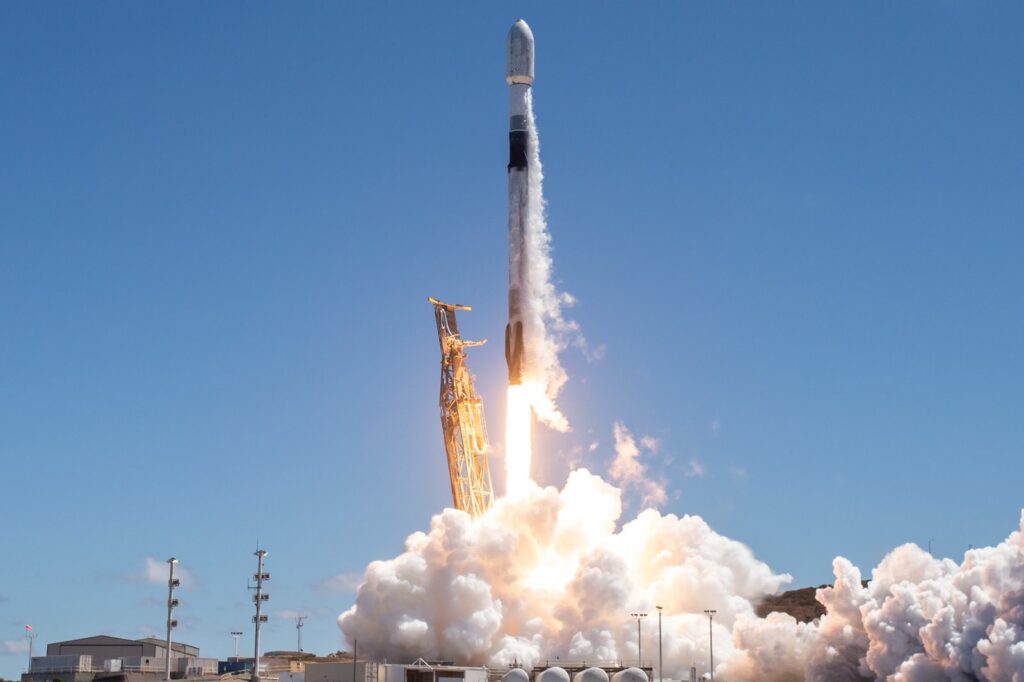
LOMPOC, November 22, 2026 — A Falcon 9 rocket is set to lift off from Vandenberg Space Force Base before dawn on Sunday, carrying a classified National Reconnaissance Office payload and returning its first stage to a landing zone on the base itself. The mission, NROL-136, highlights why this stretch of California coast has become a workhorse for reusable-rocket operations.
Geographic Advantages of a West-Coast Launch Site
Vandenberg sits on the central coast of California, in Santa Barbara County, and operates the Western Range for launches that fly east to west over the Pacific Ocean. That trajectory puts the rocket over open water almost immediately after liftoff, giving boosters a vast, unpopulated corridor for descent and recovery. The base’s remote coastal setting minimizes overflight of populated areas, which reduces both regulatory hurdles and public-safety concerns for booster returns.
Because the Pacific downrange is largely empty, SpaceX can route its Falcon 9 first stages either to the drone ship “Of Course I Still Love You” stationed offshore or back to Landing Zone 4 on the South Base. Landing Zone 4 sits west of Space Launch Complex-4, allowing land-based recoveries within minutes of booster separation. The drone ship, meanwhile, provides a mobile platform for missions that need more downrange performance.
Regulatory and Safety Framework for Ocean Recoveries
The U.S. Space Force’s Space Launch Delta 30 manages the Western Range, providing streamlined coordination for commercial and military launches alike. This single authority handles range safety, scheduling, and airspace deconfliction, which simplifies the approval process for booster-return profiles that might be more complicated at busier ranges. The base’s existing infrastructure — dedicated launch pads, recovery zones, and range instrumentation — supports a high launch cadence for national-security missions without the congestion seen at some East Coast sites.
How SpaceX Conducts Booster-Return Tests at Vandenberg
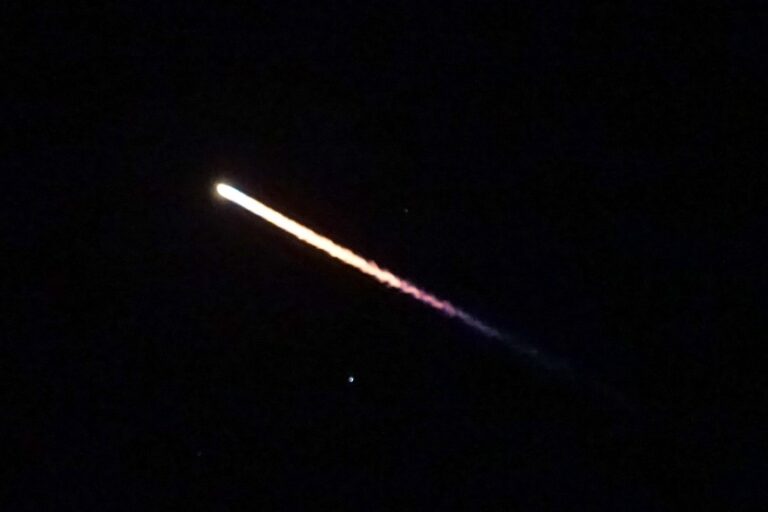
On November 20, the USSF-317 mission demonstrated the routine nature of these recoveries. The Falcon 9 lifted off from Space Launch Complex 4 East at 8:20 p.m. Pacific time, and its first stage touched down on the drone ship 8.5 minutes later. That booster, designated B1100, was making its 11th flight, having previously launched the USSF-385 mission among others. SpaceX ended its webcast shortly after touchdown, a standard practice for classified payloads.
For the NROL-136 mission scheduled early Sunday, the booster — flying for the 14th time — will target Landing Zone 4 instead. Base officials note that a pronounced sonic boom will be audible near Vandenberg 8 to 10 minutes after liftoff as the stage returns. Residents in Santa Barbara, San Luis Obispo, and Ventura counties may also hear sonic booms during ascent, depending on weather. A live webcast is set to begin about 10 minutes before the 4:16 a.m. to 4:46 a.m. PT launch window.
Numbers: Flight Paths, Landing Zones and Launch Cadence
In 2025 the Falcon 9 flew 165 times, and Vandenberg continues to host multiple classified and NRO missions each year. The USSF-317 launch was the 121st Falcon 9 flight of 2026 and the third Space Force mission SpaceX flew in November alone. SpaceX plans additional Falcon liftoffs from Vandenberg for U.S. Space Force payloads on November 24 and late November 27 or early November 28, illustrating the sustained tempo the base can support.
Both recovery modes — drone ship and land zone — operate within the same Pacific-adjacent safety corridor. The choice depends on mission performance margins: heavier payloads or higher orbits often require the downrange drone ship, while lighter loads allow the boost-back burn needed for a return to Landing Zone 4.
Implications for Future Reusable-Rocket Operations
The same geographic and regulatory advantages that make Vandenberg effective for Falcon 9 recoveries will apply to larger vehicles. Future reusable-rocket plans, such as Starship, will also benefit from the base’s ocean-downrange capability for large-scale recoveries. The combination of a clear flight path over water, dedicated landing infrastructure, and a single range authority positions Vandenberg as a reliable venue for the next generation of reusable launch systems.
Sources
- Vandenberg Space Force Base
- Sentinel Stage Processing Facility Ribbon Cutting Ceremony at Vandenberg Space Force Base
- SpaceX launches classified mission for US Space Force from California (video)
- SpaceX Launches Classified USSF-317 Payload to Expand U.S. Space Force Satellite Network
- SpaceX to launch NROL-136 mission from Vandenberg
- Vandenberg’s Next Mission: SpaceX Rocket Launch, Landing with Sonic Boom Sunday
Photo: NASA's Scientific Visualization Studio – SpaceX (CC0)