Philippines President Ferdinand Marcos Jr. confirmed on Nov. 20, 2026, that his government is in early-stage talks with SpaceX about hosting a commercial rocket launch site, though no agreement, site selection, or investment commitment has been announced.
Geographic Drivers: Equatorial Latitude and Pacific Downrange
Marcos cited the country’s position on the western edge of the Pacific as a natural advantage. Rockets generally launch eastward to harness Earth’s rotation, and a trajectory from the Philippines would place more of the downrange path over open ocean, reducing exposure to densely populated land areas in the event of a failure. Intriguingly, equatorial launch sites provide a velocity boost from the planet’s spin, reducing the fuel needed to reach equatorial and geostationary orbits. Marcos said Philippine satellites could be sent into orbit more cheaply and easily if launches occurred domestically, though those savings depend on a facility actually getting built and operating at meaningful scale.
Regulatory and Safety Hurdles
Geography alone does not establish a viable spaceport. Any project would still require technical feasibility studies, environmental assessments, airspace and maritime safety coordination, and regulatory approvals. Marcos drew a clear line between this commercial venture and government-led exploration programs, stating the goal is a commercial launch-site venture, not an effort to replicate NASA or pursue crewed missions to the Moon or Mars. Under this approach, the Philippines would seek to attract foreign launch operators and build supporting commercial capabilities around them.
Infrastructure Requirements
Substantial infrastructure investment would be needed for transport, power, communications, and workforce development before a rocket leaves the ground. The Philippine Space Agency’s plans and earlier site discussions provide context, but neither amounts to a confirmed SpaceX agreement.
Strategic Fit With Starship Operations and Starlink Deployment
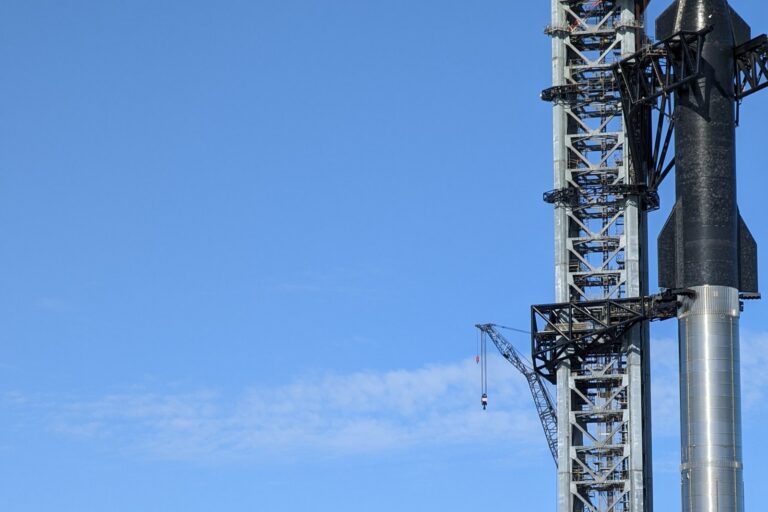
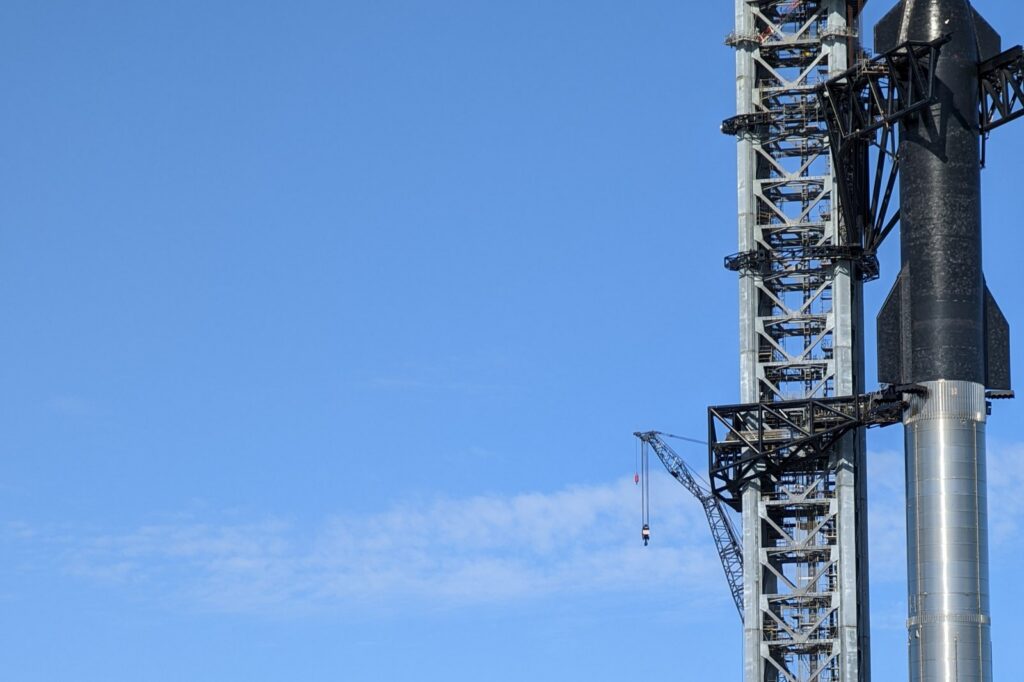
SpaceX operates three primary segments: Space, which develops and flies Falcon 9, Falcon Heavy, and Starship; Connectivity, which operates the Starlink satellite constellation; and AI, conducted through its subsidiary SpaceX Super Intelligence. The company conducts more orbital launches annually than any other provider, including national programs. Starship is a 124-meter fully reusable vehicle designed for Moon, Mars, and high-volume satellite deployment. Its Starbase facility in Boca Chica, Texas, features a “Mechazilla” tower with chopstick arms for catching returning boosters and ships, a capability demonstrated for the first time on the upper stage during Flight 15 in November 2026. SpaceX’s largest customers include NASA, the National Reconnaissance Office, Axiom Space, SES, Eutelsat, and OneWeb. An equatorial site could complement Starship’s high-volume Starlink deployment, particularly for equatorial orbits, while the Pacific downrange aligns with the safety profile required for the vehicle’s scale.
Comparative Context: Existing and Planned SpaceX Launch Sites
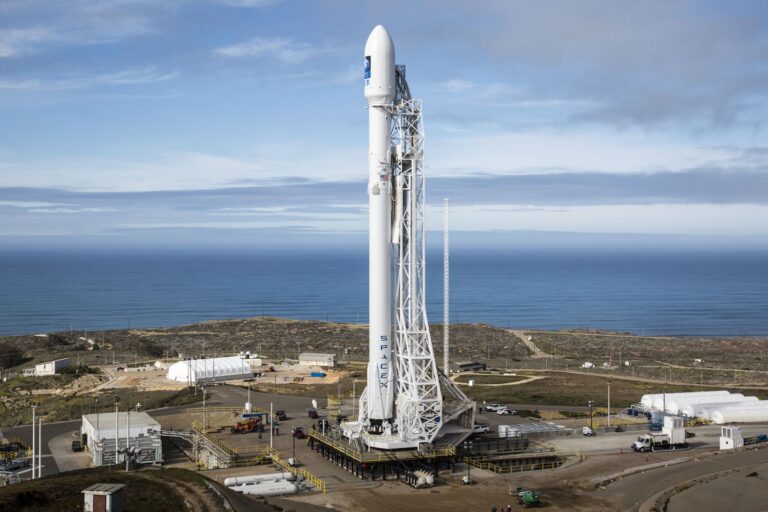
SpaceX currently launches from Cape Canaveral and Kennedy Space Center in Florida, Vandenberg Space Force Base in California, and Starbase in Texas. The company expects to begin launching Starships from Kennedy Space Center within the next few months, which serves as the starting point for NASA’s Artemis missions. A Philippine site would represent SpaceX’s first equatorial launch facility, distinct from its existing U.S. sites at higher latitudes, and would expand the company’s geographic flexibility for specific orbital inclinations and downrange safety corridors.
Next Steps: Feasibility Studies and Government Agreements
The talks remain at an early stage. No public SpaceX commitment has been identified in available reporting. The path forward hinges on technical feasibility studies, environmental assessments, airspace and maritime safety coordination, regulatory approvals, and the substantial infrastructure investment required to support launch operations. Elon Musk beneficially owns 48.4% of SpaceX Class A common stock as of August 2026.
Sources
- Philippines in Early SpaceX Launch-Site Talks, Marcos Says
- SpaceX
- SpaceX successfully catches Starship and makes history
- Elon Musk’s SpaceX catches Starship rocket upper stage from space
- 'Now everything changes': SpaceX catches Starship upper stage for 1st time ever (video)
- Elon Musk's SpaceX faces funding threat over Ukraine satellite dispute
Photo: Hotel Pika (CC BY-SA 2.0)