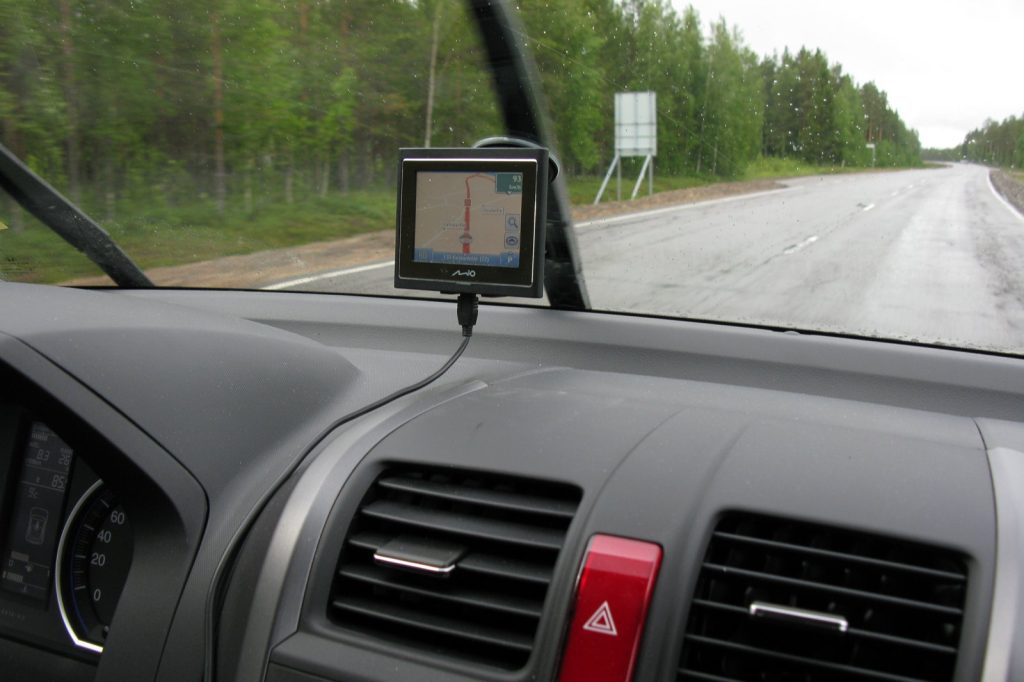
The signal that now guides families across the region, the phone in a jeepney driver’s cupholder, the ship threading a crowded harbour, even the timestamp on a cash machine withdrawal, began life as a military secret, and for its first two decades it was deliberately blurred for anyone outside uniform. The Global Positioning System is one of the quietest gifts the Cold War ever gave civilian life, and the road from classified weapon to household companion runs through tragedy, a war-time shortage and one decisive order in May 2000.
Before satellites, navigators leaned on ground-based radio systems such as LORAN and Decca, built around the Second World War, which worked until a hill, a skyline or bad weather got between receiver and station. The opening came in October 1957, when the Soviet Union lofted Sputnik, and scientists at the Massachusetts Institute of Technology, listening to its beeps, noticed the frequency rising as the satellite approached and falling as it receded, the Doppler effect in action. Reasoning that a satellite with a known position could work the trick in reverse, the US Navy had its Transit system in orbit by 1959, handing ballistic-missile submarines a fix every few hours, though only good to about 25 metres, roughly 82 feet. Better followed: an Aerospace Corp. proposal in 1963 for locating fast-moving vehicles, the Naval Research Laboratory’s TIMATION program and the Air Force’s Project 621B, until Pentagon leaders decided in 1973 that the services should stop building rival systems and fuse them into one. Col. Bradford Parkinson, running the NAVSTAR/GPS Joint Program Office, “assembled about a dozen members of the JPO over Labor Day weekend in 1973 and directed them to synthesize the design for a new satellite navigation system”, in the words of Air Force historian Rick W. Sturdevant. The result, in 1974, was NAVSTAR, “the first satellite navigation system that enabled users to determine precisely their location in three dimensions and time within billionths of a second”. A GPS prototype reached orbit in 1978.
Even so, the military never intended to keep the system entirely to itself. From the very start “the Department of Defense (DOD) recognized the usefulness of GPS to the worldwide civilian community”, as Sturdevant put it, yet the fine print favored the armed forces: a feature called “selective availability” gave the US military and approved allies a stronger, sharper signal than any commercial receiver could see. Desert Storm in 1991 was the system’s first heavy combat use, with a thin constellation of 19 satellites of mixed generations offering barely 19 to 20 hours of three-dimensional coverage a day; “Precision navigation and timing, GPS. That was the dawn of criticality of GPS to military operations,” said Maj. Gen. Paul T. Johnson, decorated with the Air Force Cross for his Desert Storm service. Short of dedicated military receivers, the Pentagon let troops press civilian units into service and temporarily eased the scrambling so the devices actually worked. Initial operational capability arrived in December 1993, and full capability on April 27, 1995, with 24 Block II and IIA satellites flying.
Civilians had been promised better far earlier, and the promise was born in grief. In 1983, Korean Air Lines Flight 007 wandered into Soviet airspace and was shot down with everyone aboard lost, and afterwards “President Ronald Reagan reassured the world that the coarser signal would remain continually and universally available at no cost once GPS became fully operational”. Available, but blurred: the civilian signal was degraded to around 100 metres, enough for a neighbourhood, not for a doorway. What it means for people arrived on 1 May 2000, when President Bill Clinton ordered the scrambling switched off, and overnight civilian accuracy jumped roughly tenfold, from roughly 100 metres down to about 20. The reasons were practical: private differential-correction services had already found workarounds, and the military had learned to jam the signal regionally without spoiling it worldwide. In 2007, President George W. Bush went further, agreeing to drop the option of ever reinstating selective availability in the GPS III requirements.
For communities, the mechanics underneath are simple enough to explain at a kitchen table. GPS does not use triangulation and angles; it uses trilateration, pure distance measurement. Each satellite broadcasts its position and the exact time it sent the signal; the receiver works out how long the signal took, converts that to a distance, and four of those distance spheres intersect at one point, yours. And GPS is no longer alone: Russia’s GLONASS, Europe’s Galileo, China’s BeiDou, India’s NavIC and Japan’s QZSS now fly alongside it, and a receiver reading several constellations at once gets a quicker first fix and steadier performance in steep gorges or thick bush, which is why serious trackers and personal locator beacons, the kind farmers, fishing crews and delivery fleets across Asia rely on, advertise which systems they combine.
Closer to home, the upgrade path continues. A GPS III program approved in 2000, with Lockheed Martin winning the satellite contract in 2008 and the first batch reaching orbit in 2018, promises signals three times more accurate than the older spacecraft, eight times better anti-jamming for military users and stronger worldwide connectivity for everyone else, even as adversaries’ jamming experiments push the Air Force to rehearse days without space. A system built to aim weapons now times bank withdrawals, steers tractors and tells a fishing boat where home is. The beeping Soviet satellite that started it all never meant to help anyone; the families who benefit number in the billions all the same.