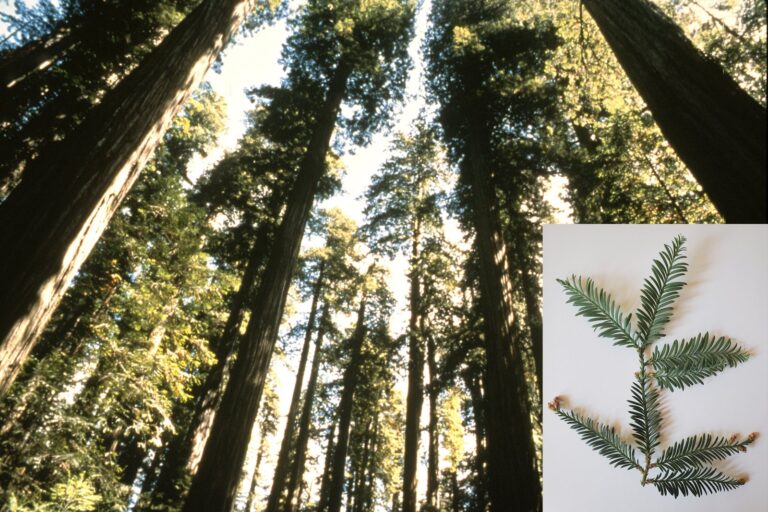
A study published in the Journal of Geophysical Research: Biogeosciences reveals that coast redwoods effectively shut down their primary energy production during extreme heat, a physiological response that threatens the stability of one of the planet’s most significant carbon stores. The research, led by ecologist Lily Klinek at the University of California, Davis, indicates that these ancient giants are closing the pores on their needles to conserve water, a survival mechanism that simultaneously blocks the intake of carbon dioxide required for photosynthesis.
The findings carry significant implications for global carbon accounting and the long-term health of old-growth forests. As climate patterns shift, the narrow coastal band where these trees survive is experiencing hotter temperatures and less fog, creating a perfect storm for physiological stress. If the trees cannot photosynthesize, they cannot grow, repair tissue, or sequester carbon, potentially turning a major carbon sink into a vulnerable ecosystem component.
The Mechanics of Heat Stress
Photosynthesis is the engine that drives the growth of all plants, converting sunlight, water, and carbon dioxide into oxygen and sugars. For coast redwoods, this process is not merely about survival; it is the mechanism by which they build their massive trunks and store carbon in their tissues for decades or even centuries. The new study provides a detailed look at how this process fails under thermal pressure. Researchers measured individual leaves, or needles, in the field to track how the trees responded to specific weather events.
The data shows a stark difference in temperature between the tree and its environment during heat spikes. During bouts of extreme heat, the redwood needles were up to 18 degrees Fahrenheit hotter than the surrounding air. This temperature gap is not a trivial anomaly. Klinek noted that such a difference indicates the leaves are stressed to the point where they can no longer thermoregulate effectively. The trees are losing their ability to manage their internal temperature, a critical function for any large organism exposed to environmental extremes.
The physiological response to this heat is the closure of stomata. These are small, pore-like openings on the surface of the leaves that regulate gas exchange. Under normal conditions, stomata open to allow carbon dioxide in for photosynthesis and release water vapor, a process that cools the leaf. However, when moisture becomes scarce or heat becomes intense, the tree prioritizes water retention. The team suspects that the stomata closed at least partially to prevent the tree from drying out. While this saves water, it creates a metabolic bottleneck. With the pores closed, the carbon dioxide required for photosynthesis cannot enter the leaf. The tree essentially stops making its own food to avoid dehydrating, a trade-off that has severe consequences for long-term growth and carbon storage.
Field Data from Garcia River Forest
To capture this dynamic, the research team conducted a multi-year study in Garcia River Forest, located in Mendocino County, California. This site was chosen for its proximity to the southern part of the coast redwood’s range, a region that is particularly sensitive to climate shifts. The study spanned from July 2022 to October 2024, a period that included two distinct heat waves. This timeframe allowed the researchers to observe the trees’ responses across multiple seasons and varying weather conditions, providing a robust dataset on the impact of thermal stress.
The methodology involved taking measurements for individual leaves once or twice a month. This frequency was sufficient to capture the rapid changes in leaf temperature and gas exchange rates during heat events. The results confirmed that the physiological shutdown is not a rare occurrence but a predictable response to the current climate trajectory. In recent years, the region has been getting hotter, and the fog that historically protected these trees has been dwindling. This loss of fog is a critical factor, as it removes the natural cooling mechanism that has allowed these trees to thrive for millennia.
The study highlights a specific vulnerability in the lower canopies of younger coast redwoods. Klinek and her colleagues collected samples from these areas to measure the impact of heat on photosynthesis more directly. Younger trees, which are still establishing their root systems and canopy structures, may be more susceptible to these stressors than the massive, old-growth individuals. However, the physiological mechanism of stomatal closure applies across the species. The inability to maintain photosynthetic rates during heat waves means that the trees are not just surviving; they are actively pausing their growth and carbon uptake. This pause, if it becomes more frequent and prolonged, could have cascading effects on the forest’s overall health and its capacity to store carbon.
The Role of Summer Fog
Coast redwoods are adapted to a cool, moist climate, a niche that is defined by the thick summer fog that blankets their canopies during the dry season. This fog is not merely a weather phenomenon; it is a vital resource for the trees. It provides moisture directly to the needles and helps regulate temperature by reducing the intensity of solar radiation. The fog acts as a natural air conditioning system, keeping the leaves cool and hydrated even when the air temperature rises. Without this fog, the trees are exposed to higher temperatures and lower humidity, conditions that trigger the stress responses observed in the study.
The decline of this fog is a direct consequence of changing climate patterns. As the region gets hotter, the conditions that generate and sustain the fog are becoming less reliable. This shift is altering the fundamental habitat of the coast redwood. The trees are no longer operating within the climatic envelope they evolved to occupy. The study suggests that the loss of fog is a key driver of the thermal stress that leads to stomatal closure. As the fog dwindle, the trees are forced to rely more heavily on their own physiological mechanisms for thermoregulation, mechanisms that are clearly struggling to keep pace with the rate of change.
This dependency on fog makes the coast redwood particularly vulnerable in a warming world. Other tree species may have different adaptations, but the coast redwood’s entire ecological strategy is built around the presence of this moisture source. The research underscores the importance of preserving the specific microclimates that support these ecosystems. It is not enough to focus solely on global temperature averages; the local conditions, such as fog frequency and intensity, are critical to the survival of these unique species. The data from Garcia River Forest provides a clear example of how local climate changes can have profound impacts on global carbon sinks.
Implications for Carbon Sinks and Forest Health
Coast redwoods are among the most important carbon sinks on Earth. Their large size, thick bark, and long life spans allow them to store carbon in their tissues for centuries. This stored carbon is kept out of the atmosphere, helping to mitigate climate change. However, the study suggests that this capacity is under threat. If the trees cannot photosynthesize during heat waves, they cannot continue to sequester carbon. More importantly, if the stress leads to mortality, the carbon stored in the trees could be released back into the atmosphere, turning a sink into a source.
The threat to these trees is not isolated to a single species. The sequoioideae subfamily, which includes the largest and tallest trees in the world, is facing multiple pressures. In addition to climate change, these trees are threatened by logging, fire suppression, and burl poaching. The combination of these factors creates a complex challenge for conservation efforts. The study adds a new dimension to this challenge by highlighting the physiological limits of the trees in a warming climate. It is not just about protecting the trees from human activities; it is about ensuring that the climate conditions remain within the range that allows them to function.
The world’s tallest living tree, Hyperion, a coast redwood in California’s Redwood National Park, stands as a symbol of these challenges. Discovered in 2006 and estimated to be about 600 years old, Hyperion is roughly 380 feet tall. It has been off-limits to visitors since 2022 to protect the delicate forest ecosystem. The protection of such iconic individuals is important, but the study emphasizes the need to protect the broader ecosystem. The health of the old-growth forests depends on the ability of the trees to maintain their physiological functions. As the climate continues to warm, the frequency and intensity of heat waves are likely to increase, putting further strain on these ancient giants. The findings from this study serve as a warning that the long-term health of these forests is at risk, and that action is needed to preserve the climatic conditions that support them.
Sources
- The World's Tallest Trees Seem to Struggle to Make Their Own Food During Heat Waves, Leaving Them Vulnerable as the World Warms
- Sequoioideae
- California elementary schools from one ultra-posh enclave dominate new rankings
Photo: www.nps.gov (Public domain (government work))