Four dated Falcon 9 missions anchor SpaceX’s November calendar, but the month’s most ambitious event has no confirmed date at all. Starship Flight 15 remains dependent on an official launch window, regulatory approval and readiness at Starbase.
The distinction matters throughout the schedule: even the dated launches are targets rather than guarantees, and trackers disagree about some times.
Four Falcon 9 targets
The government mission USSF-432 is listed first from Vandenberg Space Force Base in California. RocketLaunch.org gives Nov. 3 at 1:42 AM UTC and marks it confirmed, while Orbital Radar lists 01:28 UTC on Nov. 4. That discrepancy makes checking the launch-day status essential.
Starlink 15-21 follows in the listings at 2:21 AM UTC on Nov. 6 from Space Launch Complex 4E at Vandenberg. RocketLaunch.Live tags booster B1103 for the mission but does not state a satellite count.
Another military mission labelled R-5 and listed as USSF-xxx targets 3:03 AM UTC on Nov. 10. Neither schedule tracker published payload details, and its date remains subject to change.
Cygnus CRS-2 NG-25 stands alone among the listed Florida Falcon 9 missions, carrying cargo to the space station. It is tentatively scheduled for 4:00 PM UTC on Nov. 29 from Cape Canaveral Space Force Station, equivalent to 11:00 AM Eastern. A delay could move it into December.
OneWeb 21 and the National Reconnaissance Office’s NROL-195 mission also appear as Vandenberg Falcon 9 flights, but both lack a date and time.
The launch that has no window
Flight 15 has yet to receive official SpaceX details, according to Space Launch Schedule. Dates circulating from statements by Elon Musk and Federal Aviation Administration planning documents do not amount to a confirmed mission page.
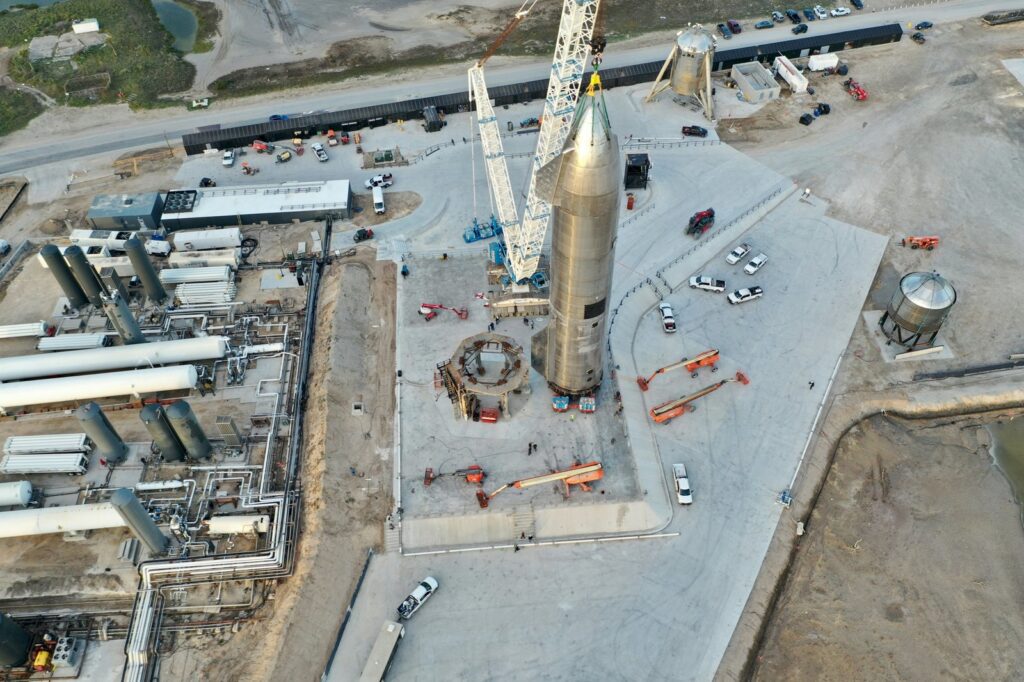
The reported plan is unusually ambitious. The launch tower’s mechanical arms, called chopsticks, would catch the returning Super Heavy booster and then attempt to catch the upper-stage ship on a later pass.
His estimated chances of a successful double catch were 50 to 60 percent. The more cautious outcome would be a booster catch while the ship splashes down.
Catching the ship requires it to survive re-entry with its heat shield intact before the tower arms can reach it. FAA approval of the flight profile, pad readiness and weather along a long ground track also affect the timing.
Reuse supports the Falcon cadence
The October Starlink 15-15 mission illustrates both the delays and the hardware behind the schedule. It suffered technical and weather scrubs before launching on Oct. 23. Booster B1063 was making its 36th flight, with the droneship A Shortfall of Gravitas recovering it.
Spaceflight Now counted the event as the 673rd Falcon booster recovery and the 229th landing on that ship. Reusing first stages reduces hardware cost per mission and avoids having to manufacture a new booster for every launch.
SpaceX subsequently launched 27 Starlink satellites from Vandenberg on Oct. 31. November’s mixture of Starlink and government payloads continues that rapid use of the California range.
Beyond the SpaceX listings
Rocket Lab’s Electron was scheduled to carry iQPS Launch 9, called The Sea God Surveys, to low Earth orbit at 16:41 UTC on Nov. 2. China’s schedule listed Long March 2C and Long March 12 launches on Nov. 5.
Orbital Radar’s catalogue listed 31,932 objects, including debris, on Nov. 2. It also highlighted 20 active close approaches, including listed minimum separations of approximately 1.50 km between two PROBA-3 components and approximately 1.55 km between two TIANHUI 2 satellites.
A close approach is not a collision prediction. Deliberate proximity, relative velocity and orbital uncertainty all matter when assessing danger.
For viewers, SpaceX normally streams Falcon 9 missions on its website and X, while Starship webcasts usually begin about 30 minutes before liftoff. NASA’s own schedule is the place to confirm coverage of the Cygnus cargo flight.
The firmest Florida target remains the tentative Cygnus NG-25 slot on Nov. 29; Starship Flight 15 still awaits an official date.
Sources
- Electron targets iQPS launch: Orbital Briefing, 2 November | Orbital Radar
- SpaceX Launches [Nov 2026]: 30-Day Schedule, Times & Stream
Photo: Jay Wedgeworth / Unsplash (Unsplash License)