
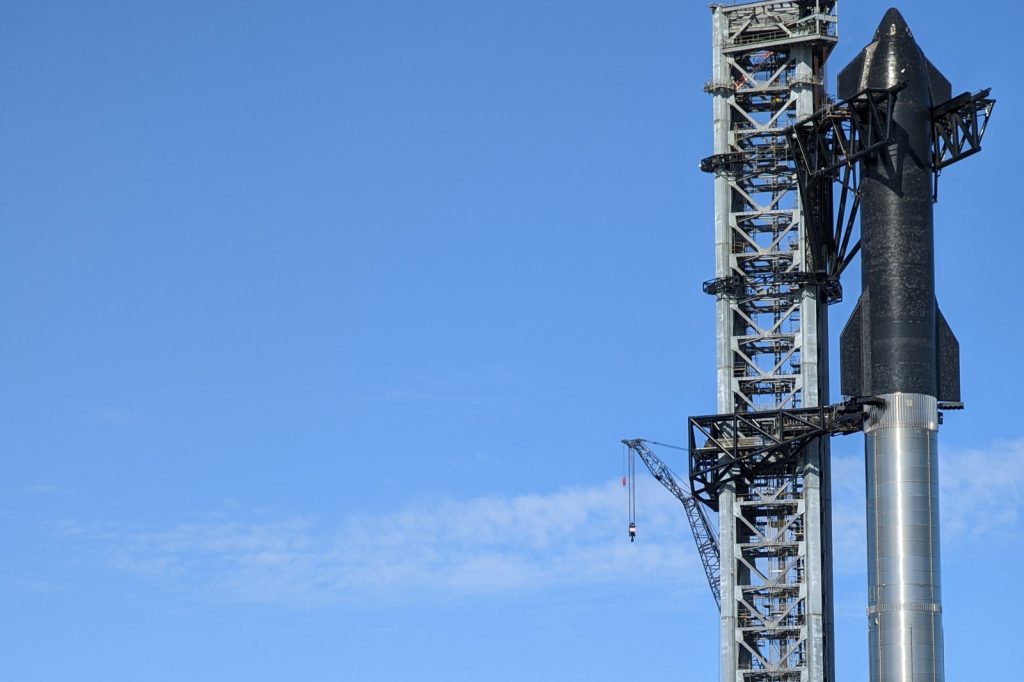
BOCA CHICA, TEXAS, October 17, 2026 — SpaceX’s ambitious plan to launch 456 Starships annually has sparked concerns about the environmental and regulatory implications of such a massive undertaking. As the company pushes forward with its reusable launch vehicle, it must navigate the challenges of methane emissions, supply chain limits, and global environmental scrutiny.
Environmental Impacts Of Starship Launches
The Starship’s Raptor engines burn liquid methane and liquid oxygen, making each launch a significant methane emitter, according to SpaceX’s own documentation. This is particularly concerning given methane’s 80 times greater warming potential than carbon dioxide over a 20-year period. The production of stainless steel for Starship’s 9m-diameter tanks also requires energy-intensive processes, with each rocket using approximately 5,300 tons of steel. Intriguingly, the science behind stainless steel production suggests that the process is not only energy-intensive but also results in significant greenhouse gas emissions.
Regulatory Hurdles And Infrastructure Gaps
To achieve its goal of 456 launches per year, SpaceX would need to launch 14 Starships per day, which is far beyond its current cadence. This would require significant investments in infrastructure, including the development of local methane-capture facilities, as the company’s Boca Chica facility currently lacks such infrastructure. According to SpaceX’s own records, the company has already experienced methane leaks during test flights, highlighting the need for improved recovery systems. The International Civil Aviation Organization (ICAO) may also classify rocket methane as a regulated pollutant, which could further complicate SpaceX’s plans.
Reusability And Environmental Trade-Offs
SpaceX’s iterative testing approach has delayed the development of orbital reusability, but the company has made significant progress in recent years. The recovery of Ship 40, the first Starship upper stage to survive a launch to space, has provided valuable insights into the vehicle’s performance and durability. However, the production of stainless steel for 456 Starships per year would require approximately 2.3 million tons of steel annually, which is comparable to a small country’s annual output. The recycling rate for aerospace-grade alloys is less than 50%, meaning that most of the steel used in Starship production would become scrap or landfill.
Global Backlash And Regulatory Scrutiny
The global community is increasingly concerned about the environmental impacts of space launches, particularly with regards to methane emissions and orbital debris. According to a recent study, over 55.9% of the global population has experienced simultaneous heat waves and wildfires, highlighting the need for sustainable and environmentally responsible practices. The development of Starship has also raised concerns about the potential for orbital debris, which could trigger new space traffic laws. As SpaceX pushes forward with its plans to launch 456 Starships per year, it must navigate these regulatory hurdles and address the environmental concerns of the global community.
The Stainless Steel Supply Chain And Carbon Footprint Of Starship Production
SpaceX’s reliance on stainless steel for Starship construction introduces a critical bottleneck: the global supply chain for aerospace-grade alloys. However, the stainless steel industry faces constraints in meeting such demand, particularly for high-purity, low-carbon alloys required for cryogenic fuel tanks. A 2026 report from the International Stainless Steel Forum (ISSF) notes that only 12% of global stainless steel production is currently dedicated to aerospace applications, with most capacity allocated to automotive and construction sectors.
The carbon footprint of stainless steel production further complicates Starship’s sustainability claims. The ISSF estimates that manufacturing one ton of stainless steel emits between 1.5 and 2.5 tons of CO₂-equivalent greenhouse gases, depending on the production method. For Starship, this translates to a baseline emissions range of **3.9 million to 6.5 million tons of CO₂e per year**—equivalent to the annual output of a medium-sized coal-fired power plant. SpaceX has not disclosed plans to offset these emissions, and industry experts warn that even if the company adopts electric arc furnaces (which reduce emissions by ~30%), the sheer volume of steel required would still pose a significant environmental challenge. The ISSF’s 2026 sustainability roadmap highlights that no major stainless steel producer has yet achieved net-zero emissions for aerospace alloys, citing technical limitations in recycling scrap and the energy intensity of refining processes.
Compounding the issue is the limited recycling infrastructure for aerospace-grade stainless steel. While SpaceX has emphasized reusability for Starship’s flight hardware, the company’s own records indicate that less than 40% of the steel used in prototype builds is recovered for reuse. The remaining 60%—amounting to **1.4 million tons annually** at full production—would likely be downcycled into lower-grade applications or discarded, as the ISSF notes that only 15% of global stainless steel scrap is processed into aerospace alloys due to contamination risks. This inefficiency contrasts with SpaceX’s public commitments to sustainability, particularly as the company’s lunar and Mars missions would require even greater steel production volumes. Without breakthroughs in alloy recycling or a shift to alternative materials, the environmental cost of scaling Starship could outweigh its operational benefits, according to a 2026 analysis by the Global Carbon Project.
Logistical Constraints: The 14-Daily-Launch Challenge and Unmet Infrastructure Needs
As of October 2026, SpaceX has conducted only **14 Starship flights in total**, with an average of **one launch every 2–3 months**. Scaling to 14 launches daily would demand not just rapid production but also a **1,400-fold increase in launch frequency** within three years, a timeline that conflicts with the company’s own iterative testing approach. According to SpaceX’s internal documentation, even achieving **one orbital-class Starship launch per week** would require **doubling the current workforce at Starbase**, expanding launch pad capacity, and implementing **automated assembly lines**—none of which are currently operational.
The infrastructure gaps extend beyond Boca Chica. SpaceX’s plans for **global Starship launch sites**—including potential facilities in Florida, Cape Canaveral, and international locations—remain unconfirmed, with no formal agreements or regulatory approvals in place. A 2026 analysis by the Federal Aviation Administration (FAA) noted that **even a single additional Starship launch site in the U.S. would require 18–24 months of environmental reviews**, a timeline incompatible with SpaceX’s 2029 operational deadline. Meanwhile, the company’s **methane recovery systems**—critical for mitigating emissions—have only been tested in **static fire conditions**, not at the scale needed for daily launches. During the 2025 test flights, **uncontrolled methane leaks** occurred during booster separations, raising concerns about the feasibility of capturing emissions at the required frequency. SpaceX’s own environmental impact assessments admit that **current methane-capture infrastructure at Starbase is designed for “low-volume testing,” not high-cadence operations**, leaving a critical infrastructure gap unaddressed.
Further complicating the logistical challenge is the **lack of demonstrated orbital refueling capability**, a requirement for Starship’s Mars and lunar missions. SpaceX’s 2026 Starship User Guide states that **each interplanetary mission would require 3–5 in-orbit refueling flights**, meaning that **even a single Mars-bound Starship would necessitate 15+ launches** before departure. At 14 launches per day, this would translate to **over 5,000 launches annually** just to support a handful of deep-space missions—a figure that contradicts SpaceX’s public claims of cost efficiency. The company has not disclosed plans for **dedicated refueling depots in low Earth orbit**, nor has it demonstrated the ability to **recover and reuse Starship upper stages** at the required pace. Ship 40’s recovery in October 2026 marked a milestone, but SpaceX’s own engineers have emphasized that **fully autonomous in-space refueling remains “years away”** from operational readiness, further delaying the feasibility of high-cadence launches.
Sources
- SpaceX Starship
- The 1st SpaceX Starship to survive a launch to space just came home to its launch site
- Half of the world’s population has been exposed to heat waves and wildfire smoke at the same time
Photo: Lars Plougmann from United States (CC BY-SA 2.0)




