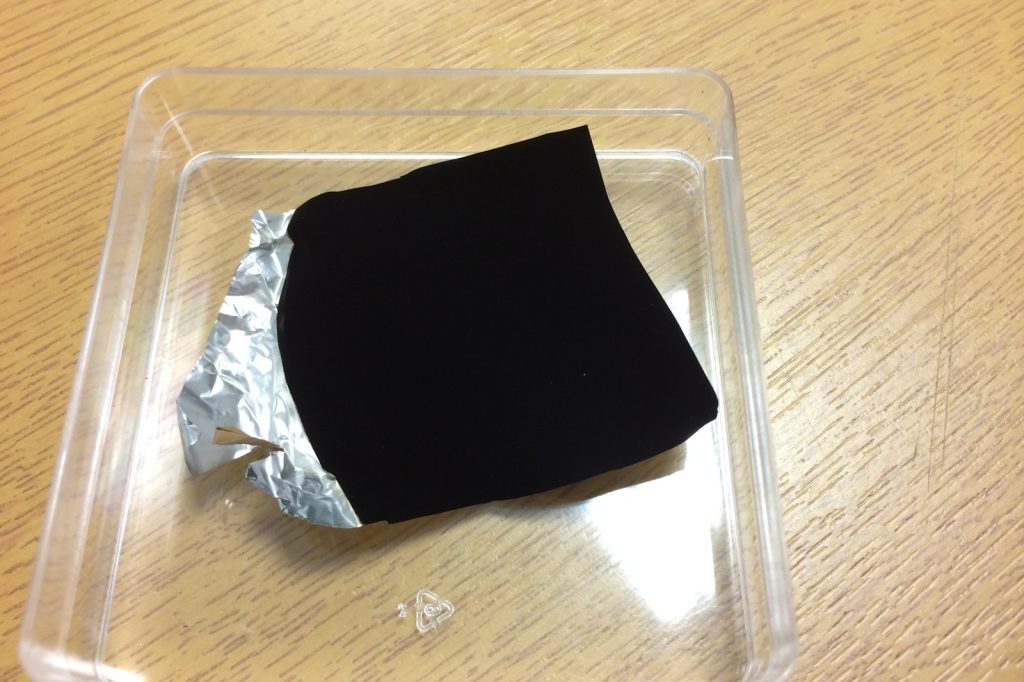
“Existing black coatings like vertically aligned carbon nanotubes or black silicon are limited by fragility,” said Yunzhen Cao, a study author. The Debrief reported that Cao and colleagues at the University of Shanghai for Science and Technology and the Chinese Academy of Sciences have created a different kind of ultrablack material.
Space observatories such as the Hubble Space Telescope and the James Webb Space Telescope gather tiny amounts of light from objects millions or billions of light years away. Stray light from the satellites themselves can interfere. Engineers cover the equipment with low-reflectance materials, but existing options have limits.
The coating goes on as a gas. The method, atomic layer deposition, exposes components to sequential gas layers inside a vacuum chamber. It can cover shapes that defeat older techniques.
“One big advantage of the ALD method lies in its excellent step-coverage ability,” Cao said. That means the film lands evenly on cylinders, pillars, trenches, and other complex surfaces.
Trapping light in layers
The researchers alternated aluminum-doped titanium carbide and silicon nitride. TiAlC works as the absorbing layer. SiO2 forms an anti-reflection structure. Together they trap nearly all incident light in the multilayer film. The result absorbs 99.3% of incoming visible light.
To coat magnesium alloys, which corrode easily and appear often in space components, the team added a third barrier layer to the process.
Cao said the film survived tough conditions. “What’s more, the film shows superb stability in adverse environments and is tough enough to withstand friction, heat, damp conditions, and extreme temperature changes,” he said.
The blocked wavelengths run from violet light at 400 nanometers to near-infrared at 1,000 nanometers. The engineers want to stretch that further. “Now that the film can absorb over 99.3% of incoming visible light, we’re hoping to expand its light absorption range even further to include ultraviolet and infrared regions,” Cao said.