
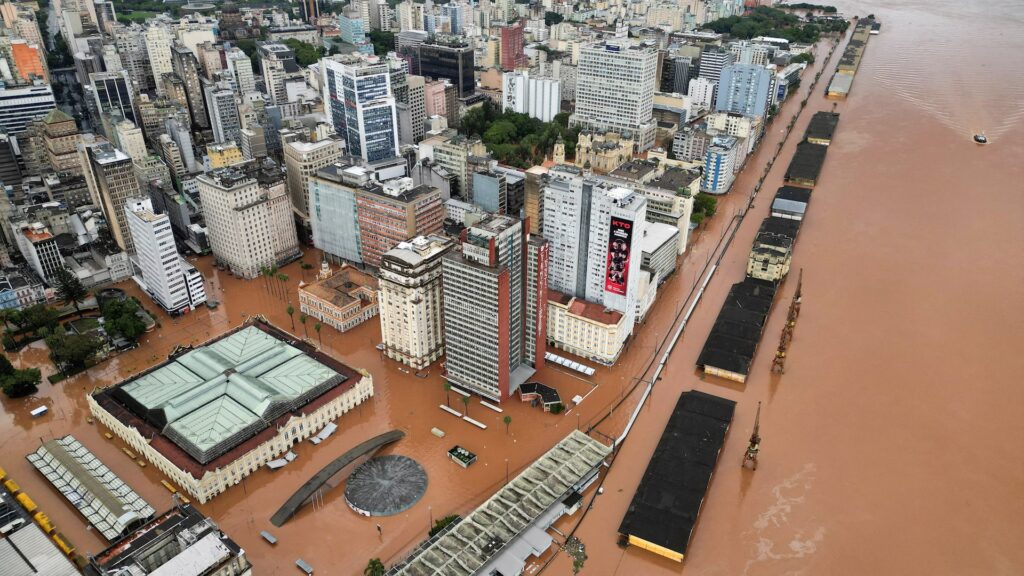
A catastrophic series of floods and storms that began in late April 2024 has left a trail of destruction across the Brazilian state of Rio Grande do Sul and parts of Uruguay, marking one of the most severe natural disasters to hit the region in over eight decades. The extreme weather, which persisted into May, triggered landslides and caused a dam to collapse, compounding the crisis for affected communities. As of July 7, 2024, official reports confirmed 181 fatalities resulting from the disaster.
This death toll places the 2024 Rio Grande do Sul floods among the deadliest environmental catastrophes to strike the area in recent years. The flooding follows a series of similar tragedies in Brazil that occurred in July, September, and November 2023, which collectively claimed 75 lives.
The impact of the floods extended beyond Brazil’s borders, severely affecting several Uruguayan cities. Treinta y Tres, Paysandú, Cerro Largo, and Salto all experienced significant damage and disruption as floodwaters swept through the region. Authorities and international organizations have mobilized to deliver aid and assistance to displaced residents and those whose lives have been upended by the disaster.
The full economic and social toll remains under assessment, but early indications suggest long-term consequences for the area. Critical infrastructure, including roads and bridges, has been damaged, while agricultural production and other economic activities have been disrupted.
The severity of these floods has intensified discussions about the growing threat of extreme weather events and the urgent need for robust disaster preparedness and response systems. Recovery efforts are expected to be complex, requiring substantial resources and coordinated support from both government agencies and global partners. Moving forward, attention is focused on how Brazilian authorities and other stakeholders will manage the rebuilding process and implement measures to prevent future catastrophes. Experts emphasize the importance of investing in early warning systems, disaster preparedness protocols, and infrastructure designed to withstand extreme weather conditions.
The 2024 Rio Grande do Sul floods serve as a stark reminder of the critical importance of environmental sustainability and disaster risk reduction. As the region begins the long road to recovery, the international community will be closely monitoring progress and the adoption of resilient approaches to mitigate the impact of similar events in the future.
Sustainable planning and cross-border cooperation will be essential to protect vulnerable communities from the escalating risks posed by extreme weather.




