
Nineteen Humans in Orbit Signals a New Era of Space Activity
The count of people living off‑planet reached nineteen today, a figure that does more than mark a high point; it reveals how access to space is diversifying, who is flying, and what the future may hold. The milestone was reached after the Russian Soyuz MS‑26 spacecraft lifted off from the Baikonur Cosmodrome in Kazakhstan. On board were cosmonauts Aleksey Ovchinin and Ivan Vagner together with NASA astronaut Donald Pettit.
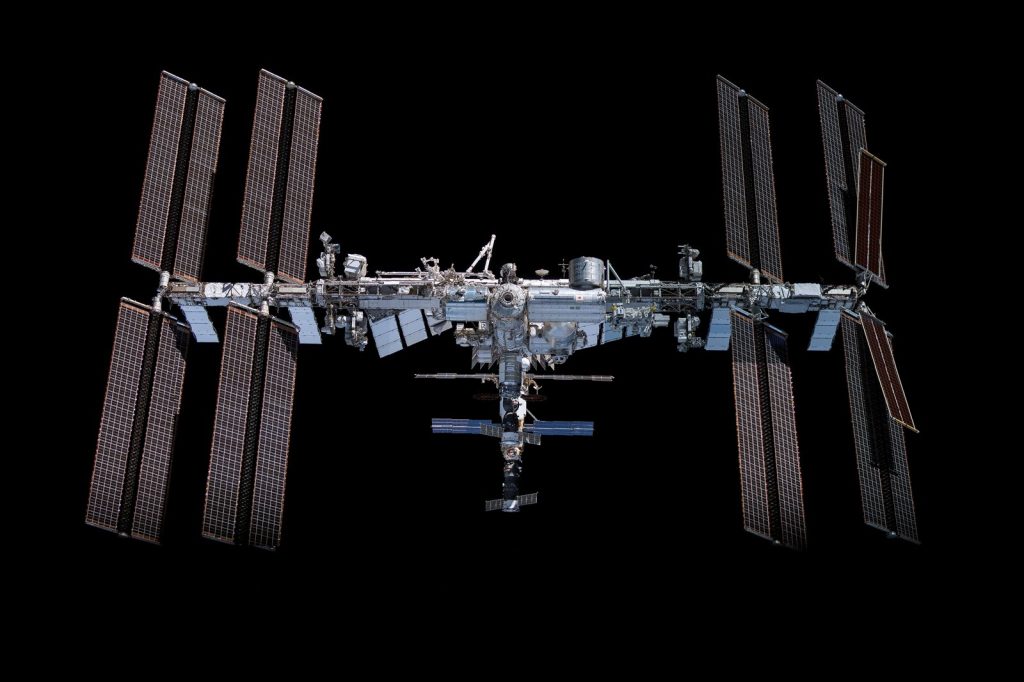
After crossing the Karman line they joined the existing occupants of low Earth orbit. Already in orbit were nine crew members aboard the International Space Station, three taikonauts on China’s Tiangong station, and four private citizens flying the SpaceX Polaris Dawn mission.
Adding the Soyuz trio brings the total to nineteen, a number never recorded before. While the headline number is notable, the underlying shift is more telling. For many years the International Space Station was the sole destination for humans in low Earth orbit.
Today three distinct platforms operate simultaneously: the ISS, China’s independent Tiangong outpost, and a variety of commercial flights. Russia continues to launch Soyuz vehicles, private firms now fly their own crews, and Beijing runs its own station.
The era of a single monopoly is over. The ISS still hosts the largest share of the orbital population with nine astronauts. It has been continuously inhabited since the year 2000, originating as a post‑Cold‑War cooperative effort between the United States and Russia, with hardware contributed by Europe, Japan, and Canada. The station has proved reliable, but it is ageing and its operational life past 2030 is uncertain.
Russia has discussed an early exit, and China never joined the partnership, leaving the ISS as a symbol of international cooperation that is fading. China’s Tiangong station, with its three taikonauts, offers a direct alternative.
Built and operated solely by Beijing, it is newer and smaller than the ISS. China has opened the facility to foreign experiments, yet United States law prevents NASA from participating, resulting in two separate orbital spheres that do not intermix. The Polaris Dawn flight illustrates the newest category of space activity.
Financed by billionaire Jared Isaacman and flown aboard a SpaceX Crew Dragon, the mission carries four private individuals, none of whom are career astronauts. Their objectives include testing next‑generation spacesuits and attempting the first commercial spacewalk.
The crew is not bound to any station; they follow an independent trajectory and schedule, a type of venture that did not exist five years ago. The Soyuz MS‑26 flight itself is designated Soyuz 72S by NASA and represents a routine crew rotation. It nevertheless transports veteran NASA astronaut Donald Pettit, who has flown three prior missions and is now 69 years old.
His presence underscores that spaceflight is no longer limited to young test pilots; it has become a career path for scientists and engineers who return to orbit repeatedly. Looking ahead, the pattern of growth is expected to accelerate.
More commercial missions, additional Chinese taikonaut flights, and continued Russian launches will increase the orbital populace. The International Space Station is slated to be succeeded by private platforms—Axiom Space is already constructing one such station. Consequently, the number of humans in space could rise to twenty, thirty, or higher.
The limiting factor is no longer technical capability; it is the availability of funding and the political will to sustain activity. Nineteen people in space today marks a record, but it should be viewed as a floor rather than a ceiling, indicating that the current level is just the beginning of a sustained upward trend.




