About 5% of world trade moves through the Panama Canal, so a serious earthquake near it is a supply chain problem as much as a geological one. A magnitude 7.5+ quake struck southern Panama on October 9, 2026, and the waterway came through largely unscathed and kept operating normally. Newsroom Panama says the canal is heavily reinforced against seismic activity, but not immune.
The Fault Under the Locks
The Pedro Miguel Fault is active and runs directly beneath the canal’s lock structures. Newsroom Panama calls a major rupture on it the greatest structural threat to the locks. That does not mean one is imminent. The point, the outlet said, is that the fault needs study so the hazard can be better understood. The canal’s post-2016 reinforcements and gravity-based design held up in October, yet geologic “pressure points” leave a continuing, if theoretical, risk of a direct hit.
Water is the second weak point. Gatún Lake is the only source for the lock chambers, and each ship that passes uses an average of 200,000,000 litres (52 million US gallons) of fresh water. A catastrophic failure of the dam system would drain that supply and stop transit altogether. Droughts already strain the system.
Then there is the Gaillard Cut, also called the Culebra Cut. Its slopes are exceptionally steep and prone to landslides. A strong quake nearby could bring earth down into the channel and block shipping.
What Happened on October 9
The Panama Canal Authority (ACP) activated emergency protocols and sent engineering teams to inspect dams, locks and crossunders. Protocol also calls for checks on administrative buildings and utility plants, and on backup generators, so that a failure in the national grid cannot cut power to the locks’ control systems and towing locomotives. Ship movements are monitored closely or briefly restricted. The Bridge of the Americas and the Centennial Bridge are on the inspection list too.
Trade Stakes
The canal opened on August 15, 1914. Annual traffic has grown from about 1,000 ships that year to 14,702 vessels in 2008, a total of 333.7 million Panama Canal/Universal Measurement System tons. More than 815,000 vessels had passed through by 2012, when the top users were the United States, China, Chile, Japan and South Korea. Ships that use it avoid the long, hazardous route around South America via the Drake Passage, the Strait of Magellan or the Beagle Channel. In 2017 the average transit between the two outer locks took 11.38 hours.
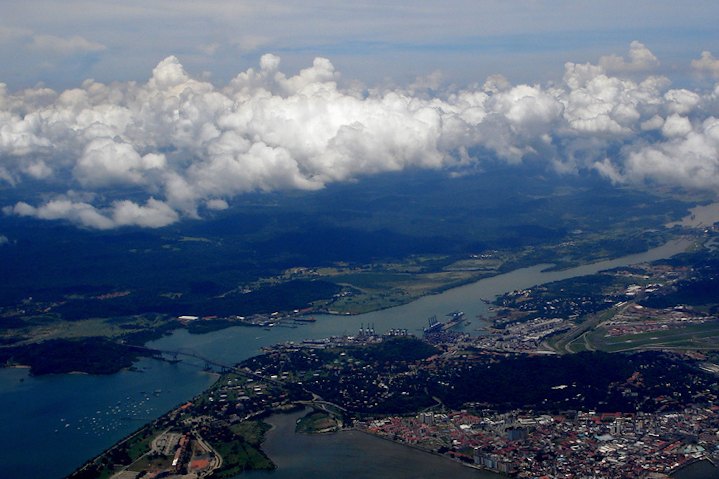
The waterway is 82 kilometers (51 miles) long. Locks at each end lift ships to Gatún Lake, 26 meters (85 ft) above sea level and formed by damming the Chagres River. The original locks are 33.5 meters (110 ft) wide and take Panamax ships. A third, wider lane of locks, built between September 2007 and May 2016, opened commercially on June 26, 2016 and handles larger Neopanamax vessels.
A New Reservoir for Water Security
The authority is also pursuing the Rio Indio reservoir, which CNN reported it considers essential because fossil fuel pollution and El Niño have made central Panama more drought-prone. The project would flood more than 11,000 acres now holding schools, churches, farms and cemeteries, and at least 1,600 residents would have to move. Construction is expected to start in 2028, with completion between 2031 and 2032. The authority says the reservoir will lift operations by 10 to 15% and help supply nearby communities.
A government decree ended burials at El Limón cemetery in July. Seven other cemeteries close to burials in January 2027.
Sources
- Is the Panama Canal at Risk during an Earthquake? – Newsroom Panama
- Panama Canal
- To keep the Panama Canal flowing, the living and the dead must pay the price | CNN
Photo: Camilo Molina
derivative work: MrPanyGoff (CC BY-SA 2.0)