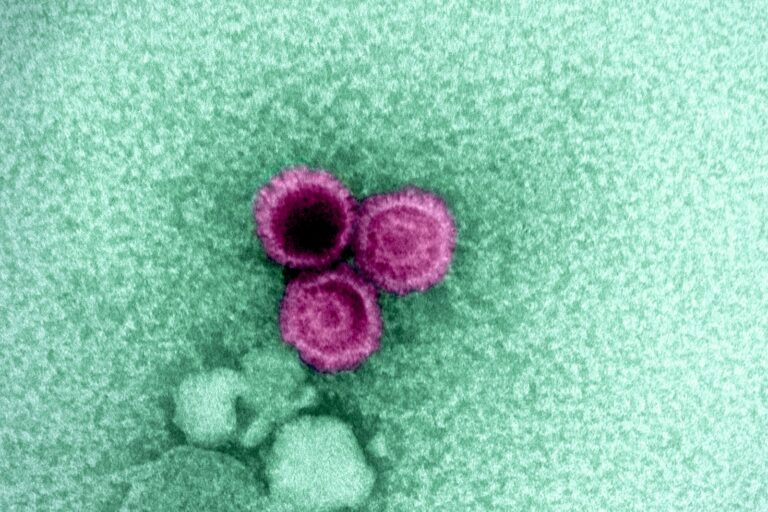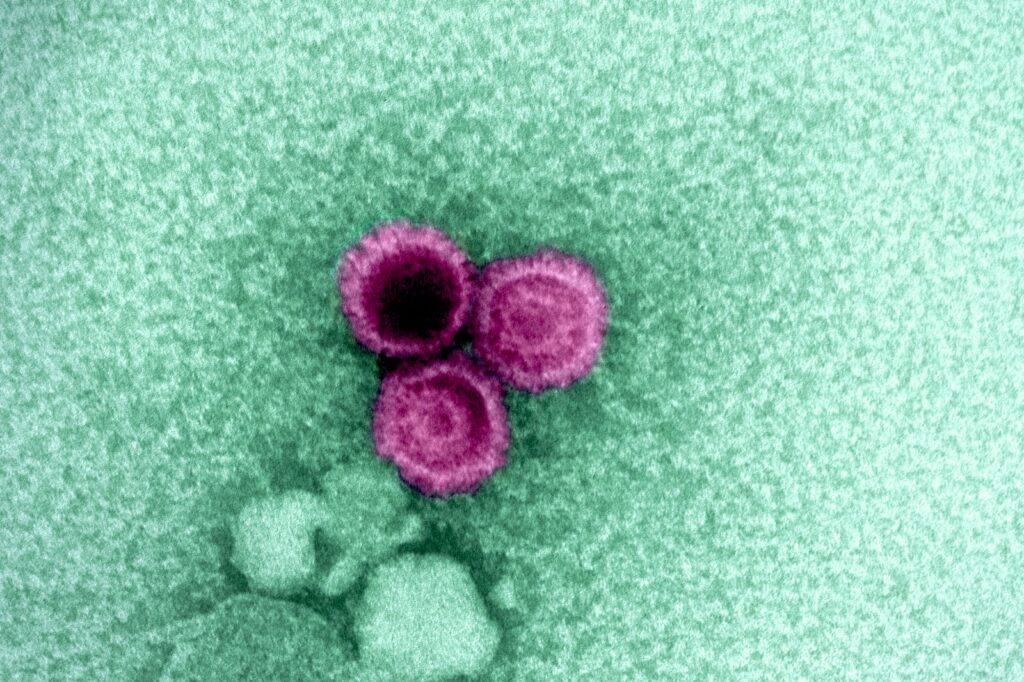
A landmark study of more than 10 million U.S. military personnel has confirmed that Epstein-Barr virus infection precedes multiple sclerosis, establishing the virus as a necessary precursor to the disease and shifting the focus of research from broad immune suppression toward antiviral prevention.
The Curiosity Hook: A Common Virus, A Rare Outcome
Epstein-Barr virus, or EBV, infects most adults worldwide, often causing glandular fever — also known as mononucleosis — though many infections pass with few noticeable symptoms. For decades, researchers have suspected a link between this ubiquitous virus and multiple sclerosis, a chronic autoimmune disease in which the immune system attacks myelin, the protective coating around nerves in the brain and spinal cord. The difficulty was proving causation: because nearly everyone encounters EBV, it was hard to tell whether the virus actually triggers MS or simply happens to be present in those who develop it.
How the Mechanism Works: Molecular Mimicry and Latency
The science behind the connection points to how the virus behaves after the initial infection. EBV establishes a lifelong latency in the body, hiding inside B-cells — the very immune cells that produce antibodies. Intriguingly, the leading theory involves molecular mimicry: viral proteins resemble components of myelin closely enough that the immune system, primed to fight the virus, mistakenly attacks the nervous system. What researchers found in the Harvard study strengthens this view. They tracked a blood protein that signals nerve fiber damage, known as neurofilament light chain. In service members who later developed MS, this marker of nerve injury rose only after EBV seroconversion — the point at which antibodies to the virus appear in the blood — confirming the infection came first.

The Numbers: A 32-Fold Risk Increase
The epidemiological proof comes from a dataset unique in its scale and design. Alberto Ascherio and his team at Harvard studied health data and regularly stored blood samples from more than 10 million active-duty U.S. military personnel. Among them, 955 developed MS during the study period. By comparing stored samples from those who fell ill with matched controls who did not, the team calculated that MS risk increased about 32-fold following EBV infection. A similar spike did not appear with cytomegalovirus, another common herpesvirus spread in comparable ways, ruling out general immune activation as the driver. The findings were published in Science in 2022.
Why Only a Minority Develop MS
If EBV is a necessary precursor, it is not sufficient on its own. The vast majority of people infected with EBV never develop MS. Globally, about 3.1 million people were affected by MS in 2024, a fraction of the billions carrying the virus. Genetics and environmental factors — notably sunlight exposure and vitamin D levels, which correlate with latitude — help determine who progresses from infection to autoimmunity. MS usually begins between ages 20 and 40 and is almost three times more common in women than in men, a pattern noted since Jean-Martin Charcot first described the disease in 1868.
Therapeutic Shift: From Suppression to Prevention
This causal clarity reshapes the therapeutic landscape. Current MS care focuses on the relapsing-to-progressive continuum, where disease activity shifts over time from peripheral adaptive immune activity to compartmentalized innate inflammation within the central nervous system. Anti-CD20 therapies, which deplete B-cells, are highly effective for relapse control but insufficient for preventing progression independent of relapse activity — known as PIRA — and the accumulation of disability. As specialists noted at a NeurologyLive forum in New York in October 2026, escalating immunosuppression does not address the underlying viral biology driving a given patient’s decline.
If EBV initiates the cascade, preventing infection or controlling viral latency could stop the disease before it starts. Researchers are now exploring EBV vaccines and targeted antivirals. A preventive vaccine would aim to block initial infection or the establishment of latency. Antivirals capable of suppressing viral reactivation in latently infected B-cells might halt the antigenic trigger for autoimmunity in those already infected.
Pipeline Implications and Monitoring the Response
The pipeline implications are immediate. Several EBV vaccine candidates are in early clinical development, including mRNA-based approaches. Parallel efforts aim to develop antivirals specific to EBV’s latent phase. Monitoring whether these interventions alter MS risk will require sensitive biomarkers. Recent work using nano-LC-HRMS/MS — a highly sensitive mass spectrometry technique — on saliva samples from 66 relapsing-remitting MS patients before treatment and 40 after six months on disease-modifying therapy showed that proteomic profiling can distinguish patients from healthy controls and capture molecular variability not reflected by relapse history or MRI alone. Such tools could eventually track whether antiviral strategies normalize the molecular signature of disease.
What Comes Next
The Harvard study established the sequence: EBV infection, then neuroaxonal injury, then clinical MS. The next step is testing whether interrupting that sequence prevents the disease. Clinical trials of EBV vaccines in seronegative populations — likely young adults — are the logical proving ground. Until then, the 32-fold risk increase stands as the strongest epidemiological evidence for a viral cause of a major human autoimmune disease.
Sources
- Scientists find a leading cause of multiple sclerosis
- Multiple sclerosis
- New York Forum Tackles Unmet Needs in Multiple Sclerosis Care | NeurologyLive – Clinical Neurology News and Neurology Expert Insights
- Toukie Smith, Top Runway Model and ‘227’ Actress, Dies at 74
- Nano-LC-MS/MS Tracks Saliva in Multiple Sclerosis | LCGC International
- What Is the Expanded Disability Status Scale (EDSS) and How Is It Used?
Photo: NIAID (Public domain)