WASHINGTON, October 22, 2026 — President Donald Trump has again singled out offshore wind projects, warning that a pending agreement to accelerate energy‑project approvals could be withdrawn. The move arrives as Canada unveiled a $100 million plan to launch offshore wind farms off Nova Scotia, intensifying a cross‑border rivalry over renewable power.
Trump’s Renewed Anti‑Offshore Wind Campaign
The president’s latest remarks target the United States’ burgeoning offshore wind sector, a market that the Department of Energy estimates could deliver more than 4,200 GW of capacity—enough to generate three times the nation’s current electricity consumption. According to the administration, the criticism threatens a deal that would speed approvals for new energy projects across the country.
Industry officials note that between 2022 and 2024 the domestic offshore wind industry invested more than $6.8 billion in manufacturing facilities, ports, vessels and transmission infrastructure. The same officials say the sector is prepared to adapt, but political uncertainty now hangs over thousands of jobs tied to projects slated for the next few years.
U.S. developers have warned that prolonged permitting delays could push them to seek financing and supply‑chain partners abroad. Such a shift would benefit rivals in Canada and Europe, where offshore wind markets are already well established.
Canada’s $100 Million Nova Scotia Initiative
On October 15, Natural Resources Canada announced a $100 million investment to jump‑start offshore wind development off Nova Scotia. The agency described the east‑coast wind resources as “some of the strongest in the world” and said the project presents a transformative economic opportunity for Nova Scotia, Atlantic Canada and the nation as a whole.
The Nova Scotia plan is part of a broader “Atlantic Energy Strategy” that also includes nuclear and hydropower. Officials highlighted that, given the longer development timelines and higher costs of nuclear and hydropower, offshore wind is shaping up as the quickest, most economical and most accessible pathway to expanding Atlantic Canada’s grid capacity.
Canada’s move leverages a mature global offshore wind industry. The country can call on international experts and supply chains—including many based in the United States—to fill gaps in domestic capability, according to the announcement.
Geopolitical Stakes and Cross‑Border Energy Flows
Canada already supplies a significant share of renewable electricity to the United States, especially through hydropower transmitted via new high‑voltage lines such as the Lake Champlain link that terminates in New York City. Analysts note that reduced U.S. offshore wind deployment would increase reliance on imported electricity, including Canadian hydropower, to meet demand.
Offshore wind projects also raise strategic considerations beyond electricity markets.
Global offshore wind capacity stood at 64.3 GW in 2022, with China, the United Kingdom and Germany accounting for more than 75 % of installations. Europe has already achieved price competitiveness, with costs falling to $78 per megawatt‑hour in 2019 and becoming comparable to conventional power sources in 2017.
Economic Consequences for the U.S. Supply Chain
The United States has poured billions into building an offshore wind supply chain, from turbine components to specialized vessels. The $6.8 billion invested between 2022 and 2024 underpins a network of ports and manufacturing hubs that could support thousands of jobs.
If permitting stalls, developers may look to overseas shipyards and turbine makers to fill the gap. Such a shift would divert future revenue away from U.S. firms that have already positioned themselves for a market that could eventually exceed 4,200 GW of capacity.
Floating turbine technology, currently being refined for deep‑water sites, is especially relevant because about two‑thirds of U.S. offshore wind resources lie in waters too deep for fixed foundations. The United States’ ability to commercialize floating platforms could determine whether it captures a share of the deep‑water market or cedes it to foreign competitors.
Implications for U.S. Energy Security
Offshore wind offers a domestic source of clean electricity that can reduce dependence on imported fuels and mitigate supply‑chain vulnerabilities. Delays in the sector could force the United States to rely more heavily on cross‑border electricity imports, including Canadian hydropower, to meet climate and reliability goals.
At the same time, the United States’ vast offshore wind potential—enough to generate three times current consumption—remains largely untapped. Realizing even a fraction of that resource would diversify the nation’s energy mix, lower exposure to fossil‑fuel price shocks and support decarbonization targets.
Policy analysts caution that the current political tug‑of‑war creates uncertainty for investors and contractors. While the wind sector is ready to adapt, the prospect of thousands of jobs hanging in the balance underscores the broader economic stakes of the debate.
Canada’s $100 million Nova Scotia push demonstrates how quickly a rival can mobilize financial support and position itself as a leader in the Atlantic wind market. As the United States wrestles with internal opposition, the risk is that the country will fall behind both its neighbor and established European players in a technology that is already price‑competitive and rapidly scaling.
In the coming months, the outcome of Trump’s anti‑offshore wind stance will shape not only the pace of U.S. project approvals but also the broader trajectory of North American energy security. The balance between political will, economic incentives and the urgency of clean‑energy transition will determine whether the United States harnesses its offshore wind bounty or cedes ground to foreign developers.
U.S. Permitting Delays and the Risk of Foreign Supply Chain Dependence
The renewed political push against offshore wind in the United States has raised concerns about the potential for increased reliance on foreign supply chains. According to the Department of Energy, the domestic offshore wind industry has already invested more than $6.8 billion in manufacturing facilities, ports, vessels, and transmission infrastructure between 2022 and 2024. However, if permitting delays continue, U.S. developers may be forced to seek alternative sources for turbine components, vessels, and other critical infrastructure.
Industry officials have warned that prolonged uncertainty could lead to a shift in financing and supply-chain partnerships toward countries with more stable regulatory environments, such as Canada and European nations. Canada, for instance, has already leveraged its access to international offshore wind expertise to advance its Nova Scotia initiative. The country’s ability to draw on global supply chains—including those based in the United States—demonstrates how quickly a rival can position itself as a leader in the Atlantic wind market.
Sources
- Offshore wind power
- Top 10 Things You Didn’t Know About Offshore Wind Energy
- Canada Stabs Trump In The Back With New Offshore Wind Plan
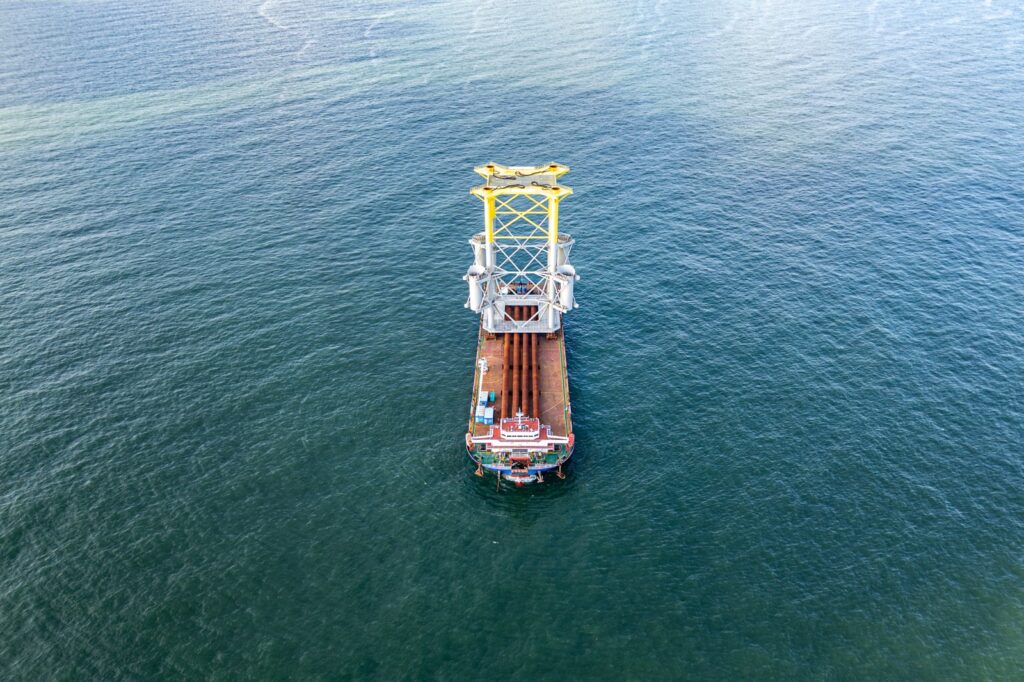
Photo: YikyuenG (CC BY-SA 4.0)