
Copper demand 18% higher by 2050, with 35% less water used and 25% less deforestation: that is the best case in a new report from Systemic and ERM, and it depends on countries working together. The worst case, in which governments retreat into rival blocs, needs 30% more copper and brings 70% more water use. The report was funded by the Gordon and Betty Moore Foundation and developed with the International Council on Mining and Metals (ICMM).
A system under strain
The authors say global mining and metals systems already show signs of disruption and fragmentation. Weather and labor problems hit supply, permitting for new projects takes years, and geopolitical tensions are rising. The report draws on more than 20 expert interviews, a survey of 16 industry leaders and a review of the literature. One mining company representative told the researchers that the decisions of the next few years will shape where and how the industry mines in 2050.
The scenarios are not forecasts or instructions. ICMM said they are meant as tools for leaders to test how well their strategies hold up whatever happens.
Three futures
In the most favorable scenario, called Flywheel, the industry is globally connected. Governments and companies diversify supply chains and speed up innovation, and permitting is streamlined so projects move faster without weakening environmental protections. Miners who can show verified low-impact performance could get price premiums and cheaper financing. By 2050 the scenario projects 18% fewer mines alongside the copper, water and deforestation figures above. It needs sustained international cooperation and a fairly stable geopolitical climate, and the report notes that both are uncertain while countries increasingly put domestic mineral security first.
Fracture sits at the other end. The world splits into competing regional blocs, with more state intervention and fewer new technologies. By 2050 it needs 30% more copper, 70% more water, 25% more mines and causes 40% more deforestation. Independent miners would struggle, and private investors would pull back.
In between is Space Race, where rivalry among major powers speeds up technology but divides mineral markets along political lines. Copper demand would match Fracture, yet deforestation would fall 3% by 2050, which suggests that technology can help the environment even without broad alignment.
Governments move first
Policy is already shifting toward domestic security. In February 2026 the U.S. Department of State launched the Forum on Resource Geostrategic Engagement, or FORGE, to succeed the Minerals Security Partnership and to strengthen diversified, resilient and secure critical minerals supply chains.
The Department of Energy is putting nearly $1 billion into mining, processing and manufacturing technologies. One piece is a funding opportunity of up to $69 million, announced on April 7, 2026, for industry-led partnerships that prototype and pilot new processing methods. Its topics include recovering materials from industrial and consumer scrap such as electronic waste and drivetrains, refining gallium, germanium and silicon carbide, and cost-competitive direct lithium extraction. The department says the aim is a more secure, predictable and affordable supply.
Sources
- Mining’s future hinges on global cooperation: report
- Critical raw materials
- Critical Minerals and Materials Accelerator
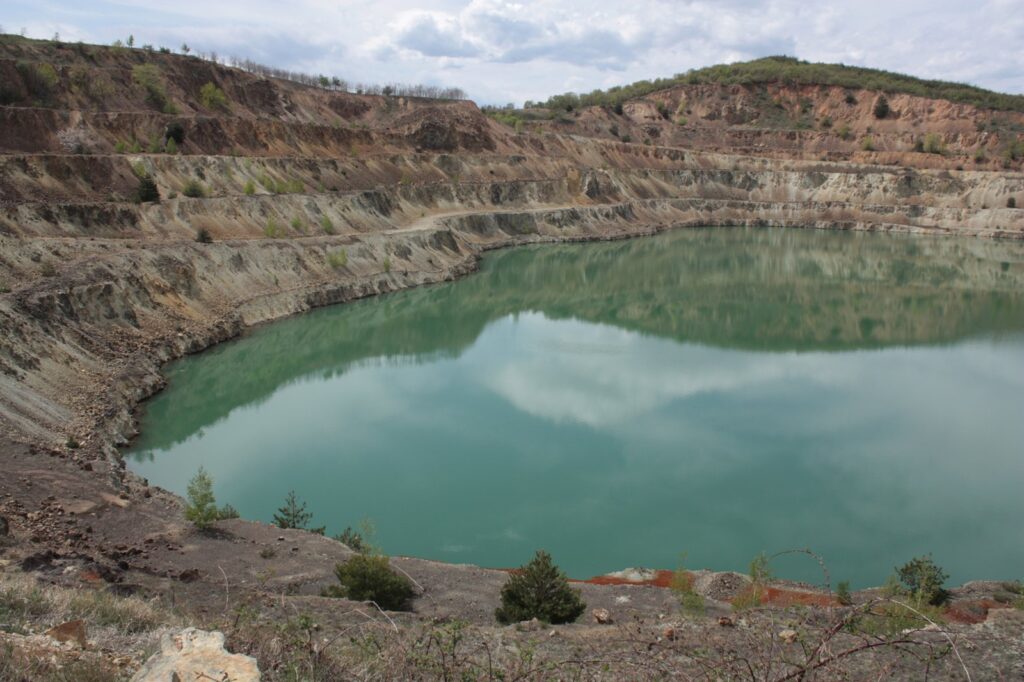
Photo: Edal Anton Lefterov (CC BY-SA 3.0)




