SpaceX Launch Frequency and Operations
Recent schedule shifts for Falcon 9 missions continue to draw public attention with the appearance of glowing plumes often called space jellyfish across regional skies. These frequent evening flights form part of an exceptionally busy launch cadence maintained by Space Exploration Technologies Corporation, doing business as SpaceX. Based at its Starbase development site in Starbase, Texas, the aerospace manufacturer operates three primary business segments according to company history. These segments cover space transportation, telecommunications, and artificial intelligence services.
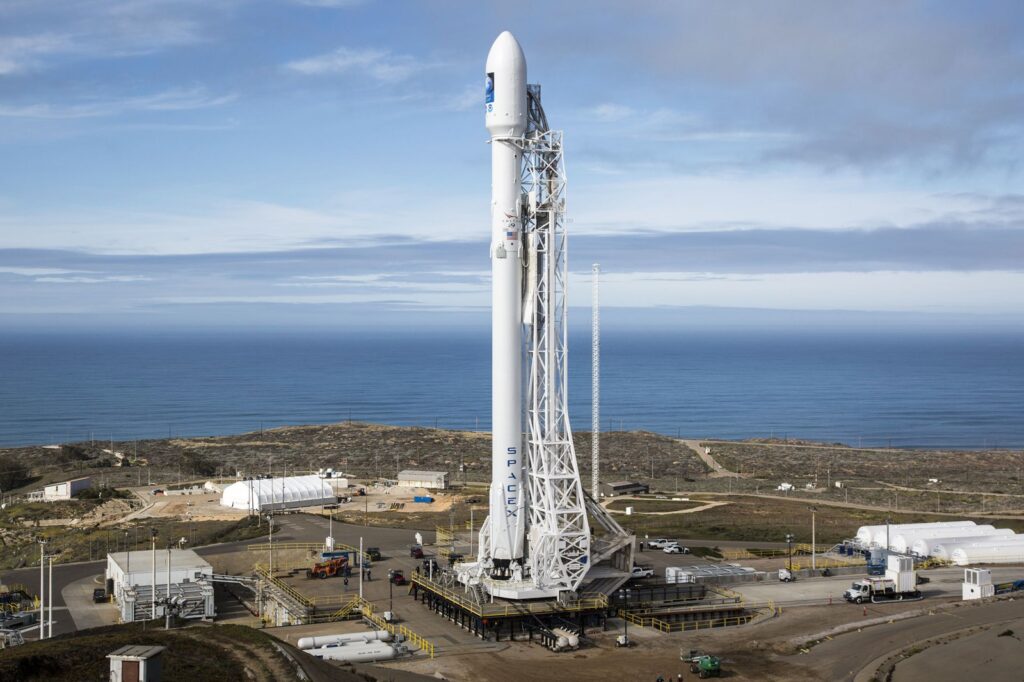
The space segment develops and flies the Falcon 9, Falcon Heavy, and Starship launch vehicles, alongside the Dragon spacecraft. According to company data, SpaceX conducts more orbital launches annually than any other launch provider, including national programs run by various governments. As of May 2026, Falcon 9 launches averaged approximately three missions per week. Falcon boosters had completed nearly 650 landings and reflights by May 2026, marking a significant milestone in rocket reuse.
The company maintains contracts with major institutional clients for these frequent flights. The company’s largest customers include NASA, the United States Space Force, and the National Reconnaissance Office. For instance, NASA routinely contracts resupply missions to the International Space Station, utilizing Space Launch Complex 40 at Cape Canaveral Space Force Station in Florida. These routine flights support ongoing orbital laboratory activities and cargo deliveries for researchers on station.
Diversified Operations and Financial Scale
Beyond traditional launch services, the connectivity segment operates the Starlink satellite constellation and satellite-based high-speed broadband internet service. In 2019, the first operational satellite of the Starlink internet satellite constellation came online, diversifying the revenue of the company. Starlink has generated the bulk of SpaceX’s income and led to its Starshield military counterpart. The connectivity division runs alongside a growing artificial intelligence segment that scales infrastructure for advanced computing needs.
The artificial intelligence segment is conducted through its wholly owned subsidiary SpaceXAI. This division develops the Grok family of large language models and related products, operates the social network X, and builds and runs large-scale data centers. Financial reports for the third quarter highlighted the substantial scale of these operations. SpaceX reported third quarter revenue of $14.58 billion, significantly exceeding Bloomberg consensus estimates of $12.7 billion.
Capital expenditures during the reported period demonstrated the heavy investment required for artificial intelligence infrastructure. Total capital expenditures were $19.59 billion, while capital expenditures for the AI segment reached $16.44 billion. The company stated that it added $6.7 billion of incremental systems integration solutions and infrastructure revenue year-over-year. This growth was driven by cloud services agreements, the acquisition of Cursor, and growing models and software applications, including Grok Bot.
History of Innovation and Reusability
The roots of the company trace back to 2002 when Elon Musk founded the firm with the goal of reducing spaceflight costs, improving the reliability of access to outer space for ordinary humans, and colonizing Mars. Elon Musk owns 39 percent of the outstanding shares of SpaceX, alongside vested options and unvested restricted shares, and controls 84 percent of the voting power via his super-voting stock. Early years involved severe financial strain and technical hurdles that nearly halted operations entirely.
In 2008, after three failed attempts between 2006 and 2008 that almost pushed the company to bankruptcy, SpaceX successfully launched the Falcon 1 into orbit. This achievement made it the first private company to develop and launch a liquid-fueled rocket to orbit. In 2010, the company launched the Falcon 9 launch vehicle and the Dragon 1 spacecraft to fulfill NASA Commercial Orbital Transportation Services contracts for cargo deliveries to the International Space Station. In 2012, SpaceX began flying Commercial Resupply Services missions to the station, becoming the first private company to successfully dock with the facility.
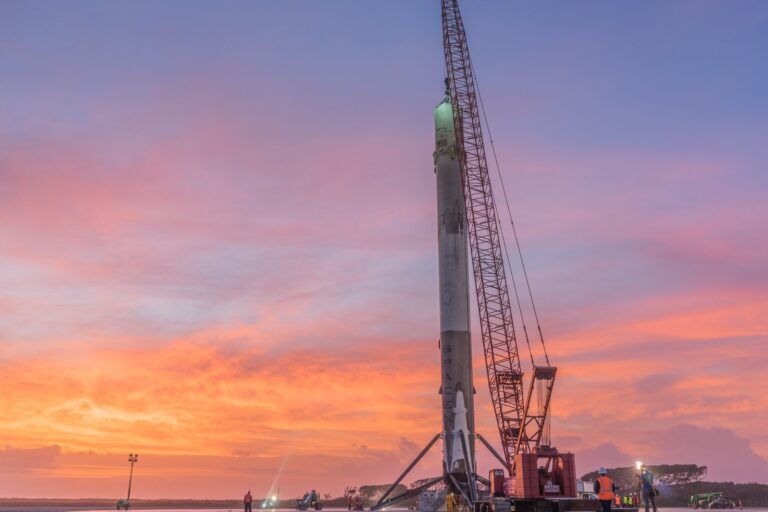
The company then started developing technologies to make the Falcon 9 first stage reusable. In 2015, Falcon 9 flight 20 was the first successful landing of an orbital-class rocket first stage, and the SES-10 mission completed the first reflight of an orbital-class booster in 2017. After a decade of development, the Falcon Heavy, which consists of three Falcon 9-derived boosters, made its maiden flight in 2018. These historical milestones laid the technical foundation for the current launch cadence that now sees nearly three missions every single week.
Launch Sites and Geographic Distribution of Falcon 9 Flights
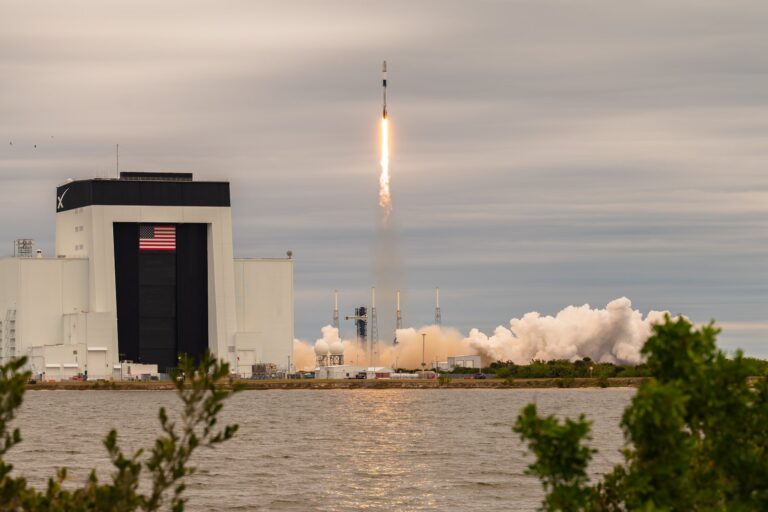
SpaceX’s high‑frequency launch cadence relies on a network of dedicated launch complexes across the United States. The primary east‑coast site is Space Launch Complex 40 (SLC‑40) at Cape Canaveral Space Force Station in Florida, from which the company routinely lifts Falcon 9 rockets for NASA’s Commercial Resupply Services missions. For example, the 35th CRS mission launched at 6:33 a.m. on 13 October 2026 from SLC‑40 before autonomously docking with the International Space Station’s Harmony module.
In addition to the Atlantic coast, SpaceX operates the Starbase development facility in Starbase, Texas, which serves as the hub for the Starship program and also supports Falcon 9 launches when operational needs dictate. The company’s ability to alternate between these two major sites—Cape Canaveral for most ISS‑related flights and Starbase for test and commercial missions—provides the logistical flexibility needed to sustain the near‑three‑missions‑per‑week cadence reported in May 2026.
Orbital Debris Tracking Challenges
The high-frequency launch cadence maintained by SpaceX significantly increases the volume of orbital debris generated during routine operations. As Falcon 9 boosters complete nearly 650 landings and reflights by May 2026, each stage transition adds small fragments to the Low Earth Orbit environment. According to company data, these frequent evening flights contribute to a growing population of tracking objects that require continuous monitoring by space situational awareness networks.
SpaceX operates three primary business segments covering space transportation, telecommunications, and artificial intelligence services, with the space segment developing and flying reusable launch vehicles alongside the Dragon spacecraft. The density of launches from Space Launch Complex 40 at Cape Canaveral Space Force Station in Florida and the Starbase development site in Starbase, Texas, creates a complex debris field. Every name, number, date, quote, plan, and “according to X” regarding these operations must be grounded in verified source material to understand the full scope of the tracking burden.
While the company’s largest customers include NASA, the United States Space Force, and the National Reconnaissance Office, the sheer volume of missions impacts ground-level space weather observations. The appearance of glowing plumes often called space jellyfish across regional skies serves as a visible indicator of these frequent rocket operations. These phenomena are part of an exceptionally busy launch cadence that challenges existing debris mitigation protocols.
Sources
- SpaceX
- SpaceX Dragon Cargo Mission Approaching Station – NASA
- SpaceX earnings Live: SpaceX beats on earnings, capex comes in less than expected
Photo: SpaceX (CC0)