
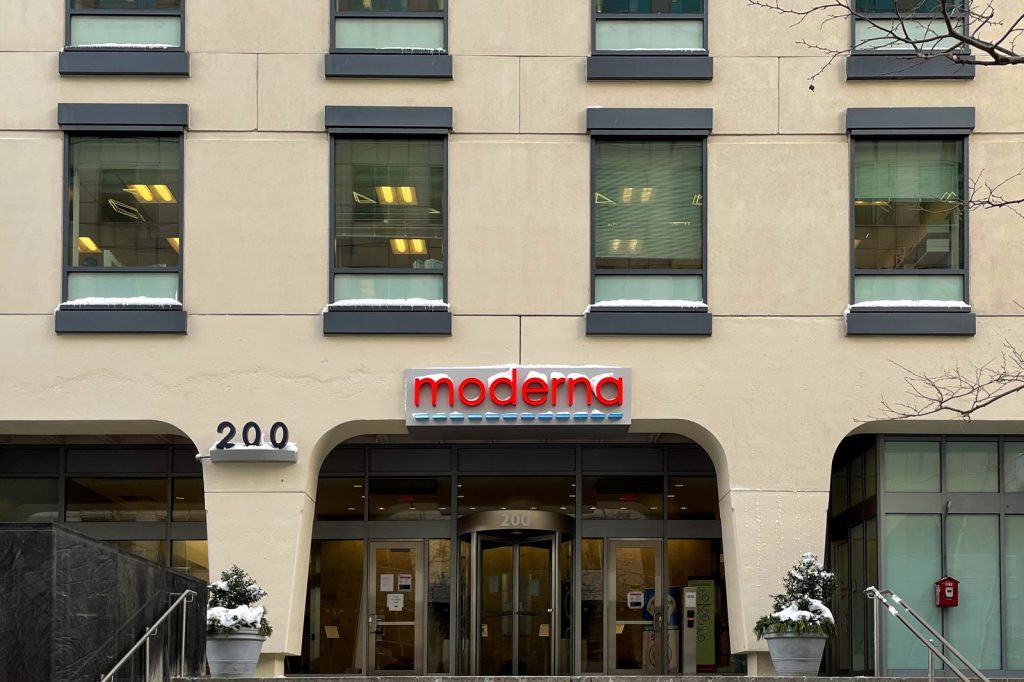
On the morning of August 19, a single press release shifted roughly $86 billion in combined market value. Moderna’s shares rose 177 percent that day and Merck’s closed up 12.6 percent, after the two companies said their personalized mRNA cancer therapy had passed a Phase 3 trial in melanoma. Now comes the harder part: showing it works anywhere else.
What the trial found
The therapy, intismeran autogene, is made one patient at a time. After surgery, a sample of the tumour is sequenced to find mutations absent from healthy cells. Moderna then designs synthetic mRNA encoding up to 34 of the resulting abnormal proteins, called neoantigens, so that the immune system learns what to hunt. It is given with Merck’s Keytruda (pembrolizumab), which releases a brake on immune cells.
The INTerpath-001 trial enrolled 1,137 people whose stage IIB to IV cutaneous melanoma had been completely removed. They were randomized two to one to the combination or to Keytruda alone, for about a year. Merck and Moderna said the combination met both its primary endpoint, recurrence-free survival, and a key secondary one, distant metastasis-free survival. They called both gains statistically significant and clinically meaningful and reported no new safety signals. It is the first positive Phase 3 result for an mRNA cancer therapy.
Why melanoma went first
Melanoma can carry many mutations, which means more neoantigens to aim at, and immunotherapy has already changed how it is treated. It was a favourable proving ground. An earlier Phase IIb study, at about five years, found a 49 percent lower risk of recurrence or death and a 59 percent lower risk of distant metastasis or death compared with Keytruda alone.
The cancers next in line
Moderna and Merck have trials under way in non-small cell lung cancer, bladder cancer, kidney cancer and other solid tumours. Moderna President Stephen Hoge has said the approach may be adapted to kidney, bladder and pancreatic cancers. Roche and BioNTech are building a rival personalized mRNA programme aimed at cancers including colorectal and pancreatic disease. The difficulty is that these tumours are biologically different, and some are less visible to the immune system. None of these studies has yet produced a Phase 3 result.
What is still unknown
These are topline findings. The companies have not released hazard ratios, absolute recurrence rates or subgroup data, and overall survival is still being followed. Full results are due at a future medical meeting. Intismeran is investigational. Patients curious about it should talk to their own doctor about what suits them. Manufacturing is its own test, since each patient needs a separate production run, and no price has been announced. Hoge has said a commercial launch could come next year.
Sources
- Moderna-Merck mRNA Cancer Vaccine Succeeds in Phase III Melanoma Trial
- Personalized mRNA Cancer Therapy Reaches a Phase 3 Milestone in Melanoma | Ascent Research
- Moderna and Merck's Cancer Vaccine Shows Promising Results in Phase 3 Trial | Litquidity posted on the topic | LinkedIn




