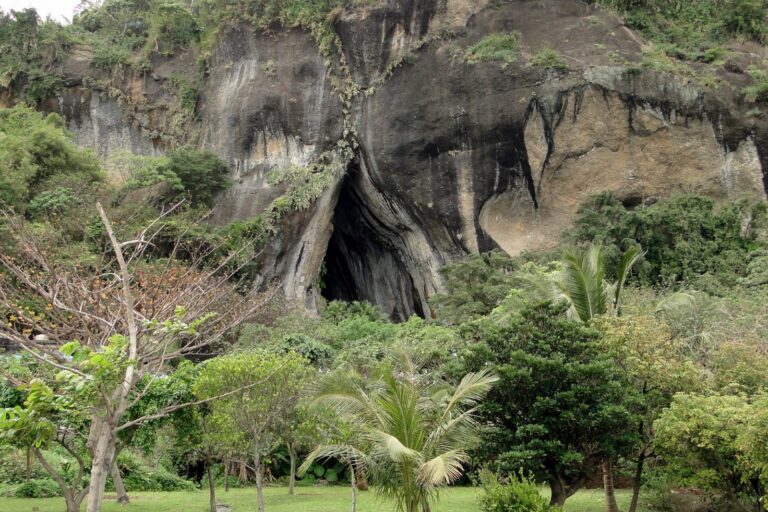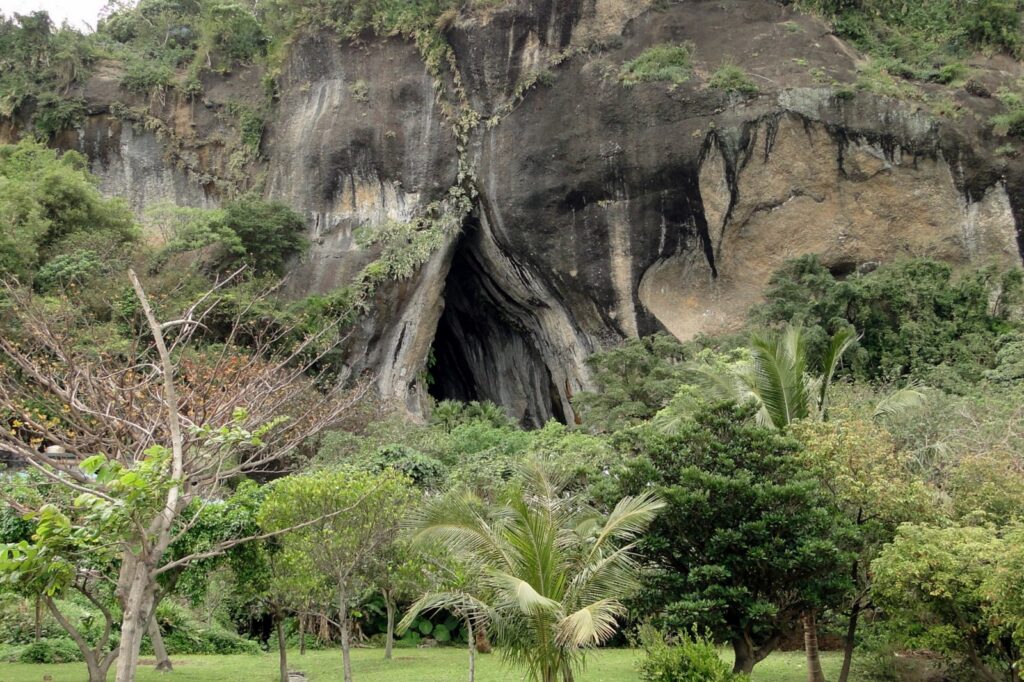
GUANGXI, November 19, 2026 — Nine teeth recovered from two limestone caves in southern China show that Homo erectus lived in dense, closed-canopy rainforests as recently as 184,000 years ago. The find pushes back the species’ known survival on the Asian mainland by roughly 200,000 years and overturns the long-held view that jungle environments were the exclusive domain of Homo sapiens.
Rewriting The Timeline
For decades, the youngest securely dated Homo erectus fossils on the Asian mainland were about 400,000 years old. The species was thought to have vanished from the region as grasslands gave way to expanding tropical forests, eventually making a last stand on the Indonesian island of Java until about 110,000 years ago. Encroaching rainforests were blamed for that final extinction.
The new fossils, recovered from Baxian and Naxian caves in Guangxi province, date to between 324,000 and 184,000 years ago. Kira Westaway, a geochronologist at Macquarie University in Australia who co-led one of the studies, said the species’ long tenure on Earth — nearly two million years — never sat well with the idea that it lacked environmental flexibility. “Homo erectus survived for a really long time, which made her doubt the species lacked the flexibility to live in different environments,” the research notes.
How It Works: Reading The Teeth
Yingqi Zhang, a paleontologist at the Institute of Vertebrate Paleontology and Paleoanthropology in Beijing, led the fieldwork over more than a dozen years. His team recovered two premolars from Baxian cave and six more teeth from nearby Naxian cave. Researchers identified eight of the nine teeth as Homo erectus by analyzing their bumps and grooves. They also extracted ancient proteins from the dental enamel of four teeth, finding links to proteins identified in Homo erectus teeth earlier this year.

To pin down the age, Westaway’s team applied five independent dating methods to the fossil-bearing layers and surrounding sediments at both caves. The convergence of these techniques placed the occupation firmly between 324,000 and 184,000 years ago.
The Science Behind The Habitat
Pollen and faunal analysis confirmed the caves sat within a dense, closed-canopy rainforest at the time. Fossilized bones found alongside the hominin teeth were dominated by forest-dwelling animals such as orangutans, tapirs, and Stegodon, an extinct elephant-like mammal.
Carbon isotope analysis of the enamel told the rest of the story. Animal teeth from the sites showed signatures consistent with feeding exclusively in the closed-canopy forest. Intriguingly, the Homo erectus teeth carried similar signatures. “The animal teeth and the Homo erectus teeth are telling the same story — these individuals were part of a rainforest ecosystem,” said Nicolas Bourgon of the Max Planck Institute of Geoanthropology.
Patrick Roberts, also of the Max Planck Institute, called it the first clear, direct evidence of a non-sapiens hominin living within rainforest habitats. “Rainforests were thought to be a frontier that only modern humans could survive and cross,” said Ben Marwick, an archaeologist at the University of Washington not involved in the research. “But now it seems this idea of Homo sapiens exceptionalism may not be the true story.”
Movement And Mind
Strontium isotope analysis added another layer. The chemical signature in four of the Homo erectus teeth did not match the local limestone geology, suggesting the individuals ranged widely during their youth — possibly from as far as northern Vietnam, some 250 kilometres away. The researchers describe this finding as tentative, but it points to a species capable of navigating complex, resource-scarce landscapes over long distances.
The discovery implies Homo erectus possessed advanced cognitive or technological skills to exploit jungle resources that are patchy, seasonal, and often toxic. What researchers found suggests behavioral flexibility was a key to the species’ success, both in its long duration and its broad dispersal across Asia.
Extinction Questions
If Homo erectus thrived in the rainforests of southern China 184,000 years ago, the cause of its eventual extinction becomes less clear. The species did not simply fail when the forests closed in. The two studies detailing these findings were published in Nature on November 18, 2026.
Sources
- Homo erectus
- Ancient fossils reveal Homo erectus survived in China some 200,000 years longer than we thought
- Homo Erectus May Have Survived in China 200,000 Years Longer Than We Thought
- Cave discovery in China reveals surprising survival skills of Homo erectus | CNN
- Homo Erectus Adopted a Jungle Lifestyle 200,000 Years Ago – Nautilus
- Ancient fossils reveal Homo erectus survived in China some 200,000 years longer than we thought
Photo: Bernard Gagnon (CC BY-SA 3.0)