CAPE CANAVERAL, November 16, 2026 — A United Launch Alliance Vulcan rocket suffered an anomaly in its Centaur upper stage roughly ten minutes after liftoff on Sunday, destroying 40 Amazon Leo broadband satellites and marking the first outright mission failure in the company’s 20-year history. The loss grounds the Pentagon’s primary heavy-lift vehicle and stalls the deployment of Amazon’s answer to SpaceX Starlink.
The anomaly and what we know
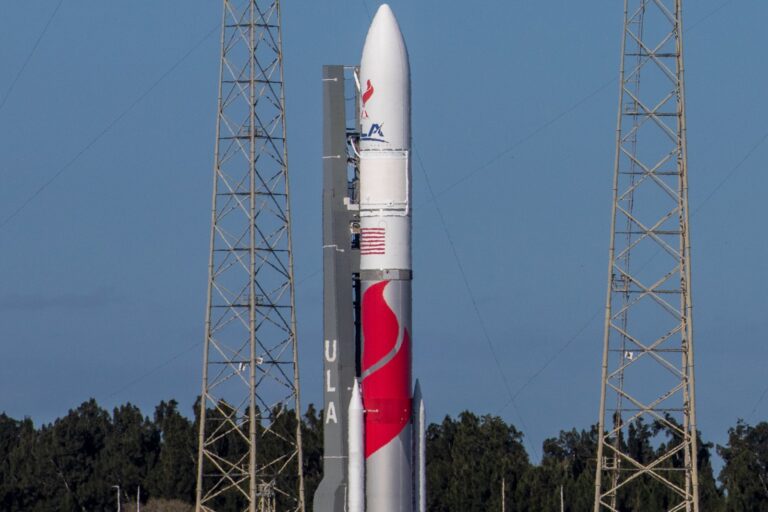
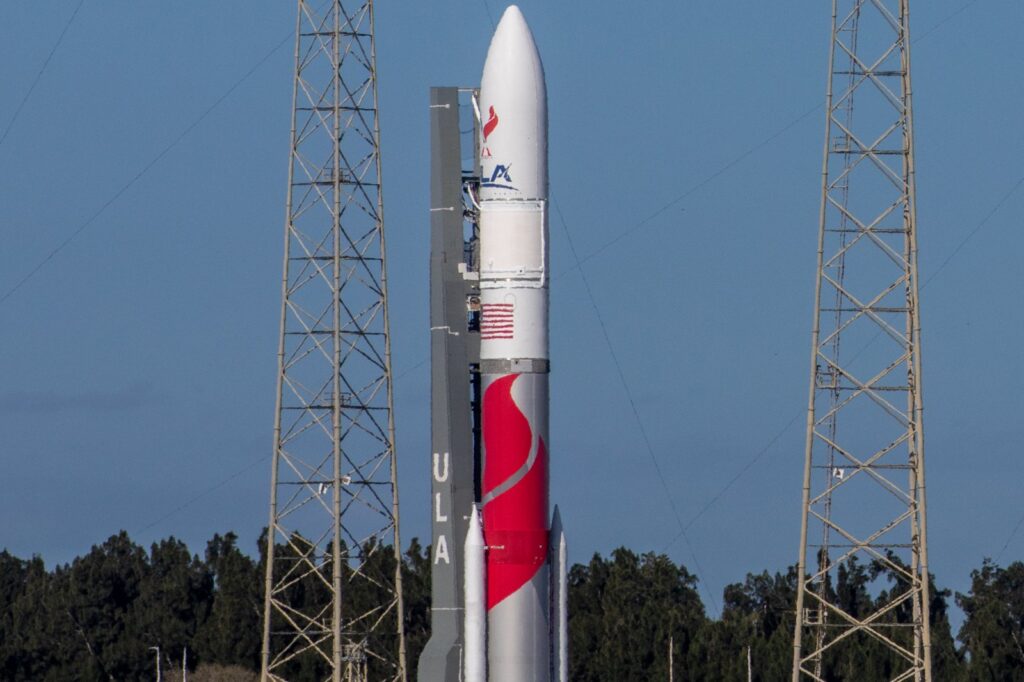
The 214-foot Vulcan lifted off from Space Launch Complex 41 at 12:40 p.m. EST on Sunday after a hold at T-minus 20 seconds for an unexplained technical issue. Six Northrop Grumman solid rocket boosters and two methane-burning BE-4 first-stage engines performed normally through the dense lower atmosphere, with the boosters burning out and separating about a minute and 40 seconds into flight.
Intriguingly, telemetry suggested the first stage burned longer than expected before separating from the Centaur upper stage. The hydrogen-fueled Centaur then took over for a planned 12-minute, 15-second burn. Something went wrong during that firing. ULA confirmed the anomaly 10 minutes into flight but said it did not immediately have specific data to understand what occurred. The company pledged to work with Amazon and appropriate organisations to find the cause, determine corrective action, and return to flight as quickly as possible.
A streak ends after two decades
Since the joint venture between Lockheed Martin Space and Boeing Defense, Space & Security formed in December 2006, ULA had never suffered a total mission loss. The Atlas V and Delta families it inherited flew national security, NASA, and commercial payloads with a reliability record that became the company’s calling card. The Vulcan Centaur, developed from 2014 to replace both retiring families, had flown four times before Sunday. On two of those flights, strap-on solid rocket booster nozzles failed, yet the rocket corrected and still reached orbit. This time, the boosters worked. The failure came later, in a different system, and the payload was lost.
What this means for national security launch
Vulcan is contracted to launch roughly half of the US military’s national security space missions in the coming years. The US Space Force had already placed national security payloads on hold pending analysis of the earlier booster nozzle issues. Sunday’s failure will almost certainly extend that grounding. ULA CEO Mark Peller told Aviation Week before the flight that the company had identified three credible causes for the nozzle problem and taken steps to mitigate all of them. The boosters appeared to work normally on Sunday, but the upper-stage anomaly introduces a new variable investigators must now chase.
Amazon’s constellation plans delayed
Sunday’s mission, designated LV-01, was the first of 38 Vulcan launches Amazon booked to deploy its Project Kuiper constellation. More than 3,300 Leo satellites are needed to complete the network. ULA has already launched eight Leo flights on Atlas V rockets, bringing the total on orbit to 436 before Sunday’s loss. Amazon also holds contracts for 24 launches on Blue Origin’s New Glenn, 24 on Europe’s Ariane 6, and 13 on SpaceX Falcon 9 rockets. New Glenn remains grounded after a catastrophic on-pad explosion last May caused by an oxygen valve in one of its seven BE-4 engines — the same engine model that powers Vulcan’s first stage. Blue Origin retrofitted the Vulcan engines with a design improvement before this flight.
Customer confidence and the path forward
Amazon projected confidence in its launch partner despite the loss. “There is risk with any launch, and that’s especially true for inaugural missions like LV-01,” the company posted on X. “ULA has been a trusted partner for Amazon, and we believe they’ll learn from this mission and deliver on their long-term plans for Vulcan.” NASA Administrator Jared Isaacman offered assistance, writing on X that the agency is available to help with the investigation and remediation effort. The investigation timeline will dictate when Vulcan flies again and how the market absorbs the delay.
Sources
- United Launch Alliance
- United Launch Alliance loses Vulcan rocket and 40 Amazon Leo internet satellites in launch mishap
- Vulcan rocket fails during launch, dealing major blow to SpaceX competitors
- First ULA Vulcan rocket suffers in-flight anomaly, fails to place Amazon mission in orbit
- Vulcan rocket fails, destroying 40 Amazon Leo satellites
- ULA suffers first outright failure with loss of Vulcan rocket carrying 40 Amazon Leo satellites
Photo: NASA/Ben Smegelsky (Public domain)