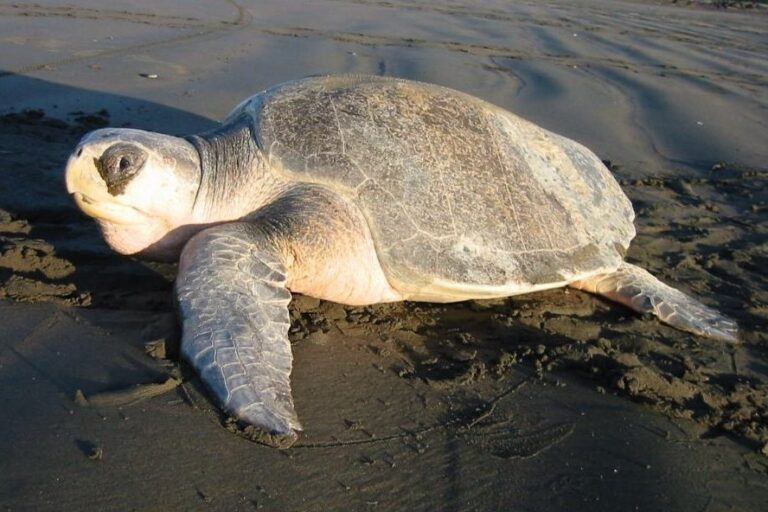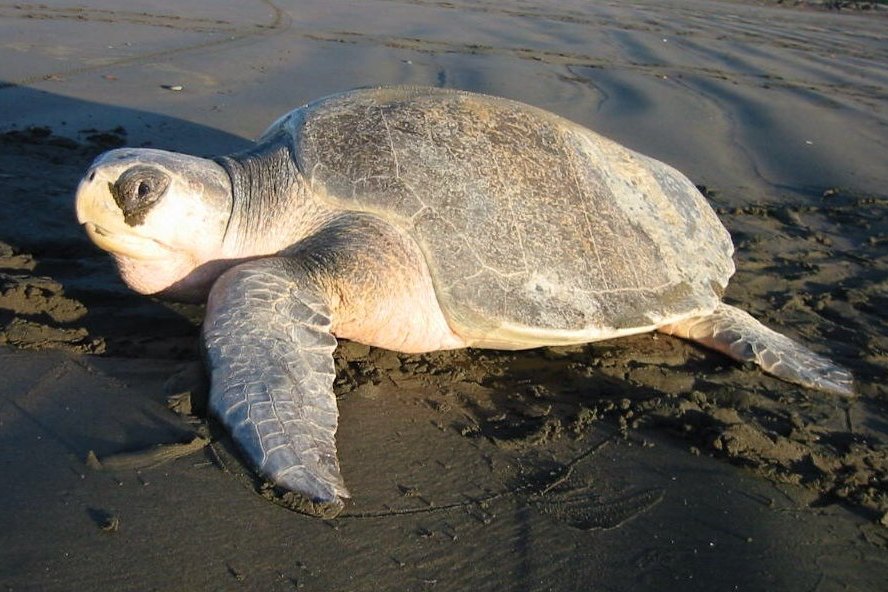
LONG BEACH, November 16, 2026 — Olive ridley sea turtles have nested on the U.S. West Coast for the first time in recorded history, with 204 eggs found on Seal Beach and Huntington Beach in September 2026. The Aquarium of the Pacific in Long Beach has incubated and released 54 hatchlings, while a second clutch of 104 eggs remains under observation.
Historic Nesting on the West Coast
The discovery marks the first-ever documented sea turtle nesting on the continental U.S. Pacific coast. Before September, the northernmost known olive ridley nest was approximately 700 miles south in Baja California Sur, Mexico, according to the Los Angeles Times. Two separate nests were confirmed: one near Seal Beach on September 16 and another roughly eight miles away near the Huntington Beach Pier on September 19. Photo analysis by NOAA Fisheries research biologist Dr. Cali Turner Tomaszewicz confirmed that two different females laid the clutches, identifying them by body shape, barnacle patterns, and scute arrangements on their shells.
Warm Waters and El Niño Drive Range Shift
Scientists attribute the unprecedented nesting to unusually warm ocean temperatures linked to a strong El Niño pattern. An extreme marine heat wave pushed Southern California water temperatures closer to the tropical ranges where olive ridleys typically nest, in regions such as Mexico, Nicaragua, Costa Rica, and Panama. NOAA Fisheries noted that the warm conditions likely drew the turtles far north of their established range. Olive ridleys are categorized as hard-shelled turtles; globally, five of the seven sea turtle species are listed as threatened with extinction on the IUCN Red List.
Emergency Relocation Ahead of Storm Surge
Conservation teams moved the eggs days after discovery as Hurricane Polo approached, bringing high tides and strong surf that threatened to inundate the nests. On September 25, biologists with the U.S. Fish and Wildlife Service collected 104 eggs from Seal Beach and 100 from Huntington Beach, transferring them to the Aquarium of the Pacific. The decision to relocate was made under exceptional circumstances; officials noted that standard practice favors natural incubation on the beach. A third nest discovered November 1 in Ventura was destroyed by high tides before it could be protected, with the few remaining eggs deemed non-viable.
Incubation and Release Results
The Seal Beach clutch was incubated for 58 days in a temperature- and humidity-controlled environment at the aquarium. Staff observed the first hatchling emerge around 7:15 p.m. on November 13, followed by a rapid emergence of 54 turtles over roughly two hours. All 54 were released before dawn on November 14 on a dark stretch of Seal Beach to minimize disorientation from artificial light. Approximately 50 eggs from the Seal Beach nest remain in incubation and will be excavated for analysis once staff are confident no more will hatch. The 104 eggs from Huntington Beach continue to incubate; olive ridley eggs typically hatch within 45 to 60 days, though viability for the California clutches remains uncertain.
What Comes Next
Agencies including NOAA Fisheries, the U.S. Fish and Wildlife Service, the California Department of Fish and Wildlife, and the Aquarium of the Pacific are coordinating ongoing monitoring. If the remaining eggs hatch, the plan is to release hatchlings on their natal beaches. The public is advised to report any stranded sea turtles to the NOAA California Sea Turtle Stranding Line at (562) 506-4315.
Sources
- Sea turtle
- California's first native-born sea turtles hatch and scuttle into the sea
- We’ve got baby turtles! First sea turtle eggs laid on SoCal beaches have hatched
- Regents Approve Construction of Sea Turtle Hospital at Texas A&M University at Galveston – Texas A&M University System
- Historic moment as first batch of olive ridley turtles released back to the ocean
- Three rare sea turtle nests discovered in California for the first time on the US West Coast; scientists moved more than 200 eggs to an aquarium as record ocean temperatures raise questions
Photo: Remove "cropped" from file name and see original file (CC BY-SA 4.0)