## AI ‘Vibe Archaeology’ Claims Maya Discovery, Exposing Deep Divide Over Science Standards
An AI researcher’s viral claim of a new Maya site was debunked within days, igniting debate over whether machine learning can replace traditional archaeological verification.
What is ‘Vibe Archaeology’?
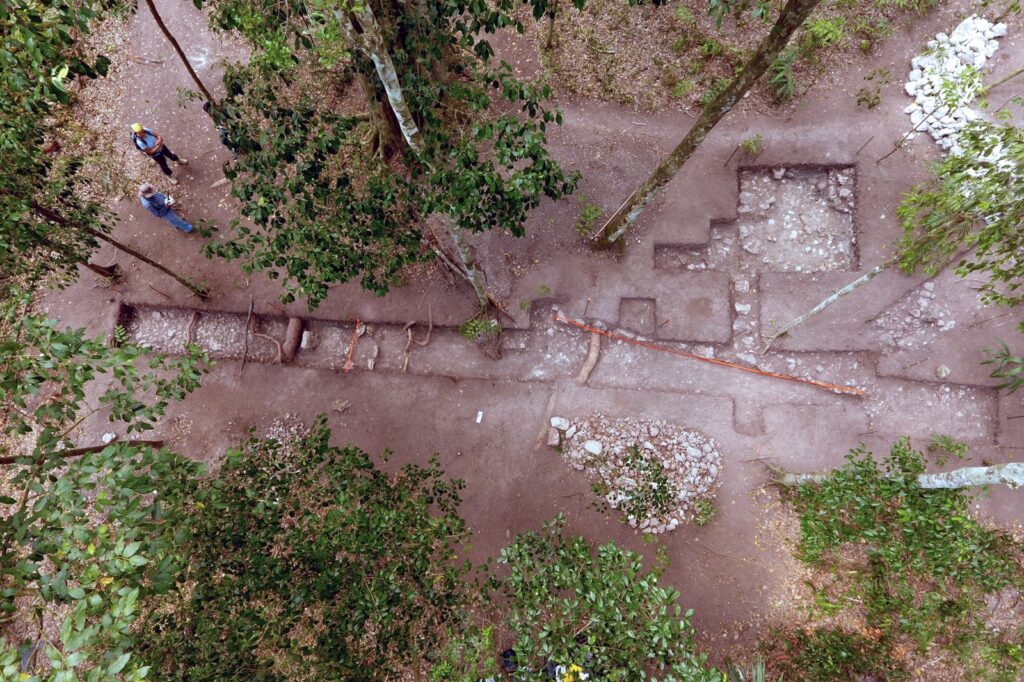
On November 10, 2026, AI researcher Pietro Miotti posted on X, claiming to have discovered a previously unmapped ancient Maya civic center in Mexico using a method he dubbed ‘vibe archaeology’. This approach involves prompting AI agents to analyze NASA lidar data for undocumented structures. Miotti’s AI identified a site that it couldn’t find in academic papers, suggesting it might be a new discovery.
How Does it Work?
Miotti employed dozens of AI agents to sift through publicly available lidar data from NASA, covering the former Maya Empire. Lidar, or light detection and ranging, is a remote sensing technology that uses laser pulses to create detailed 3D maps of the Earth’s surface. The AI’s inability to find academic documentation of the site led Miotti to contact Mexico’s National Institute of Anthropology and History (INAH), which confirmed the site wasn’t in their registry. This lack of registration was taken as a potential sign of a new discovery.
Why is it Controversial?
Archaeologists quickly debunked Miotti’s claim, revealing that the site had been previously mapped by Francisco Estrada-Belli, a professor at Tulane University. This incident exposed a deep divide within the scientific community regarding AI’s role in research. Critics argue that ‘vibe science,’ which bypasses traditional peer review and field validation, undermines scientific rigor. They cite this episode as an example of AI’s limitations, particularly its tendency to ‘hallucinate’ or generate false positives.
Proponents, however, see AI as a powerful tool for accelerating discovery, pointing to its success in solving complex mathematical problems like the Navier-Stokes equations. The debate centers on whether AI should augment or replace traditional fieldwork and the extent to which algorithmic novelty can be trusted without human verification.
This controversy highlights the ongoing tension between the rapid advancements in AI technology and the established methodologies of scientific disciplines, leaving the question of AI’s role in archaeology and beyond still very much open.
As of November 19, 2026, the discussion continues, with no clear consensus on how to integrate AI into the scientific process while maintaining the integrity of research.
Sources
- Ancient Maya site uncovered with ‘vibe archaeology’ ignites firestorm over AI in science
- Maya
- North Castle Sells Maya Kaimal to India's LT Foods – The Deal
- Dining Diary: DeGidio’s, Pizza Maya and Jujube, the new Chinese-Texas barbecue spot
- Ancient Maya site uncovered with ‘vibe archaeology’ ignites firestorm over AI in science
- LT Foods buys Maya Kaimal Indian sauces business
Photo: Henry Pérez (CC BY-SA 4.0)