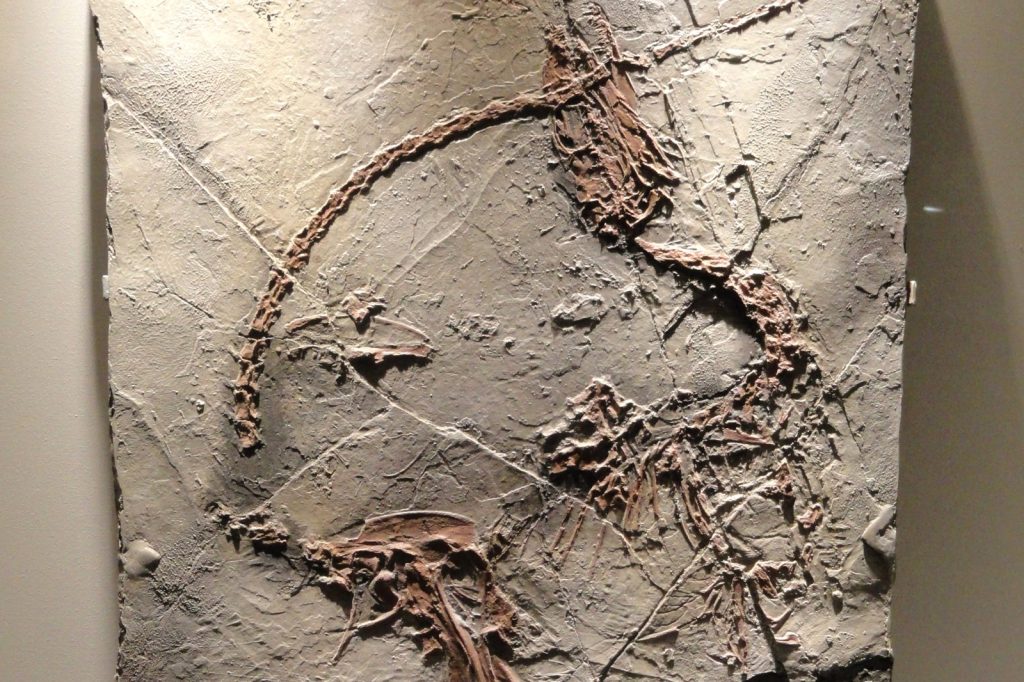
Scientists announced on 6 September 2023 that a remarkable dinosaur specimen recovered from Fujian province in China has been named Fujianvenator. The fossil, which displays a pair of ordinary hind limbs plus two additional limb structures interpreted as wings, is being hailed as a key piece of evidence for the transition from non‑avian dinosaurs to modern birds. The find arrives at a time when the relationship between theropod dinosaurs and birds is already well established, but the precise steps that led to powered flight remain debated.
By preserving both walking legs and wing‑like appendages on a single individual, the Fujianvenator provides tangible support for intermediate morphologies that may have preceded the evolution of true avian flight. Researchers plan to examine the specimen’s anatomy in detail to address questions about its lifestyle, habitat and phylogenetic position.
Morphological analysis will focus on the structure of the presumed wings, the arrangement of feathers (if any are present), and how these features compare with those of earlier theropods and later early birds. Insights gained could clarify which adaptations were crucial for the emergence of the diverse avian clade seen today. The discovery also underscores the broader narrative of dinosaur dominance on land for more than 150 million years, beginning in the early Triassic and persisting through the Jurassic and Cretaceous periods until the mass extinction event about 66 million years ago.
Within that extensive timeline, the lineage that gave rise to birds diverged from other theropods during the Late Jurassic, a period marked by significant geological and climatic shifts that created new ecological niches. By situating the Fujianvenator within this context, scientists hope to illuminate how changing environments may have driven evolutionary experimentation, such as the development of wing‑like limbs.
The fossil’s age and location suggest it lived during a phase when continents were rearranging and novel habitats were forming, potentially offering the selective pressures needed for flight‑related traits to evolve. The announcement has already sparked enthusiasm among paleontologists and ornithologists worldwide. The specimen’s unique combination of features is expected to stimulate further research, employing modern imaging, 3D modeling and other advanced analytical techniques to reconstruct its biology and behavior.
Collaborative efforts across institutions are anticipated, reflecting a broader trend toward interdisciplinary study of ancient life. Beyond the scientific community, the Fujianvenator discovery is likely to capture public imagination, inspiring interest in paleontology and the deep history of life on Earth.
It serves as a reminder of the value of continued field exploration and the many unanswered questions that still reside in the fossil record. As analysis proceeds, the fossil will contribute to a more nuanced picture of how the complex web of dinosaurian traits gave rise to the feathered, flight‑capable birds that dominate the skies today. Each new piece of evidence, such as the Fujianvenator, expands our understanding of evolutionary pathways and highlights the intricate connections that bind past and present ecosystems.