
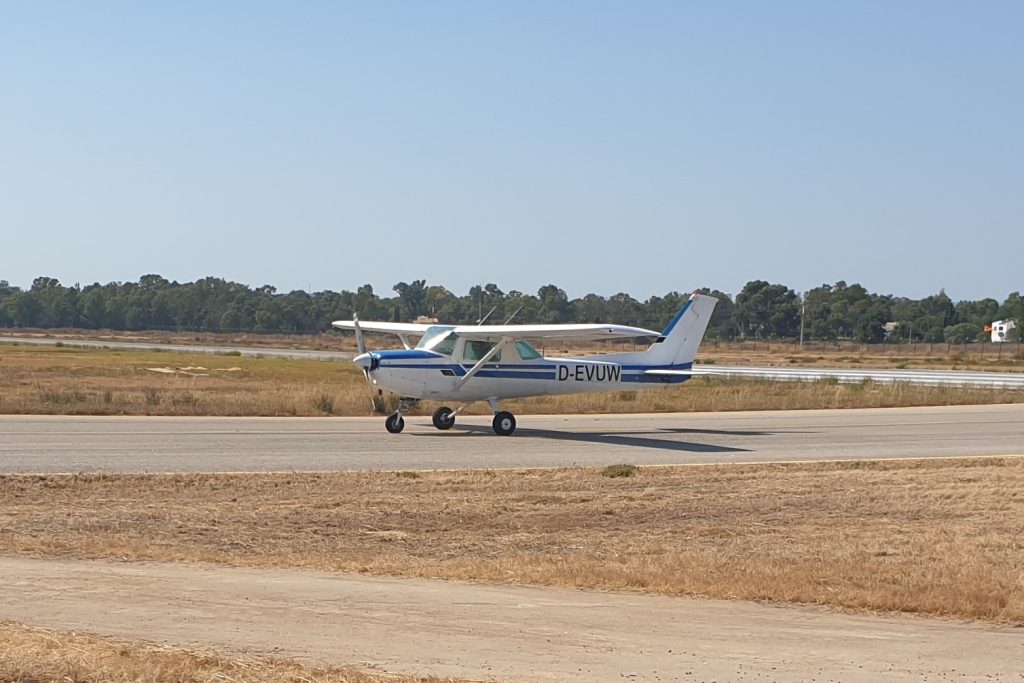
The accident that claimed two lives on August 2 involved a Cessna 152 that had been in service for decades. The aircraft, which rolled off the production line forty years ago, is no longer built, yet it remains a common sight in flight schools worldwide. Its reputation as a reliable, low‑cost trainer has kept it in the air long after manufacturing ceased, with many operators acquiring examples from the used market. On the day of the incident the plane departed from Laoag, Ilocos Norte, bound for Tuguegarao, Cagayan.
A student pilot from India occupied one seat, while a certified flight instructor occupied the other. Both occupants were killed when the aircraft went down in Luna, Apayao.
The flight was a routine training sortie, the sort of lesson that the Cessna 152 has been used to deliver since the 1970s. The Cessna 152 is a fixed‑tricycle‑gear model that received a modest power increase over its predecessor, the Cessna 150, and enjoys a longer time‑between‑overhauls interval. These characteristics made it inexpensive to operate and straightforward to maintain, prompting flight schools to purchase them in fleets.
Even though production halted long ago, the type continues to be flown extensively on the secondary market. Four decades of service mean that every structural element—rivets, control cables, cylinders—has endured thousands of heating and stress cycles.
In such an aging airframe, meticulous maintenance logs and inspection records become critical. A single overlooked crack or corrosion spot can transform a routine lesson into a tragedy. Investigators will now scrutinize the aircraft’s maintenance documentation, examine the engine and airframe, review weather conditions, and evaluate the pilots’ actions.
The findings of the inquiry will have implications beyond the immediate school involved. If a maintenance lapse is identified, regulators may impose stricter inspection requirements for similar aircraft.
Should pilot error be deemed the primary factor, training curricula could be adjusted to address identified gaps. If the investigation fails to uncover a definitive cause, the resulting uncertainty will itself pose a challenge for every flight school still operating these aging trainers. Although the Cessna 152 is not considered inherently unsafe, the accident highlights how small failures within a complex system—combining machine condition, human performance, and procedural oversight—can accumulate with serious consequences.
The system had functioned without incident for many years; on August 2 it did not. The broader context of flight training carries inherent risk.
Students inevitably make mistakes, and instructors work to correct them, but the margin for correction can disappear. The Cessna 152 is praised for its forgiving handling characteristics, yet it is not immune to hazards such as low‑altitude stalls, sudden mechanical failures, or misjudged approaches. Any of these can terminate a lesson in seconds.
Two individuals lost their lives: one who was learning to fly and one who was teaching him. The flight school that dispatched the aircraft will face scrutiny, and the Philippine civil aviation authority is expected to open a formal file.
Families of the Indian student and the instructor await answers. Ultimately, the crash serves as a reminder that the longevity of a widely used training aircraft does not eliminate the need for vigilance. The machine kept flying, the training continued, until the sequence of events on that August day brought both to a halt.




