AI and machine‑learning models can now sift through thousands of polymer candidates and flag those most likely to resist marine biofouling, cutting the laboratory testing phase from years to months.
Why Antifouling Paint Matters
Marine biofouling adds drag to hulls, raising fuel consumption and emissions while accelerating material degradation and maintenance costs.
Traditional antifouling paints often rely on heavy‑metal biocides, such as copper compounds, that pose risks to human health and marine ecosystems.
AI‑Driven Screening of Chemical Space
Recent advances in AI, ML and materials informatics enable predictive models that estimate fouling resistance, durability and environmental impact of polymer formulations.
The models learn structure‑property relationships from existing data, then rank thousands of virtual compounds, allowing researchers to focus experimental work on the most promising candidates.
Generative algorithms can even propose novel polymer backbones that avoid heavy metals while maintaining performance, a step beyond tweaking known chemistries.
Performance Metrics and Data Gaps
Key metrics AI can predict include fouling resistance, corrosion protection and overall sustainability.
However, the field suffers from data scarcity, heterogeneous experimental datasets and the absence of standardised testing protocols, which limit model accuracy and transferability.
Most AI applications to date stem from broader coatings research rather than marine‑specific studies, underscoring the need for dedicated data generation.
Implications for Ship Operators and the Coatings Market
Accelerated discovery could shorten development cycles from years to months, reducing R&D costs for manufacturers and lowering total‑ownership costs for ship owners.
Regulators are tightening scrutiny of toxic antifouling paints, creating market pressure for sustainable alternatives.
The global rheology modifiers market, a critical segment for coating performance, is projected to grow at a 3.3 % CAGR through 2035, driven by demand for eco‑friendly formulations.
Next Steps Toward Commercialization
The review calls for a staged pathway: generate standardised data, develop predictive models, validate experimentally, and eventually deploy autonomous discovery platforms.
Public consultation on a new active ingredient, Selektope, closes on 17 December, highlighting regulatory attention to novel antifouling solutions.
Sources
- AI Accelerates Discovery of Sustainable Marine Antifouling Coatings – European Coatings
- Anti-fouling paint
- The Boat Layup Checklist That Protects Your Spring Season
- Rheology Modifiers (Coatings) Market To 2035: Waterborne Shift Supports Growth – News and Statistics – IndexBox
- EPA Seeks Feedback On Applications To Stop Barnacles On Boats
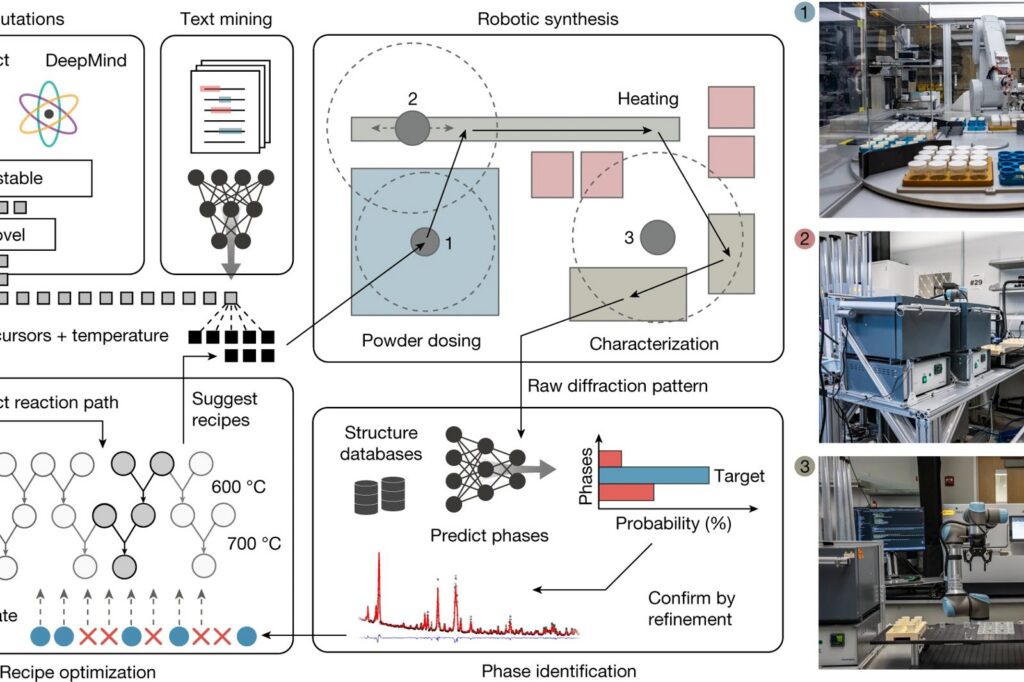
Photo: Authors of the study: Nathan J. Szymanski, Bernardus Rendy, Yuxing Fei, Rishi E. Kumar, Tanjin He, David Milsted, Matthew J. McDermott, Max Gallant, Ekin Dogus Cubuk, Amil Merchant, Haegyeom Kim, Anubhav Jain, Christopher J. Bartel, Kristin Persson, Yan Zeng & Gerbrand Ceder / wikimedia (CC BY 4.0)