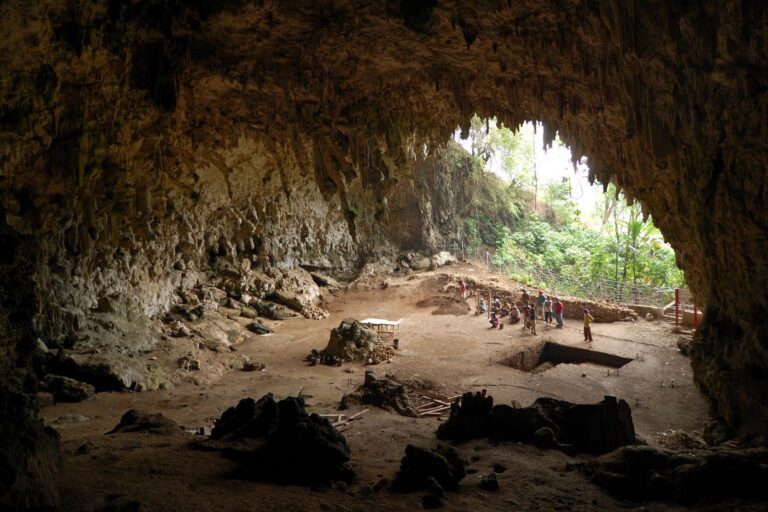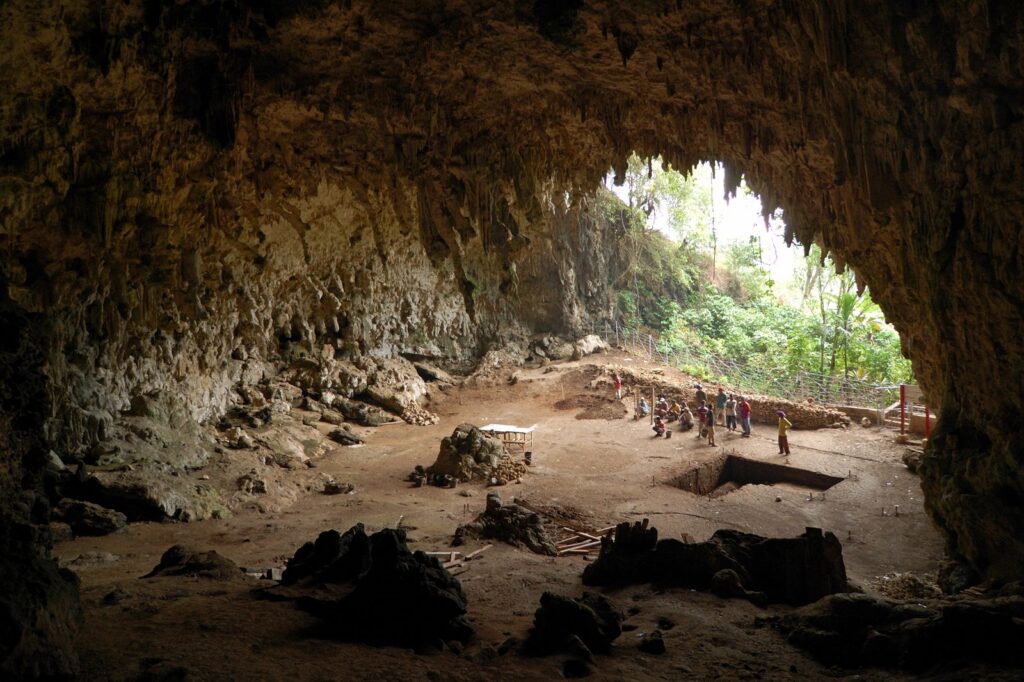
Scientists have identified a previously unknown species of prehistoric bird, Megapodius rokusi, from a fossilized leg bone discovered in Liang Bua cave on the Indonesian island of Flores, a cave famous for its ancient human relative, Homo floresiensis, nicknamed the “hobbit”. This discovery provides new insights into avian evolution in the region, as it is the first described megapode fossil from Wallacea, the island region between mainland Asia and Australia.
Background And History
The fossil, which consists of the lower portion of a right tarsometatarsus, was excavated in 2009 from cave sediments dating back approximately 190,000 to 120,000 years ago. According to Hanneke Meijer, a paleontologist at the University Museum of Bergen, the bone is larger than the same bone in any known living or extinct species of Megapodius. The species name honors Indonesian zooarchaeologist Rokus Due Awe, who played a crucial role in the analysis of faunal remains and was the first person to correctly identify the hominin bones and teeth that became part of the evidence used to describe Homo floresiensis.
How It Works
Megapodius rokusi belonged to a group of birds called megapodes, which are ground-dwelling relatives of chickens known for their powerful legs and feet. Unlike most birds, megapodes incubate their eggs by burying them and relying on environmental heat rather than body heat. As Meijer and colleagues explained, “Megapodes are a group of birds that incubate their eggs by burying them, exploiting environmental heat rather than body heat.” This unique characteristic allows them to thrive in their environment, and their eggs are highly nutritious, making up about 50-60% of the egg weight.
The Numbers
The newly identified species weighed approximately 3.9 kg, several times heavier than its living relative, the orange-footed megapode, which weighs between 0.5 and 1.2 kg. The fossil discovery provides valuable information about the birds that once inhabited the region, and the fact that megapodes do not occur in mainland Southeast Asia nor on the Greater Sunda Islands raises questions about their distribution and evolution. As the researchers noted, the distinct mounds and communal burrowing grounds of megapodes make their eggs and chicks highly susceptible to predation, and their eggs would have been an accessible source of nutrients for both Homo floresiensis and modern humans.
What It Means Now
The discovery of Megapodius rokusi sheds new light on the avian evolution in the region and provides insights into the ecosystem of Liang Bua cave. The fact that the living species, the orange-footed megapode, may have arrived on the island only after the larger bird had disappeared, raises questions about the island’s ecological history. As Meijer and colleagues stated, “Their eggs would have been an accessible source of nutrients for both Homo floresiensis and modern humans before and after 50,000 years ago, respectively.” The study, published in October 2026 in the journal Alcheringa, contributes to our understanding of the region’s paleontology and the evolution of megapodes. The findings were published online on October 22, 2026, with the doi: 10.1080/03115518.2026.2741158.
Sources
- Scientists Discover Giant Prehistoric Relative of the Chicken in Cave Once Home to Ancient ‘Hobbits’
- Chicken
- Large Megapode Bird Identified from Flores Cave Bone | Sci.News
Photo: Rosino (CC BY-SA 2.0)