
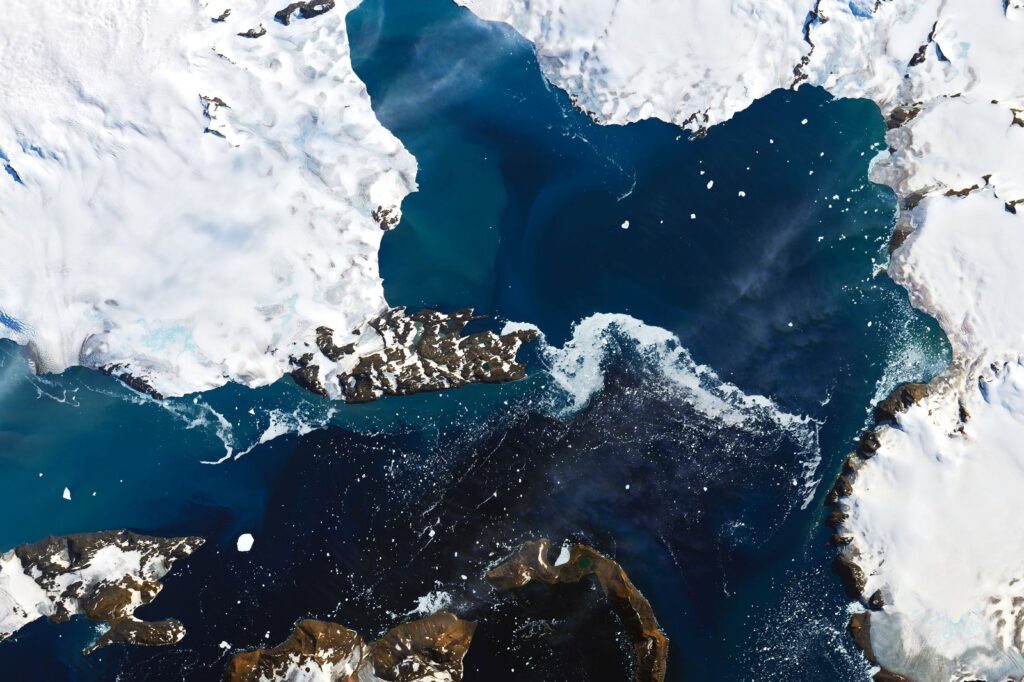
In July 2024, during the depths of the Antarctic winter, a heat wave pushed temperatures in some regions to 28 degrees Celsius above the seasonal average—a swing of roughly 50 degrees Fahrenheit. The event occurred when the sun had been below the horizon for weeks, a period when extreme cold is expected to be absolute. Instead, selected areas recorded temperatures 10 degrees Celsius higher than normal.
Scientists describe the spike as an anomaly, though such anomalies are becoming increasingly difficult to dismiss as rare occurrences. The Antarctic winter spans from March to September, characterized by darkness and deep freeze.
The July heat wave broke this pattern with force, but the temperature surge was not uniform across the continent. Some zones experienced the warming more acutely than others. This uneven distribution means that damage to local ecosystems will likely be patchy, unpredictable, and challenging to monitor.
Antarctica’s environment is not adapted to warmth. Its flora and fauna—lichens, mosses, microscopic life, penguins, and seals—survive by tolerating extreme cold.
A sudden mid-winter thaw disrupts every layer of this system. Snow melts early, ice shelves weaken, and breeding cycles can collapse if the ground becomes slushy. The balance is delicate and was already under pressure from long-term warming trends. A single heat wave can push parts of that system past a tipping point.
The underlying forces driving this event are clear. Polar regions are warming faster than the global average, a well-established pattern.
The Antarctic winter is normally insulated by its lack of sunlight, but atmospheric currents can shift, bringing warm air from lower latitudes. That appears to be what happened in July 2024. The heat wave was not a local fluke but a symptom of a larger system in flux.
If mid-winter heat waves become more common, the ice will respond. Antarctica holds enough frozen water to raise global sea levels by dozens of meters.
No single event will unleash that, but each extreme event weakens the structure. The 2024 heat wave hit during the season when ice should be growing thickest, stressing the ice sheet at its foundation. Antarctic ice loss drives sea-level rise worldwide, and coastal cities from Miami to Shanghai are already planning for higher water.
A heat wave in the dark Antarctic winter speeds that clock. The temperature anomalies were so large that they dwarfed previous winter records.
The fact that it happened in the middle of winter, when the continent should be at its coldest, makes the event stand out. It is a warning written in degrees. The question is whether anyone will read it before the next one hits.




