
The story begins with shovels, not scholars. In 1971, workers digging near an air raid shelter outside Changsha broke through into an unexpected void: a sealed burial chamber of China’s Han dynasty. What the archaeologists who followed found inside, at its heart, was a woman the ground had refused to claim. Her name was Xin Zhui, a noblewoman remembered as Lady Dai, and she had died in 163 BC. Her body, by every account since, ranks as the best-preserved human mummy ever recovered.
What the excavators saw was not a skeleton but a person. The skin was still soft, with moisture and elasticity. Her original hair remained in place, on her head, inside her nostrils, along the brows and lashes. Every organ was intact, and her veins still held type-A blood. When pathologists examined her, they found gallstones, elevated cholesterol, hypertension and liver disease, and, in her stomach and intestines, 138 undigested melon seeds. Melon seeds digest in about an hour, so the fruit was likely her last meal, eaten minutes before a heart attack, which the clots in her vessels marked as her cause of death.
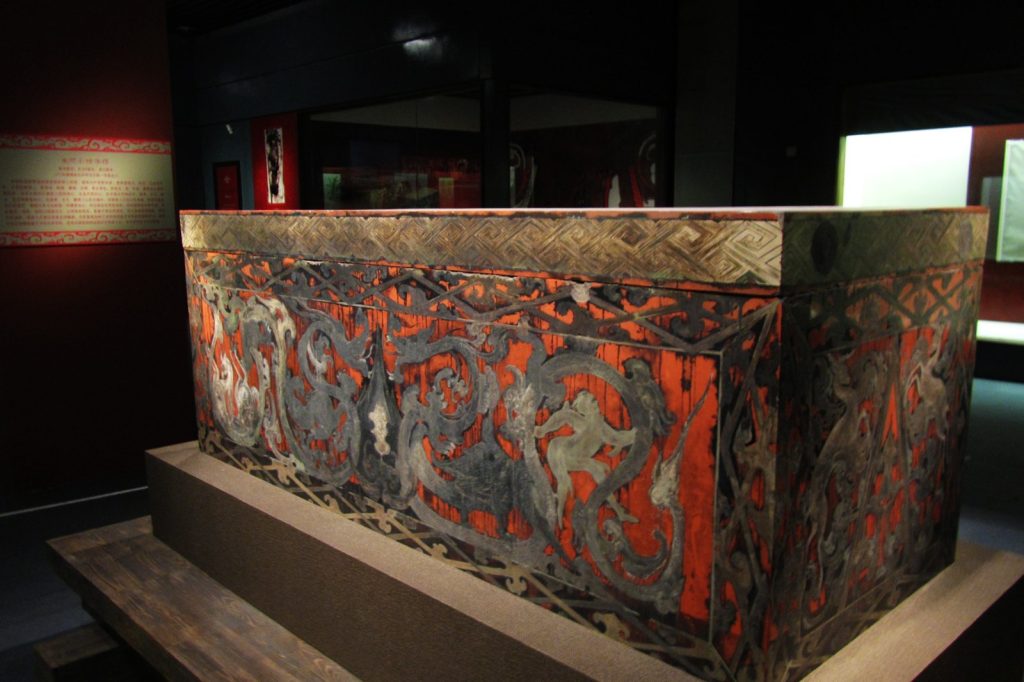
How she survived two millennia is only partly answered. She lay nearly 40 feet underground inside the smallest of four nesting coffins, the inner ones lacquered and painted with scenes of death, the afterlife and immortality, and adorned with feathers, with silk sachets of aromatic herbs in each of her hands. The burial chamber had been packed with charcoal and sealed under clay and dirt, keeping out bacteria, water and oxygen; her body, wrapped in 20 layers of silk, lay in 21 gallons of a mildly acidic, red-tinted liquid containing magnesium. No embalming fluid was found inside her, and researchers still cannot say for certain what role, if any, the liquid played.
For those involved, the sting came after the opening. Once oxygen touched her, the body began to deteriorate, and the photographs that survive do not do the first sighting justice. The tomb itself was excess embodied: more than 1,000 artifacts, makeup and toiletries, hundreds of pieces of lacquerware, 162 carved wooden figures standing in for her servants, and nearly 100 dishes of food, from beef and goose to strawberries and sparrow, laid out for an afterlife she plainly meant to enjoy. Reporters later nicknamed her “The Diva Mummy”.
What unfolded that year has kept her famous ever since: a silk banner in pristine condition, divided into heaven, the lady with her servants, her body among mourners, and the underworld, sealed the message. Today she rests at the Hunan Provincial Museum, still soft to the touch, still defying explanation, a woman who wanted to keep her lifestyle, and, against every odd, did.
Sources
- Xin Zhui's Lady Dai Mummy: The Best-Preserved Corpse In History
- Meet Xin Zhui: The Most Well-Preserved Mummified Body In History




