
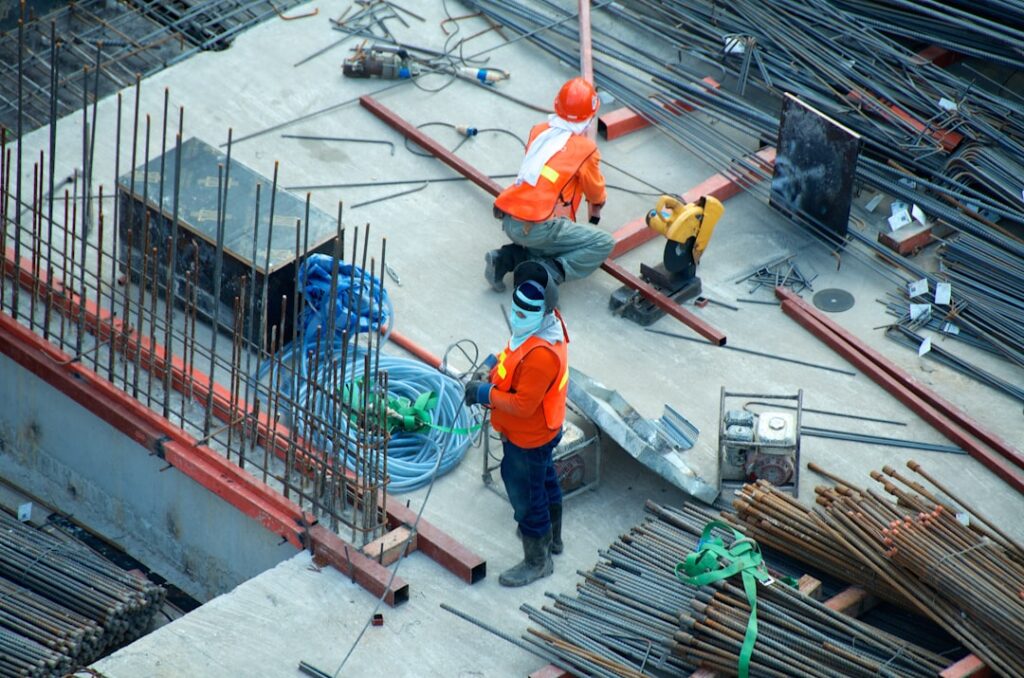
Busan, South Korea — The construction industry spent more than $11 trillion globally in 2022. On February 14, 2025, a fire at a building site in this port city killed six people and injured seven. The two numbers sit side by side: trillions in spending, a handful of lives lost.
The connection between them is what the industry is supposed to manage, and what it keeps failing to manage. The fire itself is a local tragedy.
Six families are grieving. Seven more workers are in hospitals or recovering. But the accident in Busan is also a data point in a much larger pattern.
Construction is one of the world’s deadliest industries. The International Labour Organization has estimated that at least 60,000 workers die on construction sites every year — more than 160 a day.
South Korea has its own grim record. In 2022, the country passed the Serious Accidents Punishment Act after a series of high-profile industrial deaths. The law holds company executives criminally liable for safety failures.
It did not stop this fire. The report on the Busan fire notes that the industry “must also focus on” safety. That is a polite way of saying it has not focused on it enough.
Global construction spending hit $11 trillion in 2022. That is an enormous sum of money.
A fraction of it, properly spent on fire suppression systems, evacuation plans, and worker training, might have changed the outcome in Busan. But construction is a low-margin, high-pressure business. Deadlines are tight.
Budgets are tighter. Safety is treated as a cost, not an investment.
This is not a new problem. The report mentions that the industry “plays a vital role in the development and growth of economies.” It does. Construction contributes heavily to GDP in many countries.
In South Korea, construction accounts for roughly 16 percent of the economy. The sector builds the apartments people live in, the factories where they work, the roads they drive on. But it also kills them.
The same industry that creates the built environment also creates the conditions for these fires, these falls, these collapses. The Busan fire is a small event in a large industry.
It will likely be investigated. South Korean authorities will look for violations. Somebody may be charged.
But the fundamental structure that produced the accident — the pressure to build fast and cheap, the treatment of safety as optional, the tolerance for risk — will remain in place. That structure is not unique to Busan or to South Korea.
It is global. The $11 trillion figure is not just a measure of economic activity. It is also a measure of exposure.
Every dollar spent on construction carries a certain risk. The more you spend, the more risk you generate. The industry has not figured out how to spend that money without killing people.
The report notes that “the demand for construction services is likely to increase” as urbanization continues. That means more sites, more workers, more opportunities for fires.
The industry will be under greater pressure to deliver projects safely. But pressure alone does not produce safety. Safety requires spending money on things that do not directly produce a return — fire extinguishers, emergency drills, slower schedules.
Those things cost real money. They do not show up on a quarterly report.
They only show up when they are missing, and six people die. The Busan fire is not a mystery. It is a predictable outcome of a system that values speed and cost over human life.
The industry knows what it needs to do. The question is whether it will do it before the next fire.




