
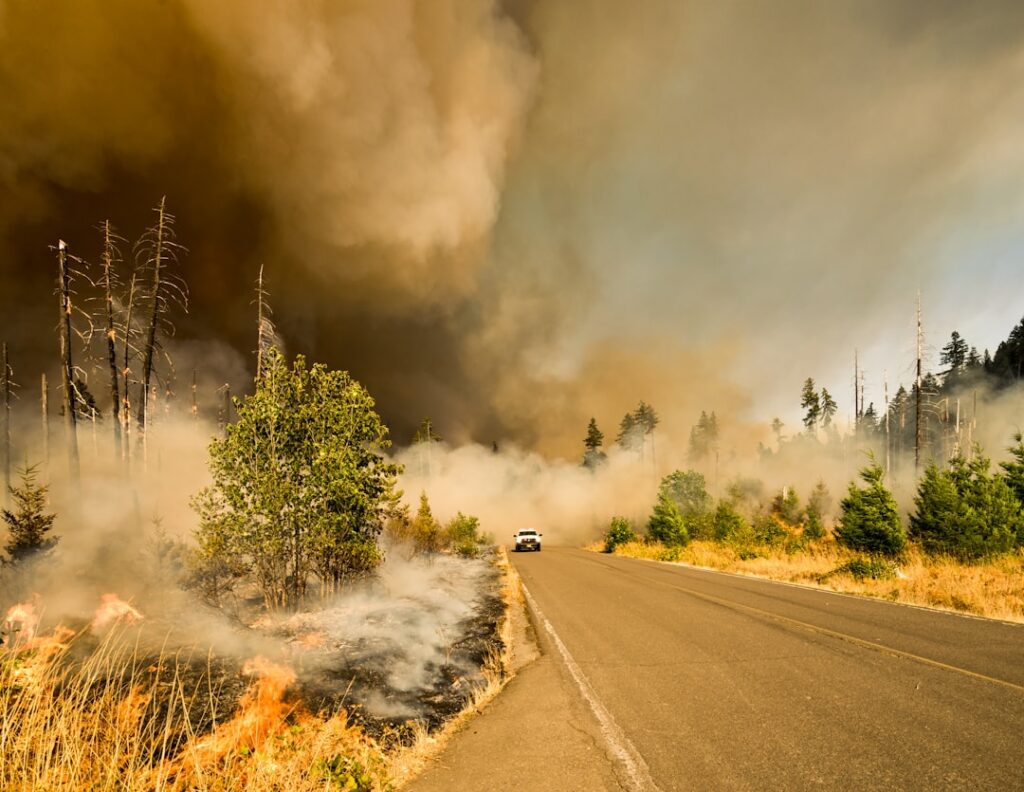
Australia, January 8, 2020 — cybernewschronicle.com — The smoke that has choked Australia’s east coast for weeks is not just a health hazard. It is a direct drag on the national economy. Analysts now put the productivity loss from the haze alone at roughly $500 million.
That figure is one piece of a much larger bill. The bushfires that began in November 2019 have burned across millions of hectares in New South Wales and Victoria.
They have destroyed thousands of buildings. They have knocked out mobile signals and electricity. They have blanketed major cities — Sydney, Canberra, Melbourne — in hazardous smoke.
The economic cost has already passed $2 billion, and it climbs daily. This crisis did not erupt from nowhere.
Australia’s fire season has grown longer and more intense over the past decade. Drought has parched the land. Record heat has primed the forests.
The conditions that turned this summer into a catastrophe have been building for years. What was once a predictable seasonal threat has become a rolling national emergency. The Insurance Council of Australia reports that roughly 6,000 claims had been lodged since November.
That number will rise sharply as more properties are assessed. The insured losses are one thing.
The uninsured losses — the small businesses that cannot reopen, the towns that lose their tourist season, the farms that have no crop — are another. Those are harder to count, but they add up. Tourism has taken a direct hit.
Holidaymakers cancelled trips to fire-affected regions. The timing could not be worse.
The crisis converged with the holiday season, the peak period for travel and hospitality. Property company Aspen Group, which owns tourist parks in fire-prone areas, expects a hit of at least A$500,000 to its income. A company spokesperson said fire activity along the NSW south coast has been catastrophic, with significant loss of life, housing, and infrastructure.
They added that it is not known when trading conditions will return to normal. That uncertainty is the real cost. A factory can rebuild.
A resort can repair. But when the smoke clears, will the tourists come back?
Will the businesses that survived find customers waiting? The fires have damaged more than buildings. They have damaged the confidence that underpins local economies.
The economic toll is not evenly spread. The smoke haze has disrupted air travel.
It has closed businesses. It has forced people indoors. It has cut output across multiple sectors.
The fires themselves have destroyed infrastructure, knocked out roads, and severed supply chains. The cost is measured in lost workdays, cancelled bookings, and delayed investments. This is not a short-term shock.
The fires have been burning since November. The crisis is entering its third month.
The economic damage will be felt long after the last flame is out. Recovery will take years. Some communities may never fully recover.
The $2 billion figure is an estimate. It will grow.
The Insurance Council expects claims to rise. Economists expect the broader cost to climb. The smoke haze alone has cost half a billion in lost productivity.
That is a number that will keep rising as long as the fires burn.




