
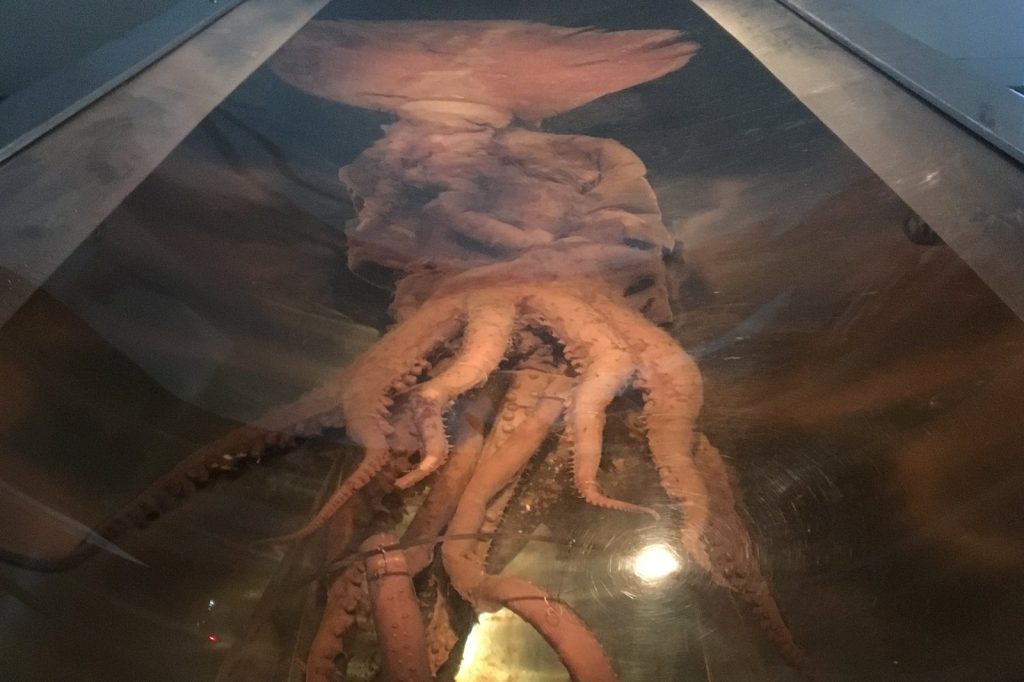
Researchers from the University of Essex have recorded the first-ever video footage of a live colossal squid in its natural environment, marking a historic achievement in deep-sea exploration. The sighting occurred on April 16, 2025, in the Southern Atlantic Ocean, near the remote South Sandwich Islands, at a depth of 600 meters. The juvenile specimen, measuring 30 centimeters in length, was observed using state-of-the-art equipment deployed by the university’s scientific team.
This milestone comes exactly 100 years after the species was first documented in 1925, making it the first time the creature has been filmed in the wild since its initial discovery. The colossal squid—scientifically classified as a member of the family Cranchiidae and also referred to as the Antarctic cranch squid or giant squid—is recognized as the largest invertebrate currently living on Earth.
While the filmed juvenile is relatively small, adult specimens have been confirmed to reach a mass of at least 495 kilograms, with some estimates suggesting they may weigh between 600 and 700 kilograms. The South Sandwich Islands, located in a largely unexplored region of the Southern Atlantic, provided the setting for this significant encounter. The area’s remote and deep waters have long been of interest to marine biologists seeking to study elusive deep-sea species. This footage offers researchers an unprecedented opportunity to examine the early developmental stages of the colossal squid.
By observing the juvenile in its natural habitat, scientists hope to gain new insights into the species’ life cycle, behavior, and biological characteristics—aspects that have remained largely mysterious despite the creature’s massive size. The achievement represents a major breakthrough in marine biology, particularly in understanding the complex ecosystems that exist in the ocean’s depths.
Advanced technology has played a crucial role in enabling such discoveries, allowing researchers to capture high-quality video of creatures that were previously only known from specimens caught in fishing nets or washed ashore. Since the colossal squid was first identified a century ago, scientific curiosity about the species has remained high. However, its deep-sea habitat and elusive nature have made direct observation extremely difficult.
The University of Essex team’s success demonstrates how innovation and collaborative research can overcome these challenges. As scientists continue to analyze the footage, further findings may emerge that challenge existing knowledge about deep-sea life.
This discovery opens new avenues for research, not only into the colossal squid itself but also into the broader ecosystems of the Southern Atlantic Ocean. The possibility of uncovering additional species and understanding previously unknown ecological relationships remains a compelling prospect for the field.




