
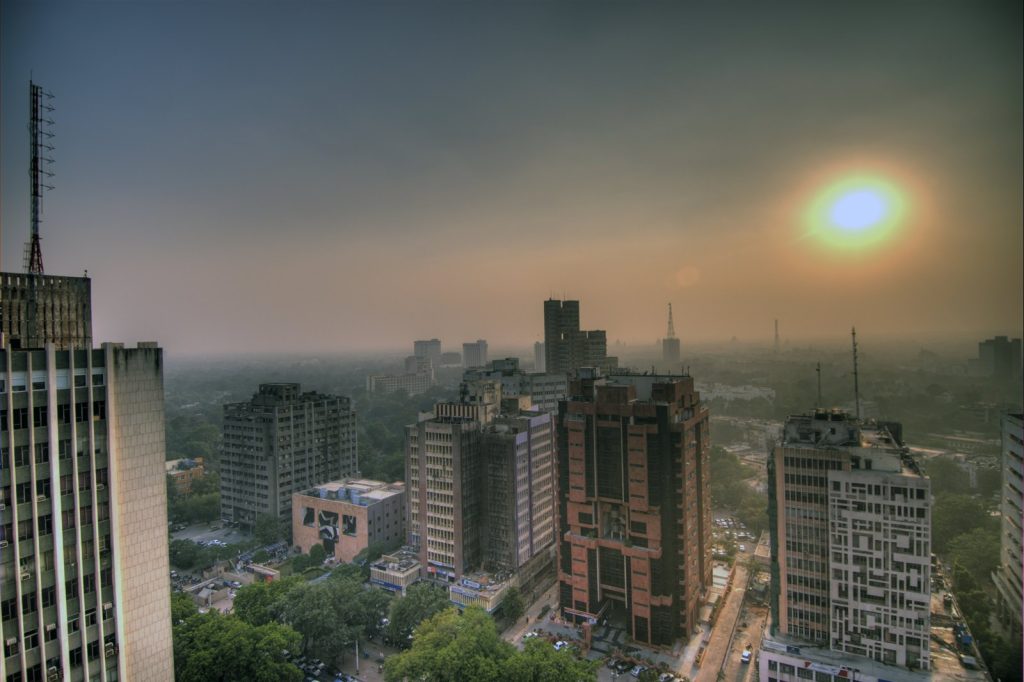
New Delhi’s air quality index has remained in the “very poor” category for the fifteenth consecutive day, marking a prolonged period of hazardous conditions. The persistent smog has reduced visibility to zero meters at times, forcing drivers to use headlights during daylight hours. Residents report eye and throat irritation as they navigate through the thick gray haze that has enveloped the city.
The situation has escalated into a public health emergency, with doctors noting increased patient visits for respiratory complaints. Children and the elderly face the highest risk from the toxic air.
The zero-meter visibility poses a direct danger to anyone required to be outdoors. New Delhi’s geography exacerbates the problem. The city sits in a basin that traps pollutants near the ground.
During winter, cold air and calm winds prevent natural dispersion, allowing pollution to accumulate daily. This explains why the current 15-day streak of “very poor” air is occurring during the cold months.
Major pollution sources include millions of vehicles on Delhi’s roads, along with industrial emissions from surrounding areas. The New Delhi Municipal Council faces significant challenges in addressing this recurring crisis, which repeats every winter rather than occurring as an isolated event. The Indian government has implemented measures to reduce vehicular emissions and promote cleaner fuels, but the report indicates these efforts remain insufficient. Root causes persist, particularly inadequate public transportation infrastructure.
Many residents rely on personal vehicles due to limited alternatives, perpetuating the cycle of worsening air quality. Industrial polluters represent another challenge.
The report calls for stricter regulation of industrial activities and stronger accountability measures. Current fines and enforcement mechanisms are weak, with some companies finding it more economical to pay occasional penalties than to invest in pollution control equipment. Renewable energy offers potential relief.
Solar and wind power could reduce dependence on fossil fuels, cutting emissions from power plants and industrial sources. However, the transition proceeds slowly, as coal continues to dominate India’s energy grid.
Significant investment and political commitment will be required over several years to change this. The pollution crisis extends beyond Delhi’s borders, affecting the entire region. Smog spreads to neighboring states, imposing health costs on millions across northern India.
Economic consequences include lost productivity from sick workers, increased healthcare spending on pollution-related illnesses, and reduced tourism when the city is shrouded in toxic haze. For now, Delhi residents cope with masks that provide incomplete filtration, home air purifiers, and reduced outdoor activity.
None of these measures offer a true solution. The fifteenth consecutive day of “very poor” air represents an unwelcome milestone, with no immediate end to the streak in sight.




