
WASHINGTON, July 17 — The story begins not with a shovel breaking ground, but with a legal battle that has been simmering for years, one that pits the sovereignty of Native American tribes against the momentum of a multi-billion-dollar energy infrastructure project. At its heart is the Line 5 tunnel proposal, a plan by Enbridge Energy to encase a segment of its aging oil pipeline in a concrete tunnel beneath the Straits of Mackinac.
For the Bay Mills Indian Community, the stakes are nothing less than the protection of treaty rights and the waters that have sustained their people for generations. The project involves a cast of powerful players.
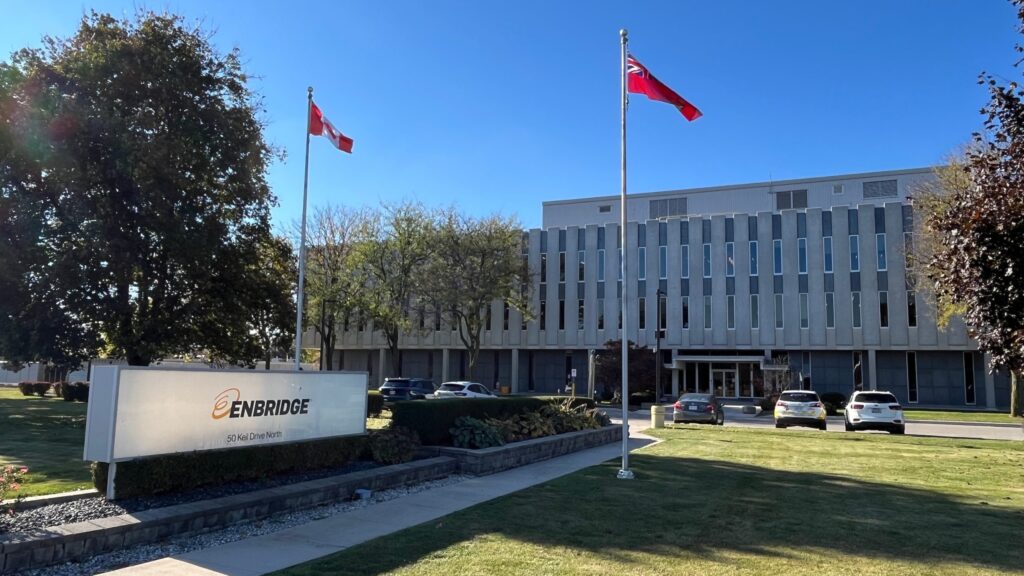
Enbridge, the Canadian company headquartered in Calgary, is the pipeline’s operator and the driving force behind the tunnel. On January 10, 2024, two Michigan state agencies — the Department of Environment, Great Lakes, and Energy (EGLE) and the Michigan Public Service Commission (MPSC) — approved the permits necessary for construction to move forward. Governor Gretchen Whitmer has taken what can only be described as a mixed stance.
In 2020, she revoked an easement that allowed the pipeline to operate in the Straits, a move that signaled a hardline opposition. But she later shifted course, supporting the tunnel as a compromise — a position that has left environmentalists and tribal leaders feeling betrayed.
For those involved, the conflict is deeply personal. The Bay Mills Indian Community, together with the Grand Traverse Band of Ottawa and Chippewa Indians, has filed lawsuits challenging the project. Their claims are rooted in treaty rights that guarantee access to fishing grounds and other resources in the Great Lakes.
They argue that the tunnel, while intended to reduce the risk of a spill, does not eliminate it — and that a rupture in the Straits would be catastrophic for the ecosystem and their way of life. The National Wildlife Federation and the Sierra Club have joined the opposition, raising environmental concerns that echo the tribes’ warnings. What unfolded in the months following the state permit approvals was a legal and regulatory standoff.
The U.S. Army Corps of Engineers is still reviewing a federal permit for the project, a process that could take years. That federal review adds another layer of uncertainty, as the Corps must weigh the project’s compliance with the Clean Water Act and other federal laws.
For the tribes, this is not just about a pipeline — it is about whether their voices will be heard in a process that has historically marginalized Indigenous communities. The tunnel is Enbridge’s answer to a long-running controversy. Line 5, which carries crude oil and natural gas liquids from western Canada to refineries in Ontario and Michigan, has been a flashpoint for environmentalists and tribal nations for years.
The pipeline crosses the Straits of Mackinac, the narrow waterway that connects Lake Michigan and Lake Huron. Opponents have long warned that the pipeline is vulnerable to anchor strikes and corrosion.
Enbridge has countered that the tunnel would provide a permanent solution, encasing the pipeline in a reinforced concrete structure beneath the lakebed. But for the Bay Mills Indian Community, the tunnel does not address their core concerns. They argue that the project violates treaties signed in the 19th century that guarantee their right to fish, hunt, and gather in the Great Lakes region.
Those treaties, they say, are not historical artifacts — they are living documents that the federal government is obligated to uphold. The lawsuits filed by the tribes and the Grand Traverse Band seek to block the project on those grounds, arguing that state permits cannot override federal treaty obligations. The environmental groups opposing the project — the National Wildlife Federation and the Sierra Club — have focused on the broader risks.
A spill in the Straits, they argue, would be nearly impossible to contain due to the powerful currents that sweep through the channel. The economic and ecological damage would be incalculable, affecting tourism, fishing, and drinking water for millions of people in Michigan and beyond.
The groups have called on the Army Corps to conduct a thorough environmental review before any federal permit is issued. Governor Whitmer’s position has been a source of confusion and frustration for many. Her 2020 revocation of the easement was seen as a bold move against Enbridge.
But her subsequent support for the tunnel — which she has described as a compromise that balances energy needs with environmental protection — has drawn criticism from both sides. Some environmentalists view it as a capitulation to corporate interests.
Tribal leaders see it as a betrayal of the trust she had built with Indigenous communities during her first term. As of this writing, the Army Corps of Engineers has not yet issued a decision on the federal permit. The lawsuits filed by the Bay Mills Indian Community and the Grand Traverse Band remain pending in federal court.
For those involved, the waiting is the hardest part. The tribes continue to assert their treaty rights, the environmental groups continue to sound the alarm, and Enbridge continues to push for construction. The outcome of this battle will likely set a precedent for how the United States balances energy infrastructure, tribal sovereignty, and environmental protection — a question that has no easy answers.




