
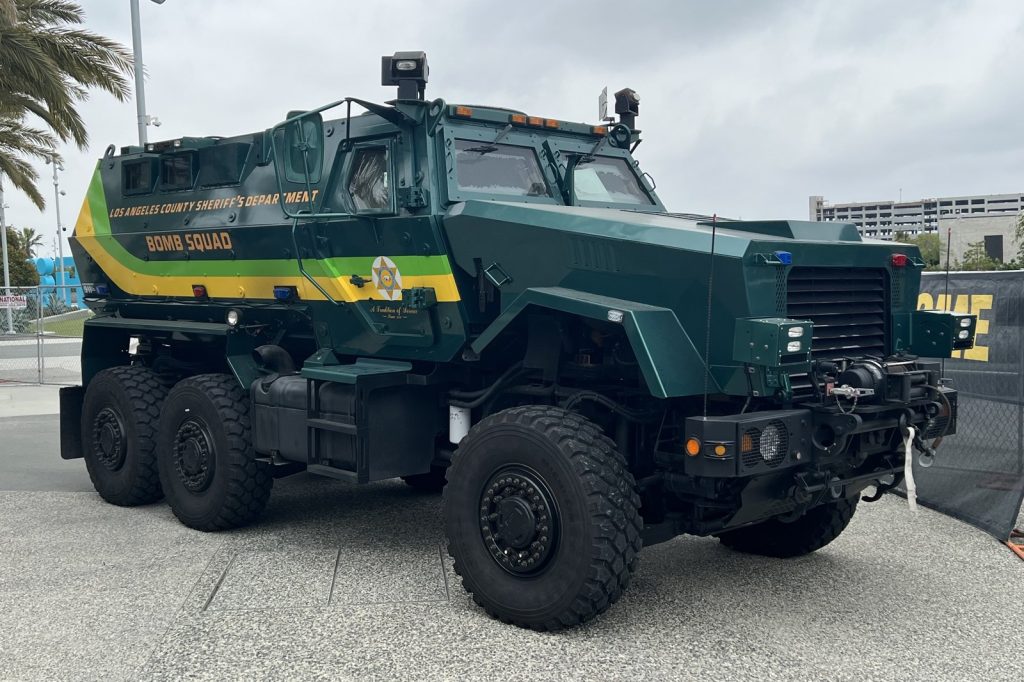
The Los Angeles County Sheriff’s Department, the nation’s largest sheriff’s agency with roughly 19,000 employees, suffered a blast at its Monterey Park training facility on July 18, 2025. The explosion killed at least three people, and investigators have not disclosed whether the incident stemmed from an accident, a mechanical failure, or another cause. Officials have remained silent, leaving families, colleagues, and the surrounding community awaiting answers.
The department’s workforce splits almost evenly between sworn deputies and civilian staff. Of the 19,000 personnel, 9,915 are sworn deputies who patrol the county’s 4,000 square miles, while 9,244 perform unsworn duties ranging from jail operations and dispatch to forensic analysis.
Every deputy must pass through training sites like the one in Monterey Park before taking to the streets. The Monterey Park complex is far more than a storage annex. It hosts use‑of‑force simulations, emergency‑vehicle drills, and tactical‑response exercises—practical rehearsals for the violent situations deputies may encounter. The irony is stark: a place designed to prepare officers for danger became the scene of loss itself.
Monterey Park, a densely populated, diverse suburb east of downtown Los Angeles, prides itself on a strong community spirit, a trait the sheriff’s department has highlighted. Residents are accustomed to seeing deputies on their streets, responding to calls, and living as neighbors.
The blast has overturned the assumption that training grounds are inherently safe. The sheer scale of the agency complicates the investigation. With 19,000 staff spread across dozens of locations, securing every site and accounting for every individual presents a logistical challenge.
The training center itself is a controlled environment: access is limited, equipment is stored on‑site, and the inventory includes explosives, ammunition, and pyrotechnics used in drills. Whether any of those materials contributed to the blast remains unknown.
Similar tragedies have struck law‑enforcement training facilities elsewhere—fires, gas leaks, and structural collapses have prompted reviews of safety protocols, maintenance schedules, and emergency plans. The LASD now faces that same scrutiny. Its long‑standing commitment to public safety and community policing is being tested by an incident that occurred inside its own walls.
The identities of the victims have not been released, and it is unclear whether they were deputies, instructors, or civilian staff. The absence of names intensifies grief, leaving room for speculation.
Beyond the three confirmed deaths, the department has not provided injury figures; there may be additional wounded or survivors in critical condition. Monterey Park hosts businesses, schools, and community organizations, all of which feel the ripple effects of the explosion. Residents have begun to rally, delivering food, posting supportive messages online, and organizing vigils—spontaneous acts of solidarity that follow a familiar pattern after such events.
Investigators continue their work, and a definitive cause will eventually emerge. Until then, the training facility sits idle, halting the preparation of deputies for field duty.
Each day of lost training represents a day when officers may be less ready for the streets, a gap the agency will need to address after it has tended to its immediate responsibilities of mourning and burial.




