POTSDAM, November 7, 2026 — Researchers at the GFZ Helmholtz Centre for Geosciences have developed an unsupervised machine learning program that identified unusual behavioral shifts in small earthquakes before three major tremors but found no such signals before two others. The study, published in Nature Communications, demonstrates a method that recognizes changing fault behavior rather than predicting exact dates.
Algorithm Groups Seismic Families Without Preset Rules
The program, led by GFZ scientist Sadegh Karimpouli alongside Patricia Martínez-Garzón, Marco Bohnhoff, and international colleagues, was given only basic seismological records: the time, location, and magnitude of each earthquake. It then grouped earthquakes occurring close together in space, time, and size into families described by about 100 measurements, such as strain release and spatial clustering. These families were sorted into four or five groups based on similarity, without the algorithm being told what a warning sign looks like.
For the magnitude 7.8 earthquake that struck Türkiye in 2023, the program analyzed 5,686 earthquakes recorded within 50 kilometers of the epicenter since 2017. The algorithm detected a distinct group of families appearing mostly in the months leading up to the mainshock. These families were unusually tight in space and time and released more strain than background seismicity, the company said.
Mixed Results Across Five Major Quakes
The model identified similar precursory groupings before the 2009 L’Aquila, Italy earthquake (magnitude 6.1) and the 2014 northern Chile earthquake (magnitude 8.1). In Chile, the program’s most unusual groups appeared about two weeks before the event, aligning with the period of slow fault slip documented in a 2014 Science paper. However, the algorithm found no rising trend or matching group traits before the 2016 Amatrice, Italy earthquake (magnitude 6.2) or the 2024 Noto Peninsula earthquake in Japan (magnitude 7.5).
At Amatrice, a group switch occurred in the final two months, but the same switch had happened in earlier periods without a large quake following. At Noto, the program sorted 23,630 earthquakes from a long-running swarm beginning in late 2020, yet none of the groups before the mainshock showed the traits seen in the three positive cases. Officials noted that some faults may fail without obvious seismic warning signs, presenting a major forecasting challenge.
Tool Recognizes Fault Behavior, Not Dates
“This does not mean we can predict earthquakes in a deterministic way, but it provides a powerful tool to recognize when a fault system is behaving differently than usual,” Karimpouli stated. Martínez-Garzón added that the next step is to build these approaches into real-time monitoring systems and determine why some faults give clear signals while others do not. The authors emphasized that until the program runs on live data, every result comes from an earthquake that had already happened.
Sources
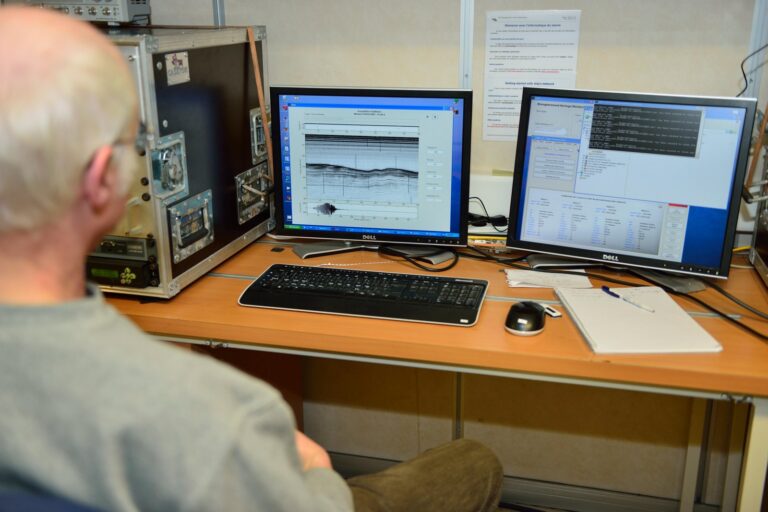
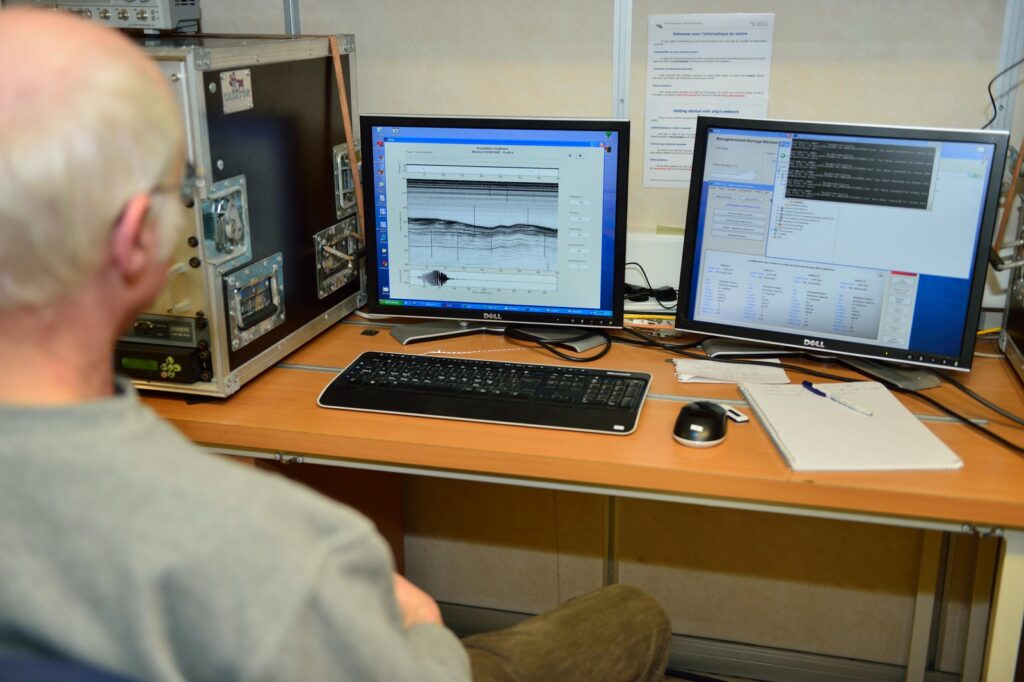
Photo: Stephane Lesbats (CC BY 4.0)