Scientists have finally explained the Great Unconformity, a gap in Earth’s rock record that spans up to a billion years. New mantle-flow models show that deep currents lifted continents for hundreds of millions of years, exposing them to glacial erosion before letting them sink to be buried by fresh sediments.
What the Great Unconformity Is and Why It Matters
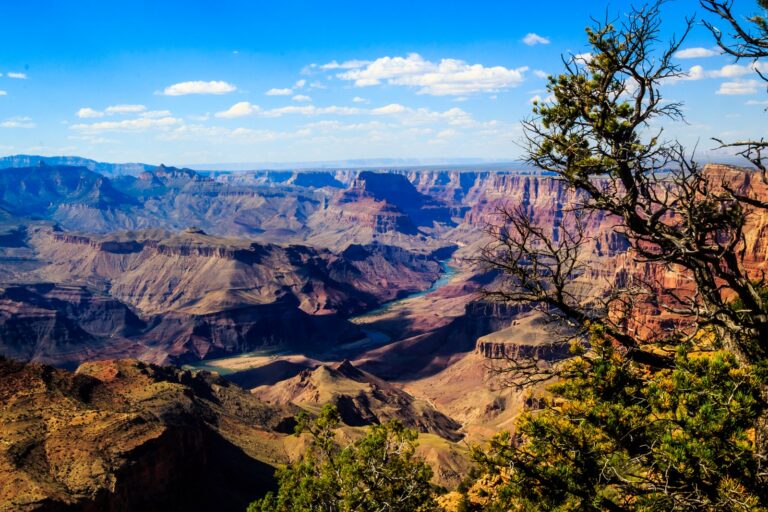
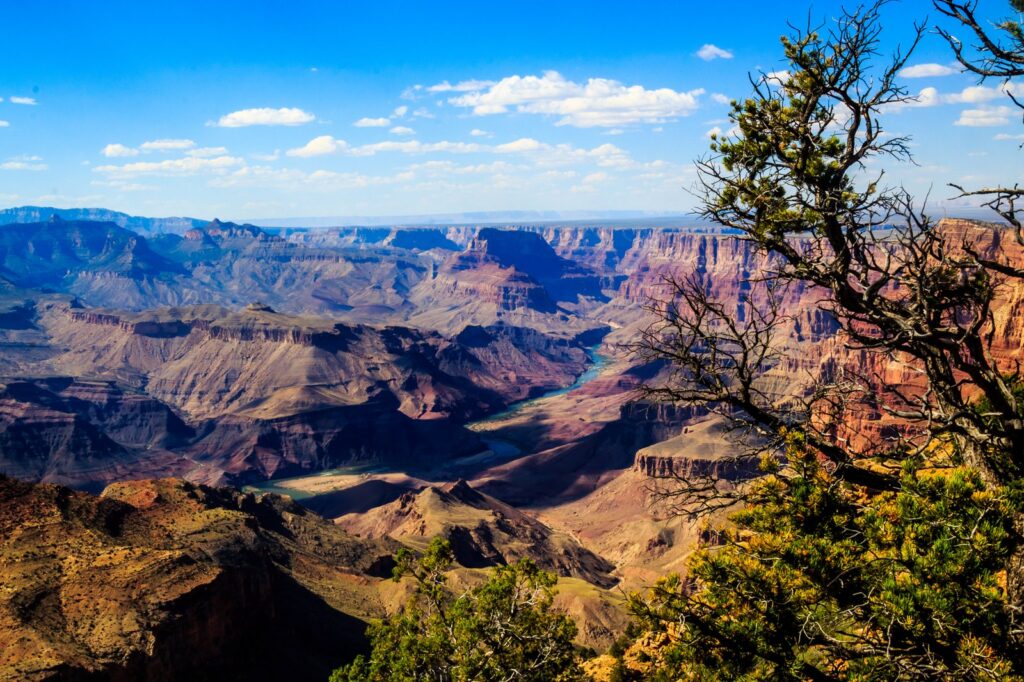
Imagine opening a history book and finding several chapters torn out. That is what geologists discovered in the 1870s when they compared rock records on several continents. They dubbed it the Great Unconformity. In places like the Grand Canyon, a flat layer of sedimentary rock about 540 million years old or younger rests directly atop a crystalline basement up to two billion years old. Somewhere in between, a considerable chunk of Earth’s history — up to a quarter of it — has simply vanished.
The gap can range anywhere between 200 million years to more than a billion years, depending on location. Intriguingly, the sedimentary layers on the younger side appear around the same time as the Cambrian explosion, which began about 540 million years ago. Scientists have speculated that the erosion of entire continents during this gap may have altered the chemical balance of seawater and helped animal life flourish.
A 150-Year Mystery
The Great Unconformity was first observed in the Grand Canyon by John Wesley Powell in 1869. It was recognized twelve years earlier by John Newberry in New Mexico during the 1857–1858 Ives expedition, though the disruption of the American Civil War kept Newberry’s work from becoming widely known. For 150 years, the origin of this massive gap remained a puzzle. Some scientists argued it was caused by massive ice sheets during the Snowball Earth period between 720 million and 635 million years ago. Others pointed to mountain-building, volcanic activity, or global sea level change. Testing these hypotheses was a challenge because the primary evidence consists of missing rock.
How Deep Mantle Processes and Glacial Erosion Create the Gap
A recent study in Nature by Santosh Dhungana and Nicolas Flament of the University of Wollongong provides the explanation. According to their models, slow currents of hot rock in Earth’s mantle pushed entire continents up for hundreds of millions of years. This prolonged uplift raised landscapes high above the sea, where the grinding movement of enormous ice sheets scoured them down. Later, changing mantle circulation let the continents sink, allowing fresh sediments to bury and preserve the eroded surface.
The oldest sediments resting on the Great Unconformity in North America are between 635 and 482 million years old. The predicted pattern fits ancient continental cores in North America, northern Europe, and northern China, with different histories elsewhere. The work addresses both the creation and the survival of the boundary, proposing a broad geological setting in which glaciers and other surface processes could remove rock.
What the Breakthrough Means for Earth’s History
The explanation connects a surface feature — the missing chapters of rock — to circulation deep inside the planet. It suggests the largest hole in the rock record might be a fingerprint of processes happening in the mantle. The model does not establish that every missing interval formed simultaneously or that one mechanism explains every location, but it shows how deep Earth dynamics prepared the stage for the erosion that defines the Great Unconformity.
Sources
- Earth's rocks have a missing layer spanning up to a billion years. Scientists finally know what happened to it
- Great Unconformity
- Earth's churning mantle may have created the Great Unconformity
- Earth’s rocks have a missing layer spanning up to a billion years. We finally know where it went
- Billion-year geological model explains the Great Unconformity seen in the Grand Canyon
- Billion-year geological model explains the Great Unconformity seen in the Grand Canyon
Photo: Lennart Sikkema (CC BY 3.0)